How to Choose Kitchen Worktops
How to Choose Kitchen Worktops
The best kitchen worktop for your home is one that suits how you cook, the care you are prepared to give it and your fitted budget. Compare materials by their practical limitations as well as their colour and pattern.
This buying guide explains the main worktop options, what affects the price and the details to agree before installation. For the wider project, start with our Buying a Kitchen guide.
My Kitchen Specialist retailers offer different worktop ranges and services. Some provide entry-level options alongside kitchen furniture; others offer a wider choice of premium surfaces and specialist fabrication. Use this guide to compare suitable products, then ask your chosen retailer what they can supply within your budget.
Start with how you use your worktops
Think about your daily routine. Do you cook frequently, bake, leave washing-up beside the sink or want a surface that needs little ongoing maintenance? These habits help you assess which materials are suitable.
Ask about heat, staining, scratching and repairability separately. A surface can perform well in one area and need more care in another. Follow the care instructions for the exact product, finish and thickness you are considering.
My Kitchen Specialist Top Tip
Ask to see the care instructions before choosing a worktop. Check the rules for hot cookware, cleaning products and water around joins, then decide whether that routine suits your household.
Compare kitchen worktop materials
Use this comparison to narrow your shortlist. It covers entry-level and premium options, rather than a range available from every retailer. Performance and fitting requirements vary between products, so confirm the specification with your supplier.
| Material | Why consider it | What to check |
| Laminate | A wide choice of finishes, often at a lower initial cost. | Protect edges and joins from water; use heat protection. |
| Compact laminate | A slim profile and solid laminate construction. | Confirm sink options, supports and care of exposed cut-outs. |
| Engineered quartz | Consistent designs and generally little routine maintenance. | Use trivets; check cleaning and heat guidance for the exact product. |
| Granite | Natural colour and pattern variation. | Ask whether sealing is needed and which cleaners are suitable. |
| Porcelain or sintered surfaces | Slim designs and strong heat and stain resistance in suitable products. | Check edge protection, fabrication and product-specific heat limits. |
| Solid timber | A natural appearance and a surface that can often be refinished. | Needs suitable protective treatment and care around water. |
| Acrylic solid surface | Discreet joins and the possibility of repairing some damage. | Protect from hot pans; check scratching and repair arrangements. |
| Marble | Distinctive natural veining. | Acidic spills can etch the surface; discuss staining and sealing. |
Engineered quartz, natural quartzite and sintered surfaces are different materials. Brand names also identify particular products, so ask what the surface is made from rather than assuming similar-looking samples perform alike.
Marble deserves particular thought if you want a consistently unmarked finish. Sealing can help resist staining, but does not prevent acid etching. If natural wear would bother you, discuss a marble-effect alternative.
Which worktop is easiest to look after
Many engineered quartz, porcelain, sintered and acrylic solid surfaces need little routine maintenance, although their cleaning and heat requirements differ. Laminate can also be straightforward to clean when its edges and joins are properly protected.
Timber usually needs more ongoing attention to its protective finish. Natural stone requirements depend on the stone and treatment. Ask what maintenance involves, how often it may be needed and whether you can do it yourself.
No worktop is immune to damage. Use chopping boards and follow the supplier’s instructions for heat protection. Find out how chips, scratches or damaged joins can be dealt with before ordering.
Check samples and the finished appearance
View your shortlisted worktop beside the door and flooring samples in your own kitchen. Check it in daylight and under evening lighting. A small sample may not show the full pattern or variation of a large slab.
For natural stone or prominent veining, ask whether you can approve the slab or layout before fabrication. Discuss where joins will sit, how the pattern will run and what the finished edges will look like.
Choose thickness alongside the furniture design. It affects the finished height, edge appearance and some appliance or sink details. Our kitchen furniture guide explains the cabinet decisions to coordinate with your worktop.
My Kitchen Specialist Top Tip
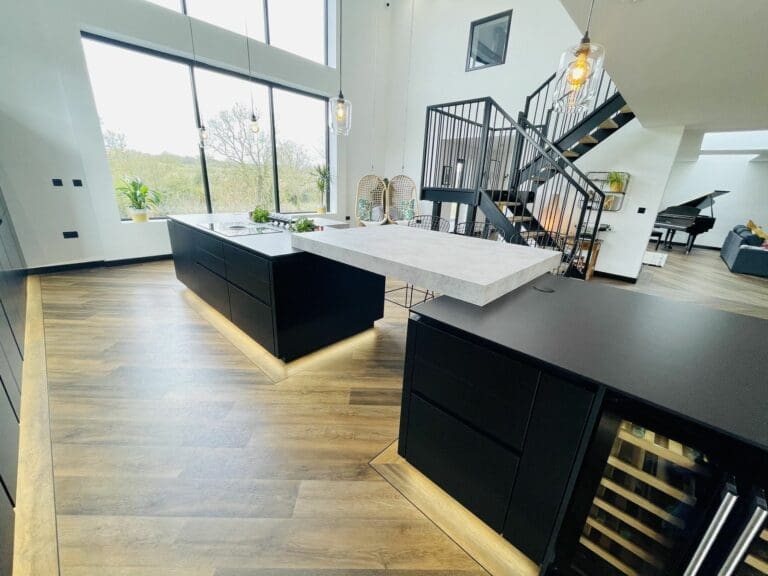
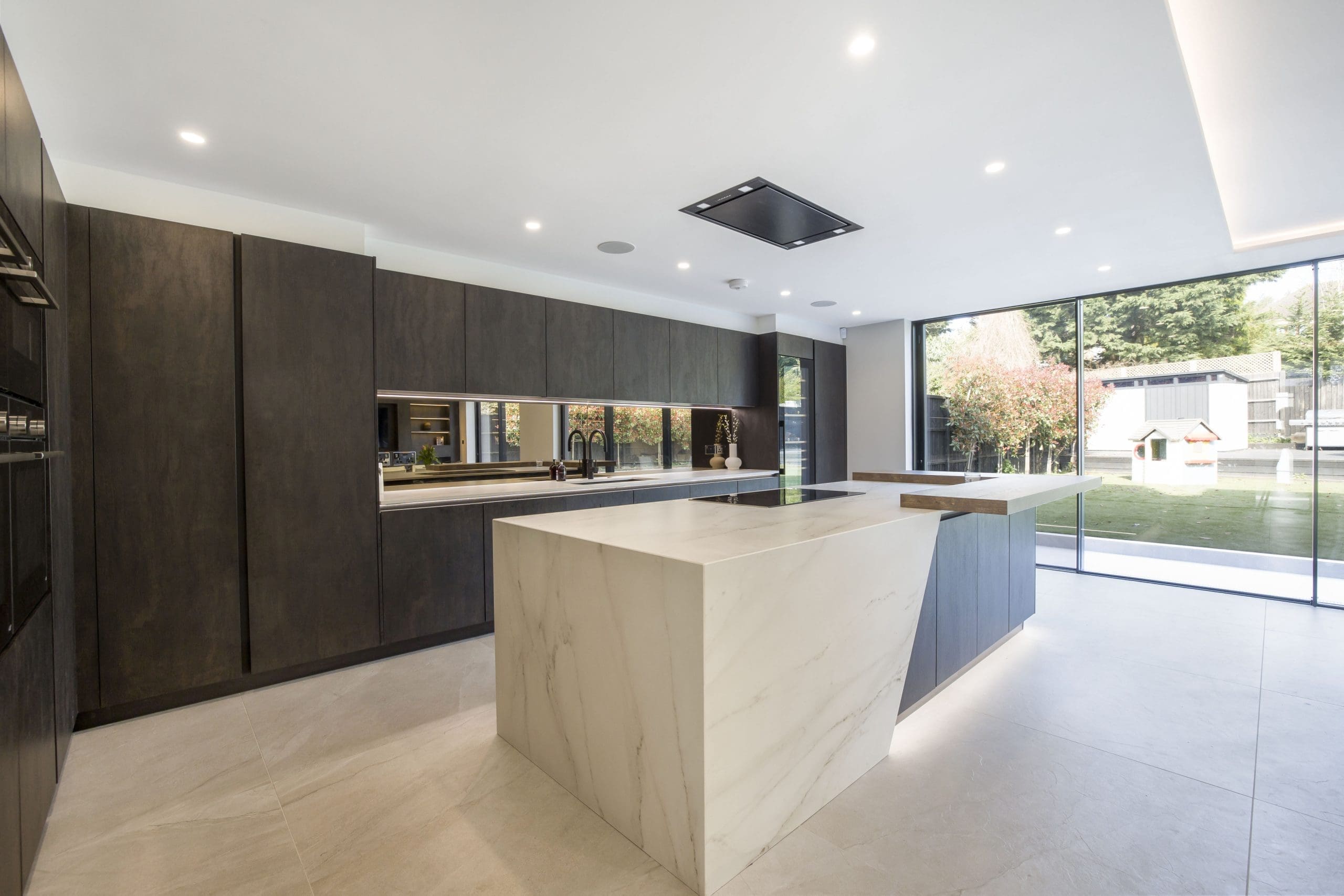
Ask your supplier to show the proposed joins and pattern direction on a plan. Check whether the edge matches the surface pattern, particularly on printed designs and any waterfall ends.
What affects the fitted worktop price
Compare quotations for the same material, finish and layout. A price per metre or square metre may leave out work needed to produce the finished installation.
Ask whether the quotation includes:
- Measuring or templating, fabrication and fitting.
- Sink, hob and tap cut-outs.
- Edge profiles, drainer grooves and joins.
- Upstands, splashbacks or waterfall ends.
- Supports, delivery, access requirements and VAT.
Large islands, extra joins and detailed edges can affect the cost. Ask which changes would reduce the fitted total without compromising the installation. An entry-level surface can be a sensible choice when it meets your needs; a premium material should offer benefits you value. Keep overall renovation budgeting in the Buying a Kitchen guide.
Confirm sink hob and support details
Choose the sink mounting arrangement before fabrication. An inset, undermount or Belfast-style sink needs appropriate detailing and support. Check compatibility with the exact worktop system.
Give the supplier the final sink, tap and hob specifications. Confirm cut-out dimensions, installation clearances and any accessories needing holes. Avoid switching models after fabrication without checking the consequences.
Island overhangs and unsupported spans need to follow the supplier’s requirements. Ask where supports will go and whether they affect knee room or cupboard access. Thickness alone does not establish what a surface can safely span.
What happens during templating and installation
Depending on the product, your retailer may supply standard lengths for an installer to cut and fit, or arrange a bespoke surface through a fabricator. Many bespoke stone and solid-surface worktops are templated once the base cabinets are installed, levelled and secured. Confirm the process for your chosen material and who is responsible for each stage.
Agree the fabrication lead time and any gap before plumbing or appliance connections can be completed. Our kitchen installation timeline explains the wider sequence; your own supplier should confirm the project dates.
For stone worktops, ask the fabricator how they minimise cutting at your home and control any dust-producing work that remains necessary. This concerns fabrication and installation, rather than ordinary use of a finished surface.
My Kitchen Specialist Top Tip
Confirm the sink, tap and hob models before templating. Ask whether the physical products must be on site, and who approves the final cut-outs before the worktop is manufactured.
Before you order your worktops
Confirm the exact product, colour, finish and thickness, together with joins, edge details and supports. Keep the fitted quotation and agreed drawings, and ask who handles installation issues or later repairs.
Request care instructions and warranty terms. Check what is covered, whether fitting is included and how to register the product if required.
Compare worktops with a local kitchen specialist
Seeing samples and fitted displays can help you compare the options. Use Find a Specialist to locate a nearby My Kitchen Specialist retailer and discuss a worktop that suits your kitchen and budget. Ranges and services vary between partners, so check which materials they offer, your fitted budget and how installation is arranged before booking a visit.