

Understanding UK Kitchen Regulations: A Homeowner’s Guide
Updated January 2026.
When planning a new kitchen or upgrading an existing one, design and layout tend to take centre stage. However, behind every well-designed kitchen is a framework of UK regulations that ensure the space is safe, functional, and compliant. These rules cover everything from electrical safety and ventilation to gas appliances and water supply. Ignoring them can lead to delays, extra costs, or, in the worst cases, serious safety risks.
Based on real-world experience designing and installing kitchens in UK homes, we find that many homeowners are unsure which rules apply to them and which are handled by professionals on their behalf. Some regulations are mandatory under Building Regulations, while others relate to product standards or industry best practice. Understanding the difference helps you make informed decisions and avoid unpleasant surprises during installation or when selling your home later.
This guide explains the key UK kitchen regulations in plain English. It’s designed to help you understand what matters, why it matters, and how compliance is usually achieved in a typical kitchen project. Whether you’re replacing units, installing new appliances, or planning a full renovation, this article will help you approach your project with confidence.
UK Kitchen Regulations Explained
UK kitchen regulations set the safety and compliance standards for electrics, gas appliances, ventilation, plumbing, and fire protection in domestic kitchens. They ensure kitchens are safe to use, legally compliant, and suitable for long-term everyday living, whether you’re updating an existing layout or installing a completely new kitchen.
Why UK Kitchen Regulations Matter
Kitchen regulations exist to protect homeowners, installers, and future occupants. A compliant kitchen is safer to use, more reliable over time, and less likely to cause issues during surveys or property sales.
In practice, regulations help to ensure:
- Electrical systems are safe and correctly installed
- Gas appliances are fitted and vented properly
- Adequate ventilation prevents moisture and air-quality problems
- Water and drainage meet hygiene and efficiency standards
- Fire risks are reduced through correct spacing and materials
Most homeowners won’t deal directly with Building Control, but understanding the basics makes it easier to work with designers, installers, and trades.

Our Experience With Kitchen Compliance
At My Kitchen Specialist, kitchen regulations are part of everyday work rather than an afterthought. Designing and installing kitchens across a wide range of UK properties means working within Building Regulations, coordinating with qualified electricians and Gas Safe engineers, and ensuring products meet current UK standards. This hands-on experience informs the guidance below, focusing on how regulations apply in real homes rather than just theory.
What are UK Kitchen Regulations?
UK kitchen regulations are a combination of Building Regulations, safety laws, and product standards that govern how kitchens are designed, installed, and used. They cover areas such as electrics, gas safety, ventilation, plumbing, and fire prevention to ensure kitchens are safe, hygienic, and fit for purpose.
Key UK Regulations That Apply to Kitchens
Building Regulations Overview
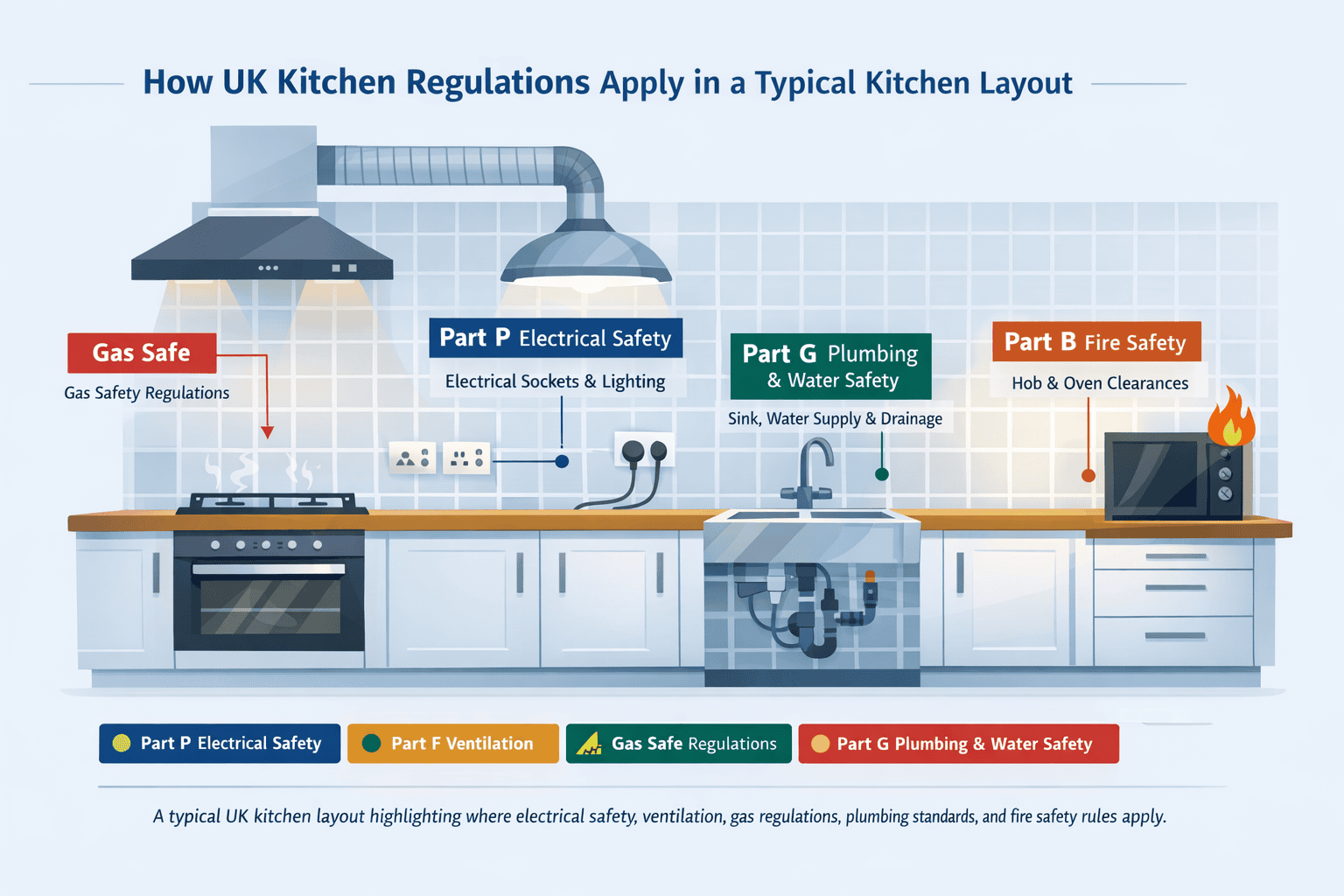
Building Regulations apply when work is classed as “notifiable,” such as installing new electrics, altering drainage, or adding gas appliances. In kitchens, the most relevant parts include:
- Part P (Electrical Safety)
- Part F (Ventilation)
- Part G (Sanitation, hot water safety and water efficiency)
- Part B (Fire Safety)
Not every kitchen update requires Building Control approval, but certain works must be certified by qualified professionals.
Electrical Safety (Part P)
Kitchens are considered high-risk areas due to the presence of water and appliances. Under Part P:
- Electrical work must be carried out by a qualified electrician
- New circuits or significant changes must be certified
- Work must meet current IET Wiring Regulations
Most reputable kitchen installers work with Part P registered electricians who can self-certify compliance.
Gas Safety and Regulations
Any gas appliance, including hobs or range cookers, must be installed by a Gas Safe registered engineer. Key requirements include:
- Correct ventilation for gas appliances
- Safe connection and isolation valves
- Certification of completed work
Gas safety is strictly enforced and should never be treated as optional.
Ventilation Requirements (Part F)
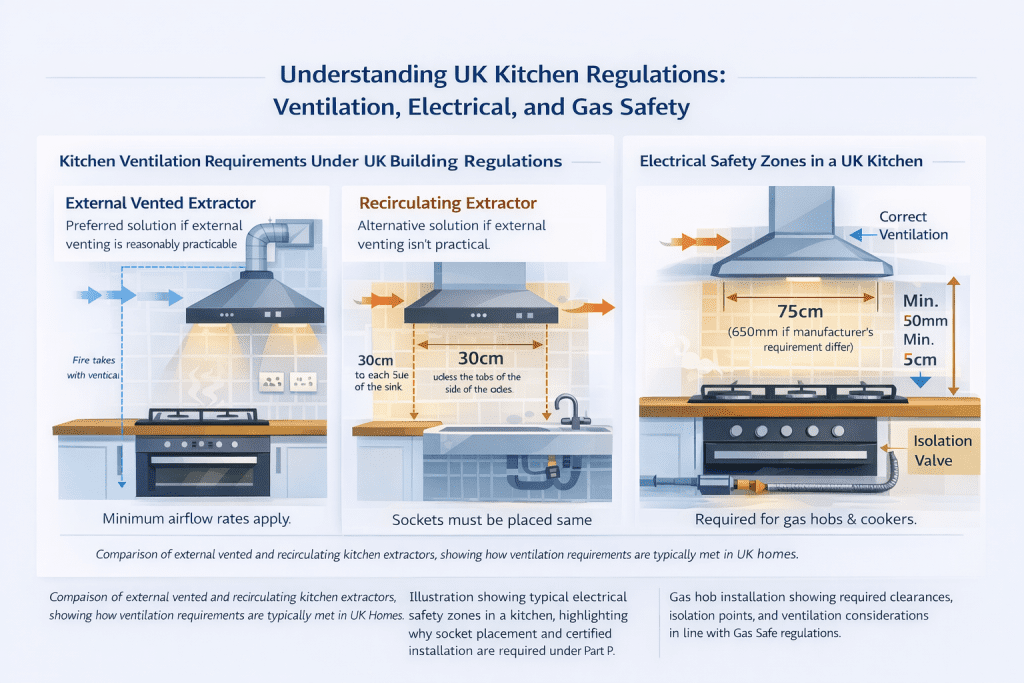
Ventilation is essential in kitchens to remove moisture, odours, and pollutants. Regulations typically require:
- Mechanical extraction, such as a cooker hood, vented externally where possible
- Minimum airflow rates depending on the type of extraction
- Alternative solutions if external venting isn’t practical
Good ventilation protects both the structure of your home and the longevity of your kitchen units.
Plumbing, Water Supply and Drainage (Part G)
Kitchen plumbing must ensure:
- Safe delivery of hot and cold water
- Proper drainage to prevent leaks or contamination
- Compliance with water efficiency standards
This applies whether you’re relocating a sink, adding appliances, or installing boiling water taps.
Fire Safety Considerations (Part B)
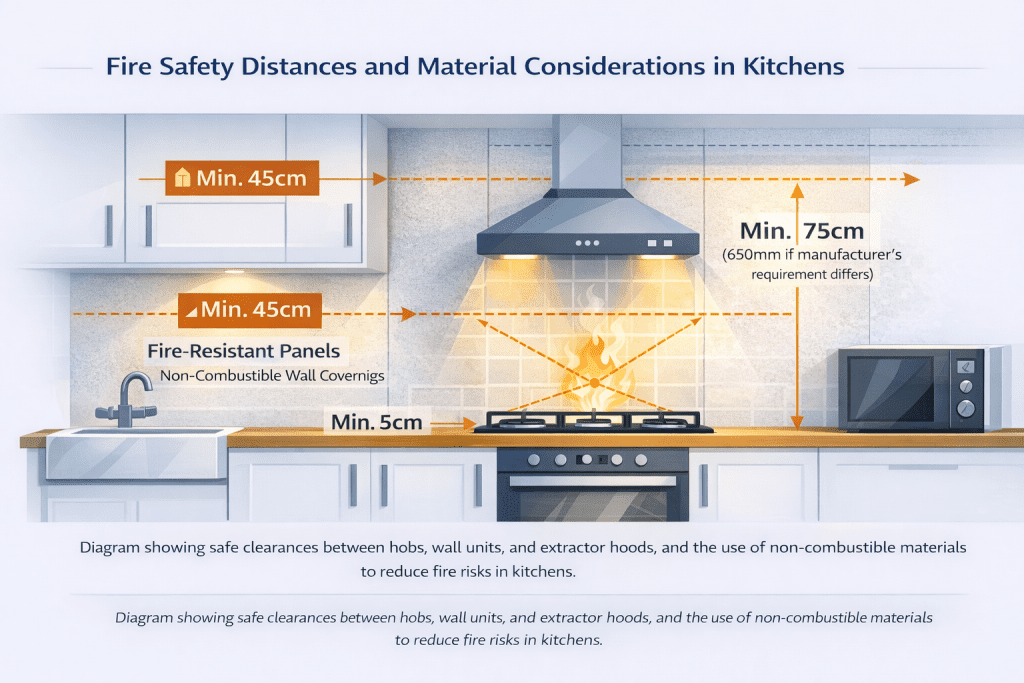
Fire safety in kitchens focuses on reducing risk through layout and materials. Common considerations include:
- Safe distances between hobs and combustible materials
- Fire-resistant materials where required
- Appropriate placement of appliances and electrics
In flats and apartments, additional fire safety rules may apply.
Product Standards: CE and UKCA Marking
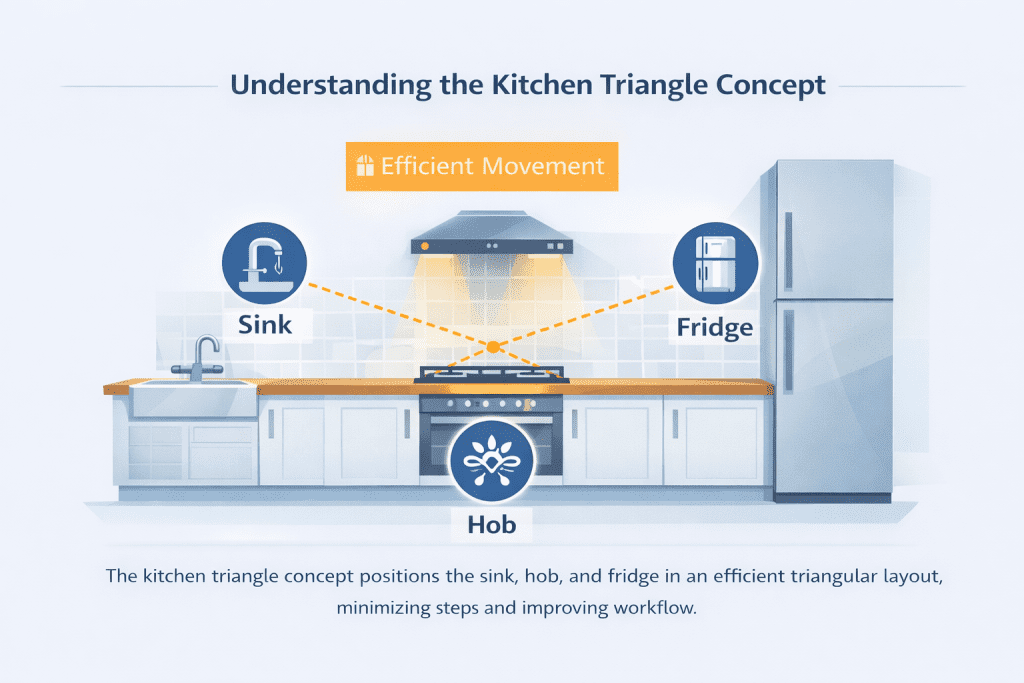
Although there are no explicit rules within the UK kitchen regulations concerning your kitchen’s layout, practical safety factors usually guide it. The kitchen triangle, a design principle positioning the stove, sink, and fridge in a triangle, is widely accepted. This setup provides a safe and functional workflow, minimising congestion and potential hazards.
How Regulations Affect UK Kitchen Design and Installation
Regulations influence more than just technical details. They can affect:
- Where appliances can be positioned
- Whether an extractor can recirculate or must vent externally
- The type of lighting and sockets used
- The feasibility of layout changes in older properties
A well-planned kitchen design takes these factors into account from the outset, avoiding costly redesigns later.
How to Stay Compliant Without Stress
For most homeowners, compliance is achieved by:
- Using qualified trades for gas and electrical work
- Ensuring installers understand current Building Regulations
- Keeping certificates and documentation for future reference
You don’t need to become an expert, but asking the right questions helps ensure nothing is overlooked.

UK Building Regulations: Frequently Asked Questions
Do I need Building Control approval for a new kitchen?
Not always. Like-for-like replacements usually don’t need approval, but new electrics, gas work, or structural changes often do.
Can I install my own kitchen electrics?
Minor tasks may be allowed, but most kitchen electrical work must be carried out and certified by a Part P registered electrician.
Are extractor fans legally required in kitchens?
Yes, some form of ventilation is required. This is usually a mechanical extractor, especially where gas or electric hobs are installed.
What happens if my kitchen isn’t compliant?
Non-compliance can lead to safety risks, invalid insurance, or problems when selling your property.
Do regulations differ for flats and apartments?
Yes. Flats often have additional fire safety and ventilation requirements, particularly in blocks with shared services.
Are older kitchens exempt from current regulations?
Existing kitchens aren’t required to be upgraded unless work is carried out, but any new work must meet current standards.
Final Thoughts on UK Kitchen Regulations
UK kitchen regulations are there to protect homeowners and ensure kitchens are safe, durable, and fit for everyday use. While they may seem complex at first, most compliance is handled by qualified professionals as part of a well-managed kitchen project. Understanding the basics helps you make informed decisions, avoid unnecessary delays, and enjoy peace of mind once your kitchen is complete.
Written by My Kitchen Specialist
Reviewed by a kitchen design consultant with experience working on UK homes