
The 5 Types of Kitchen Lighting and Where to Include Them
Kitchen lighting plays a vital role in modern design. It influences safety, ambience, workflow, and the overall feel of your home. When you plan a new kitchen, lighting should be treated as a structural decision, not an afterthought. Good kitchen lighting enhances cabinetry, defines zones, and brings balance to open-plan living. Alternatively, poor lighting creates shadows, glare, and uneven brightness that undermines even the most beautiful design.
This guide explains the five essential types of kitchen lighting, how they work, and where to position them for the best results. You’ll find practical advice, professional insight, and examples from leading manufacturers to help you make confident choices for your space.

1. Ambient Lighting: The Foundation of Every Kitchen
Ambient lighting provides the main level of illumination in your kitchen. It sets the tone, ensures visibility, and works as the background layer that supports all other types of lighting.
Where to Use Ambient Lighting
You need this lighting layer across the entire room, including working areas, walkways, and social zones. It helps create a consistent lighting level that avoids patches of darkness. Common placements include:
- Ceiling-mounted LED panels
- Flush-fitting lights
- Integrated ceiling strips in dropped ceilings
- Evenly spaced downlights
For large or open-plan kitchens, ambient lighting should stretch across the entire footprint, giving you an even wash of light that makes the kitchen feel cohesive.
Professional Insight
Many UK kitchen designers prefer warmer white tones between 2700K and 3000K for kitchens that open onto living spaces. This creates a softer mood that still feels bright. In more contemporary designs, 4000K neutral white LED lighting maintains clarity over worksurfaces.
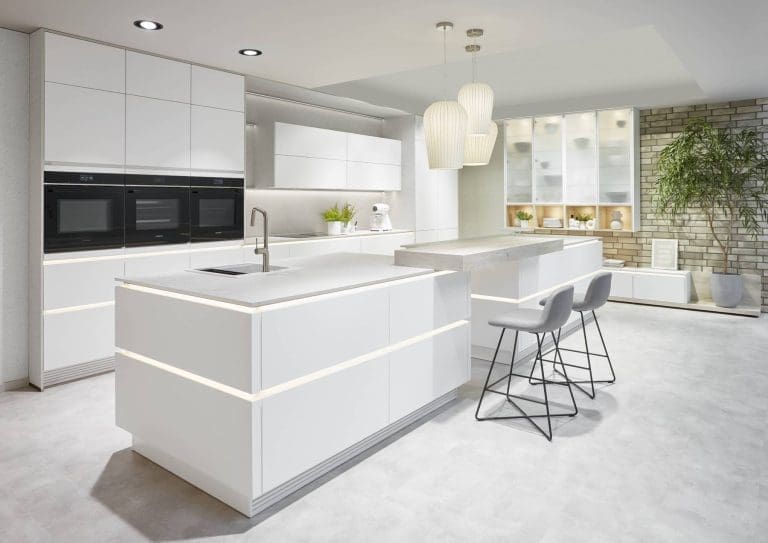
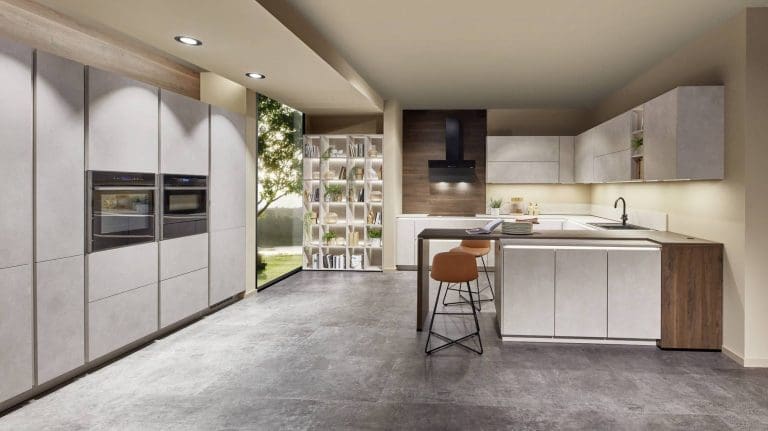
Popular kitchen brands such as Nobilia offer pre-configured ambient LED modules for tall units, creating a balanced glow across the room and reducing reliance on ceiling lights alone.

2. Task Kitchen Lighting: Essential for Safe and Accurate Cooking
Kitchen task lighting is focused illumination that supports safe meal preparation, precision cooking, and cleaning.
Where to Use Task Lighting
Install task lighting wherever you handle detailed work, including:
- Under wall cabinets above worktops
- Over hobs
- Inside larders
- Over islands where food preparation takes place
- Above sinks for clarity while washing vegetables or dishes
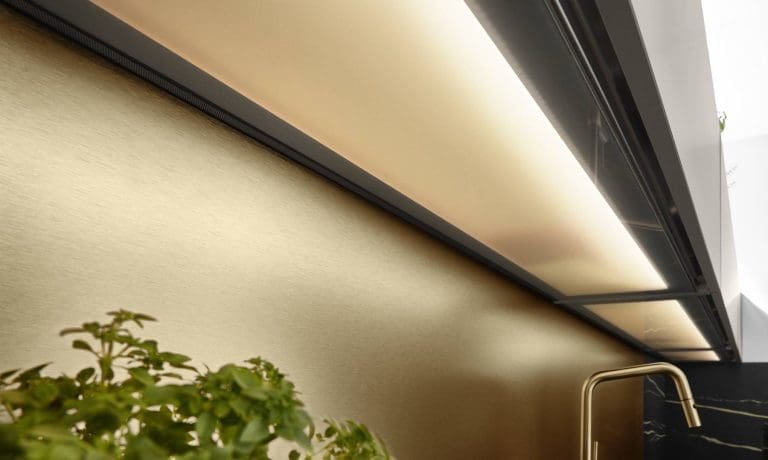
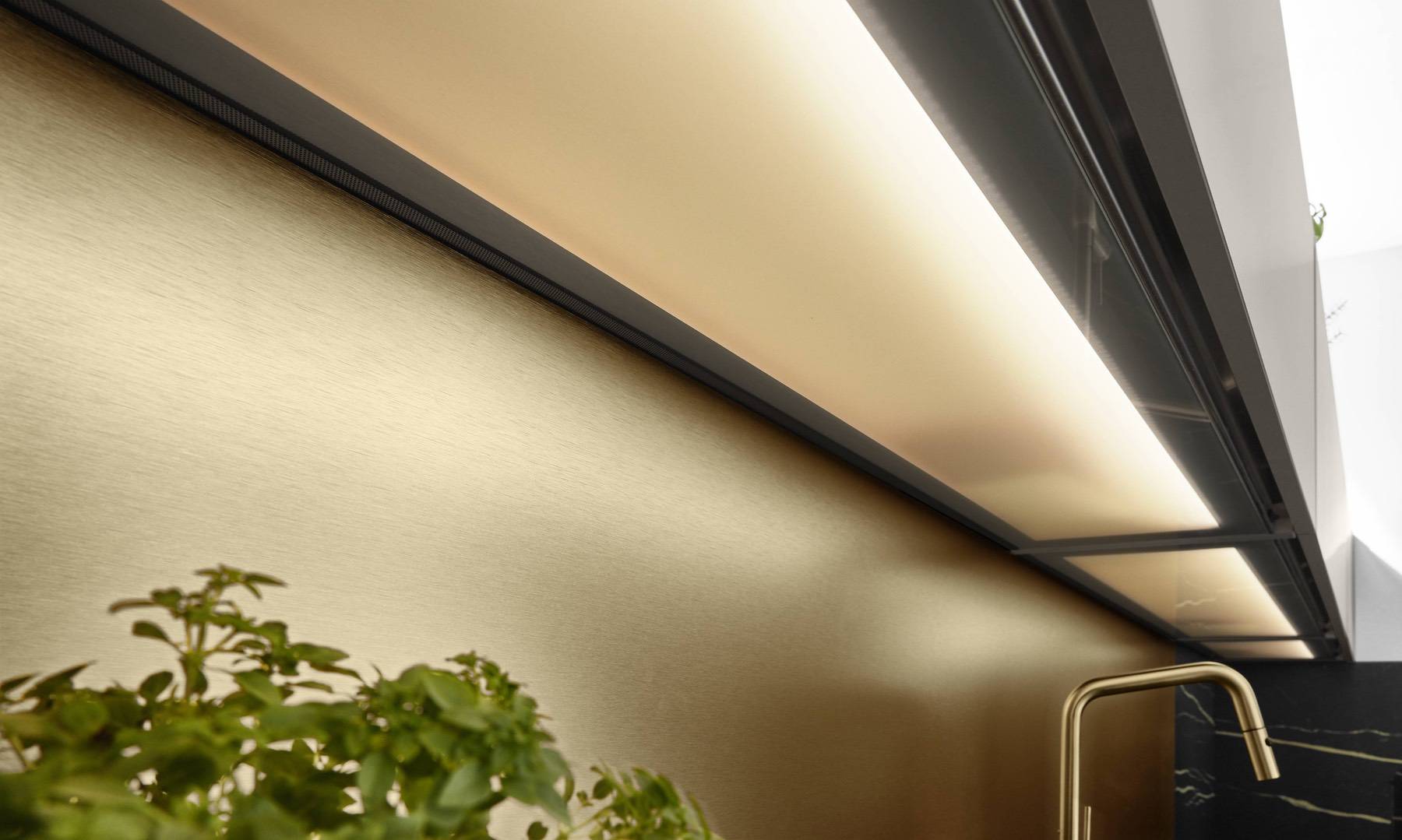
LED strip lighting or directional downlights are the most reliable options. Under-cabinet task lighting continues to be one of the most effective solutions because it eliminates shadows that overhead lights can cast across the worktops.
Professional Insight
German kitchen manufacturers such as Ballerina, Bauformat, and Brigitte are known for their advanced under-cabinet LED systems with diffusers that avoid harsh hotspots. If you’re choosing a handleless kitchen from Alku or JJO, adding discreet task lighting underneath the grip rails can create even illumination without visible fixtures.
Task lighting should always be bright, consistent, and positioned to reduce shadowing from your body while you prepare food. Neutral white light works well here because it gives clarity without feeling clinical.

3. Accent Lighting: Adding Depth and Detail
Accent lighting highlights architectural features, textures, and specific design elements within your kitchen. It works as a decorative layer that adds a sense of depth and interest. Accent lighting doesn’t need to be bright. Instead, it subtly draws the eye, enhances textures such as brushed matt finishes or light wood tones, and gives your kitchen character during the evening.
Where to Use Accent Lighting
Consider accent lighting for:
- Open shelving
- Glass-fronted display cabinets
- Plinth areas
- Recessed wall niches
- Over a drinks cabinet
- Around canopy hoods
- Above or below floating shelves
Professional Insight
If you’re considering modern handleless kitchen designs from Nobilia or Bauformat, plinth LEDs create a floating effect that lends a contemporary feel. In classic or shaker styles from Ashley Ann or JJO, softly lit display units elevate painted timber doors and bring warmth to the scheme.
Accent lighting is ideal for open-plan homes because it transitions your kitchen from a daytime workspace to a relaxed evening environment. It helps define zones without introducing harsh brightness.

4. Decorative Kitchen Lighting: The Style Statement
Decorative lighting for kitchens includes pendants, feature lamps, and statement fixtures that contribute to your overall aesthetic. These lights do more than illuminate your space — they express personality and shape the visual identity of your kitchen. Large pendants or sculptural designs create focus in the room and work as a design anchor. In properties with an extension, decorative lighting helps define the transition between original and new areas.
Where to Use Decorative Lighting
Popular placements include:
- Over kitchen islands
- Above dining tables
- At a breakfast bar
- In a seating nook
- Within vaulted or extended ceilings
Professional Insight
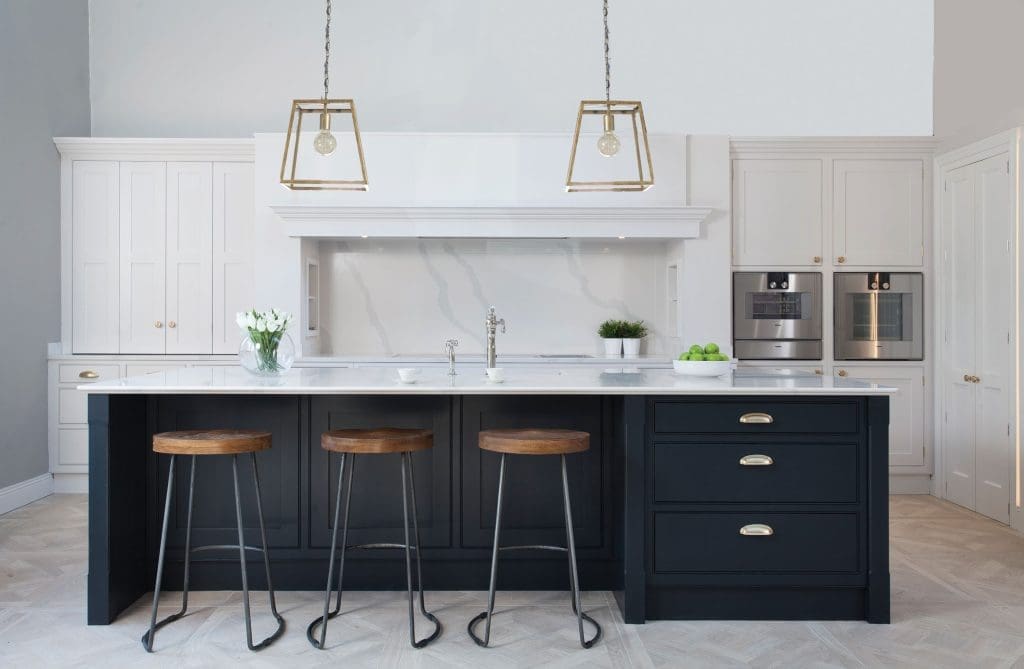
Your decorative lighting should complement the style of your chosen cabinetry. When selecting pendants for a kitchen island, keep scale in mind. Three evenly spaced small pendants work well for long islands, whilst one oversized pendant works better for compact layouts or where you want a bold focal point.
5. Integrated Cabinet Lighting: Subtle, Modern, and Highly Functional
Integrated lighting is becoming standard within well-designed kitchens. It sits within the furniture itself, giving you illumination exactly where you use it.
Where to Use Integrated Cabinet Lighting
This type of lighting works particularly well:
- Inside drawers
- Within tall larders
- In pantries
- Behind glass units
- Along handle rails
- Inside wall units that store small appliances
Drawer lighting makes everyday tasks smoother because you can see items immediately without relying on overhead lighting. Tall units benefit greatly from integrated LEDs because they remove dark corners inside large compartments.
Professional Insight
Kitchen manufacturers such as Ballerina, Bauformat, and Nobilia offer factory-installed LED modules that activate automatically when you open a door or drawer. These systems are discreet and add a touch of refinement to your storage. Alternatively, if you prefer a British manufacturer, Ashley Ann and JJO provide stylish glass-fronted cabinetry that pairs perfectly with integrated LED strips.
Integrated lighting also increases the perceived value of your kitchen because it feels thoughtful, polished, and aligned with high-quality craftsmanship.

Creating a Balanced Kitchen Lighting Plan
Now that you understand the five types of kitchen lighting, the next step is to combine them effectively. A layered lighting plan ensures your kitchen works for food preparation, socialising, and relaxation.
Key Considerations for Your Lighting Design
1. Understand how you use your kitchen.
If you cook often, put greater emphasis on task lighting. If your kitchen doubles as an entertaining space, decorative and accent lighting will be important.
2. Plan lighting early in the process.
Lighting layout should be determined before plastering or cabinetry installation. Integrated lighting, in particular, needs early planning.
3. Combine lighting temperatures carefully.
Warm white helps you relax, while neutral white supports clarity. A mix of the two gives you flexibility.
4. Add dimmers where possible.
Dimming options help transition your kitchen from morning brightness to relaxing evening light.
5. Consider smart lighting controls.
Simple systems allow you to adjust scenes, dimming levels, and zones with ease.

Practical Examples From Leading Manufacturers
Nobilia
Nobilia’s handleless kitchen designs work beautifully with integrated channel lighting. A soft LED strip running beneath the worktop line highlights the sleek silhouette without overpowering the room.
- Bauformat and Ballerina
These German brands are known for precision lighting systems. Under-cabinet LEDs with frosted diffusers create shadow-free worktops in both matt and high-texture finishes. - Alku and JJO
Both offer thoughtful storage lighting solutions, especially for pull-out larders and internal drawers. - Brigitte
Brigitte’s modern timber finishes look striking with warm accent lighting that enhances texture. - Ashley Ann
A great choice for classic or modern shaker kitchens, where softly lit display units elevate painted finishes.

Common Lighting Mistakes to Avoid
When you plan your kitchen lighting, keep the following in mind:
- Avoid relying solely on downlights; they can create shadows.
- Do not overlook lighting inside tall storage.
- Avoid mismatched temperatures across different fixtures.
- Do not place pendants too high above an island.
Making these adjustments ensures a polished and practical result.

Final Thoughts: Creating a Kitchen That Works Beautifully Day and Night
A well-lit kitchen is both functional and atmospheric. When you balance ambient, task, accent, decorative, and integrated lighting, you create a space that feels bright, comfortable, and tailored to everyday life. Whether you choose a sleek German kitchen from Nobilia or Bauformat or a warm British design from Ashley Ann or JJO, thoughtful lighting will elevate every detail.
Lighting influences how you cook, how you socialise, and how your kitchen feels at different times of day. When you take time to plan it, your new kitchen becomes more enjoyable, practical, and long-lasting — a space that supports modern living with clarity and style.