

U-Shaped Kitchen Layout: Benefits, Design Advice & Planning Guide
A U-shaped kitchen layout is one of the most efficient and storage-rich configurations available. Built around three connected runs of cabinetry, it creates a defined cooking zone that maximises worktop space while keeping everything within easy reach.
For many UK homes — from period terraces to modern open-plan extensions — a well-designed U-shaped kitchen offers exceptional functionality. However, like any kitchen layout, it requires careful planning to avoid feeling enclosed or restrictive.
This guide explores how a U-shaped kitchen works, when it’s most suitable, and how to design one that enhances both flow and usability.
What Is a U-Shaped Kitchen?
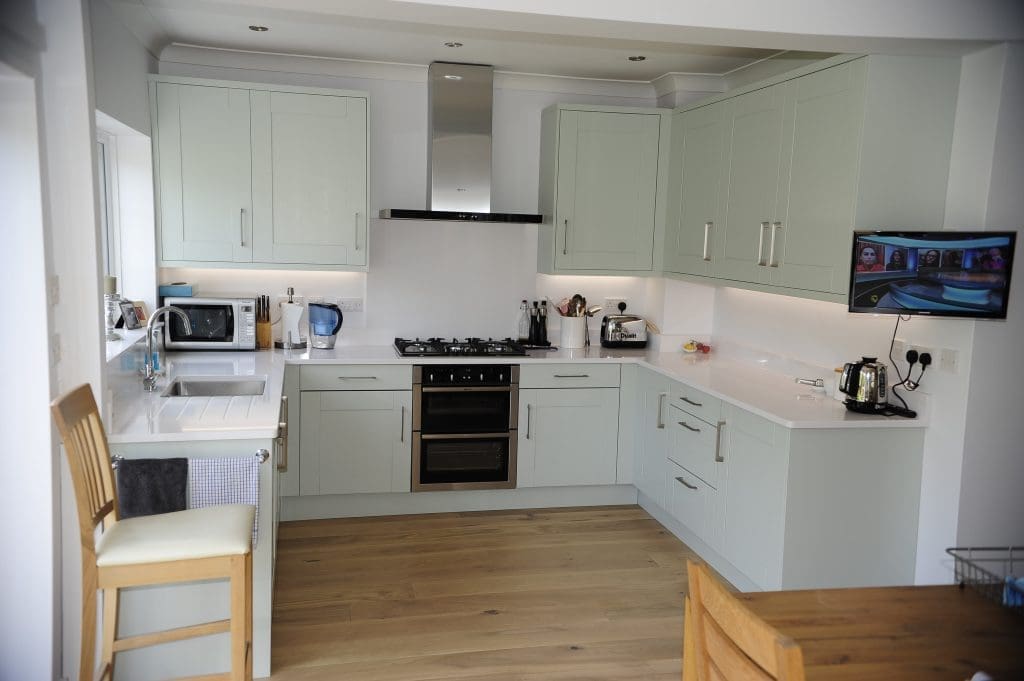
A U-shaped kitchen is a layout featuring three connected runs of cabinets and worktops forming a “U” shape. It provides extensive surface area and storage while creating a clearly defined cooking zone, making it ideal for medium-sized enclosed kitchens.

How a U-Shaped Kitchen Layout Works in Practice
A U-shaped kitchen creates a self-contained working environment, with three connected runs of cabinetry forming a highly efficient perimeter. Rather than relying on a central feature such as a kitchen island, the layout concentrates preparation, cooking and cleaning areas along continuous worktop surfaces.
This configuration allows you to:
- Establish clearly defined preparation, cooking and cleaning zones
- Keep frequently used items within easy reach
- Maintain generous continuous worktop space
- Maximise wall space for storage
Because the cook is positioned within the centre of the “U”, movement between zones is reduced, helping streamline everyday tasks. In enclosed kitchens, this can feel particularly efficient and focused. In larger spaces, one side of the layout can remain partially open to maintain a sense of connection with adjacent areas.

Why U-Shaped Kitchens Are So Efficient
1. Exceptional Workspace on Three Sides
One of the biggest advantages of a U-shaped kitchen is uninterrupted surface area. With three continuous runs, you can dedicate separate zones for:
- Preparation
- Cooking
- Cleaning
- Storage
This separation reduces clutter and improves task efficiency — especially in busy households.
2. High Storage Capacity
Because cabinetry spans three walls, U-shaped kitchens often provide more storage than L-shaped or galley layouts.
This makes them ideal for:
- Large families
- Avid home cooks
- Homes with limited utility storage
With the right internal solutions — pull-out larders, carousel corner units, deep drawers — even corner areas become usable.
3. Strong Zoning for Modern Workflow

While the traditional “work triangle” is often referenced, contemporary kitchen design focuses more on zoning — grouping tasks logically rather than relying solely on geometric positioning.
In a U-shaped kitchen, zoning can be clearly defined:
- One run for cooking
- One run for preparation
- One run for cleaning and storage
This reduces unnecessary movement and supports a smoother daily workflow.
4. Ideal for Enclosed or Semi-Enclosed Kitchens
In properties where the kitchen remains a separate room — common in many UK homes — a U-shaped layout uses wall space effectively without needing the footprint of an island.
It keeps activity concentrated and contained, which can feel efficient rather than exposed.

When Does a U-Shaped Kitchen Work Best?
A U-shaped layout is particularly suited to:
- Medium-sized enclosed kitchens
- Homes requiring extensive storage
- Households with two people cooking simultaneously
- Spaces where an island would be too intrusive
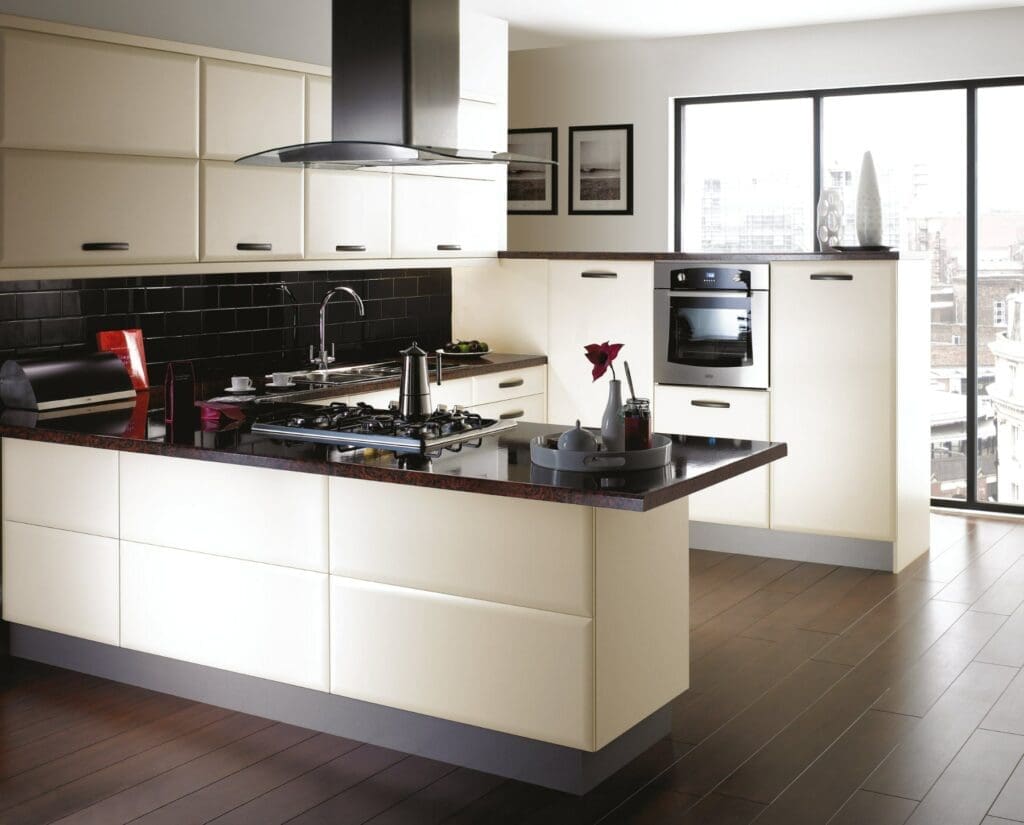
It can also work well in larger open-plan layouts when combined with an island or peninsula extension.

Can You Add a Kitchen Island to a U-Shaped Kitchen?
Yes — but only if space allows.
To incorporate an island within a U-shaped layout, you’ll typically need:
- At least 3.6–4 metres of width
- 900–1100mm circulation space between runs
In many cases, homeowners opt instead for a peninsula extension, which connects to one arm of the “U” and requires less clearance.

Design Considerations for a U-Shaped Kitchen
Maintain Comfortable Circulation
The distance between opposing cabinet runs should ideally be:
- Minimum: 900mm
- Ideal: 1000–1200mm
Too narrow and the space feels cramped. Too wide and efficiency is lost.
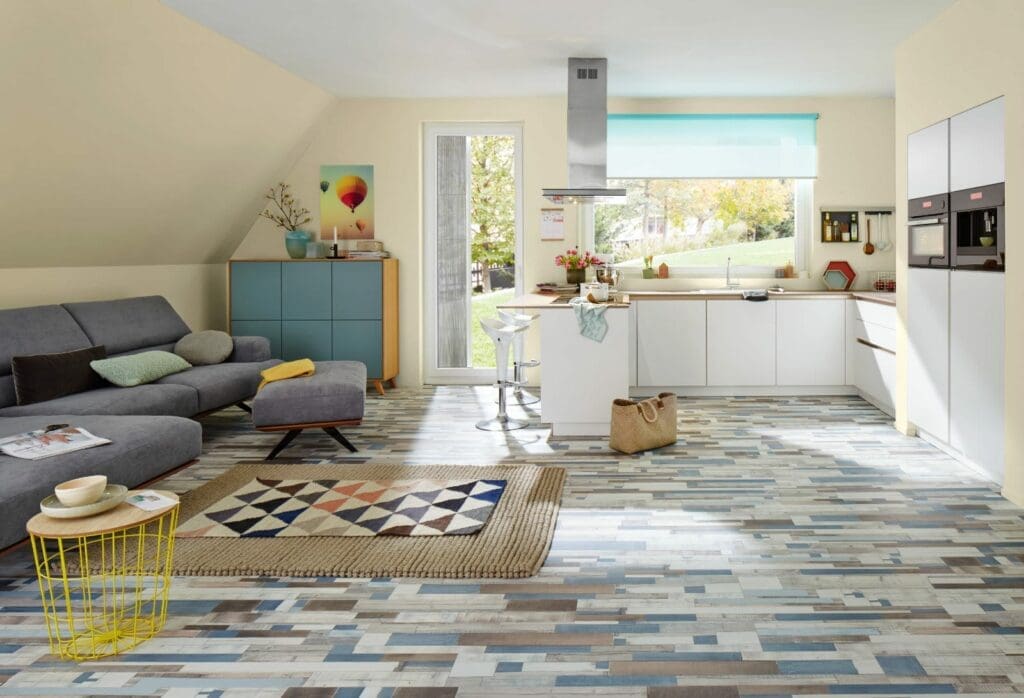
Avoid an Overly Enclosed Feeling
Because the layout wraps around three sides, smaller U-shaped kitchens can feel boxed in.
To counter this:
- Use lighter cabinetry colours
- Consider open shelving on one wall
- Incorporate under-cabinet lighting
- Keep wall units minimal on at least one side
Plan Corner Storage Carefully
Corner cabinets are essential in U-shaped layouts. Options include:
- LeMans pull-outs
- Carousel systems
- Deep drawer corner solutions
Poorly designed corners waste valuable space.
Consider Partial Open U-Layouts
In open-plan homes, one side of the “U” can extend slightly into the room, acting as a semi-peninsula and creating subtle separation without full enclosure.

Potential Drawbacks of a U-Shaped Kitchen
While highly practical, this layout isn’t suitable for every home.
1. Can Feel Enclosed in Smaller Rooms
Without careful planning, the three-sided structure may feel restrictive.
2. Higher Cabinetry Costs
Three full runs of cabinetry typically require more units and worktop material compared to simpler layouts.
3. Limited Social Interaction (Unless Adapted)
In fully enclosed U-shaped kitchens, the cook may face inward rather than outward, reducing connection with adjacent living areas.
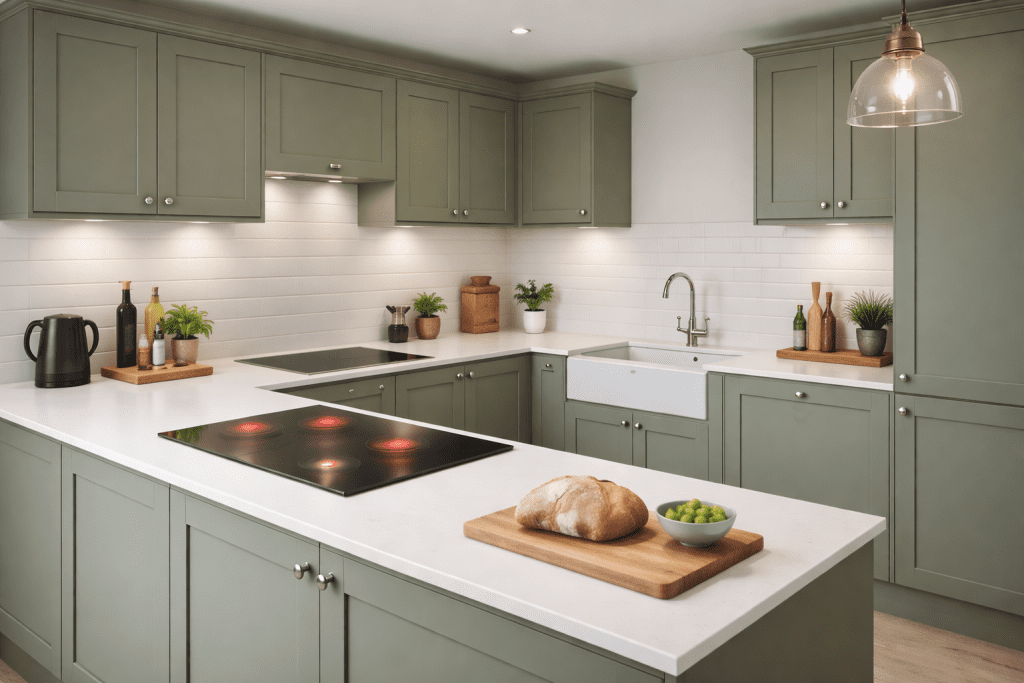
U-Shaped vs L-Shaped vs Galley: How Does It Compare?
- U-shaped kitchens offer maximum storage and surface area.
- L-shaped kitchens create a more open feel and integrate easily with islands.
- Galley kitchens are highly efficient in narrow spaces.
The right layout depends on room proportions, lifestyle needs, and circulation requirements.
Is a U-Shaped Kitchen Right for You?
A U-shaped kitchen works best when:
- You prioritise storage and prep space
- You prefer defined working zones
- You have adequate width for comfortable circulation
- You don’t require a large central island
When properly designed, it offers one of the most practical kitchen layouts available.
Is a U-Shaped Kitchen Right for You?
A U-shaped kitchen layout remains one of the most practical and storage-efficient configurations available, particularly in medium-sized enclosed kitchens. When thoughtfully planned, it offers generous surface space, clear zoning, and a highly functional workflow that supports everyday cooking as well as busier family life. The key is proportion — ensuring adequate circulation space and integrating smart storage solutions to prevent the layout from feeling enclosed. With careful design, a U-shaped kitchen can deliver both structure and flexibility, creating a space that feels organised, efficient, and tailored to how you actually use your home.
Contact your local Kitchen Specialist today to find your ideal U-shaped kitchen!
FAQ’s: U Shaped Kitchens
1. How wide should a U-shaped kitchen be?
Ideally, allow at least 900–1000mm between opposing cabinet runs to ensure comfortable movement and appliance access.
2. Are U-shaped kitchens suitable for small kitchens?
They can work in smaller kitchens if proportions are carefully planned. However, narrow U-shaped layouts may feel restrictive if circulation space is insufficient.
3. Can you add an island to a U-shaped kitchen?
Yes, but only if the room is wide enough to maintain at least 900–1100mm clearance around the island.
4. Do U-shaped kitchens improve workflow?
Yes. When properly zoned, they minimise movement between preparation, cooking, and cleaning areas.
5. Are U-shaped kitchens outdated?
No. They remain one of the most practical layouts, particularly in homes where storage and surface area are priorities.
Author Note
This guide has been developed by the My Kitchen Specialist editorial team in collaboration with approved independent kitchen retailers across the UK. The insights reflect practical layout planning experience across German and British kitchen brands, ensuring the advice is grounded in real-world kitchen design rather than theory alone.