
Floor to Ceiling Kitchen Cabinets: Ultimate Guide to Stylish & Practical Storage
Updated February 2026.
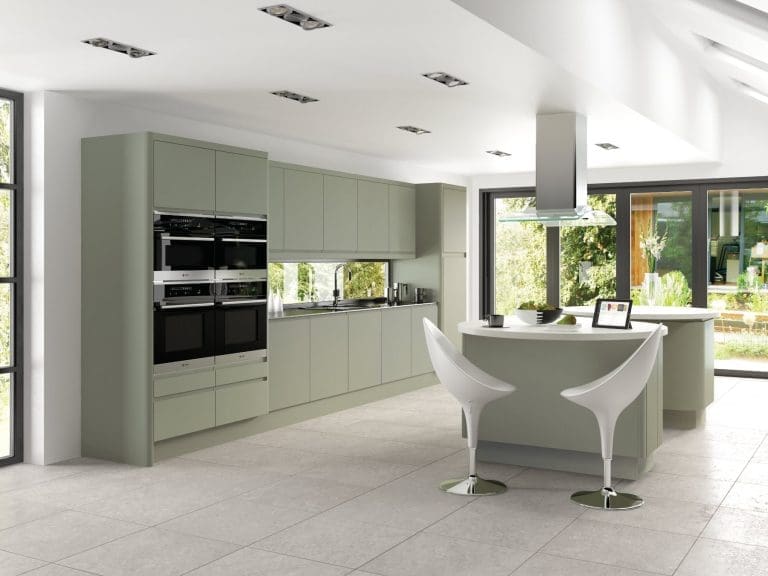
Floor to ceiling kitchen cabinets have become one of the most talked-about storage solutions in UK kitchens today. Seen increasingly in both contemporary and traditional design styles, these tall units offer exceptional storage capacity while creating a sleek, uninterrupted look that elevates a kitchen’s overall aesthetic. Whether you’re tackling limited space, seeking a more organised workflow, or simply want a timeless, cohesive finish, understanding how floor to ceiling kitchen cabinets work — and why they’re so popular — can help you make better planning decisions.
Across the UK, homeowners are prioritising functionality as much as style, and floor to ceiling storage is one of the most effective ways to tick both of these boxes. These cabinets make full use of vertical space, eliminate awkward gaps above conventional units and can be tailored to suit a range of design preferences — from modern handleless kitchens to classic shaker-style looks. With practical insights from across the My Kitchen Specialist network, this guide explains what you need to know about floor to ceiling kitchen cabinets, how they can work in your layout and what to consider before you commit.

What Are Floor to Ceiling Kitchen Cabinets?
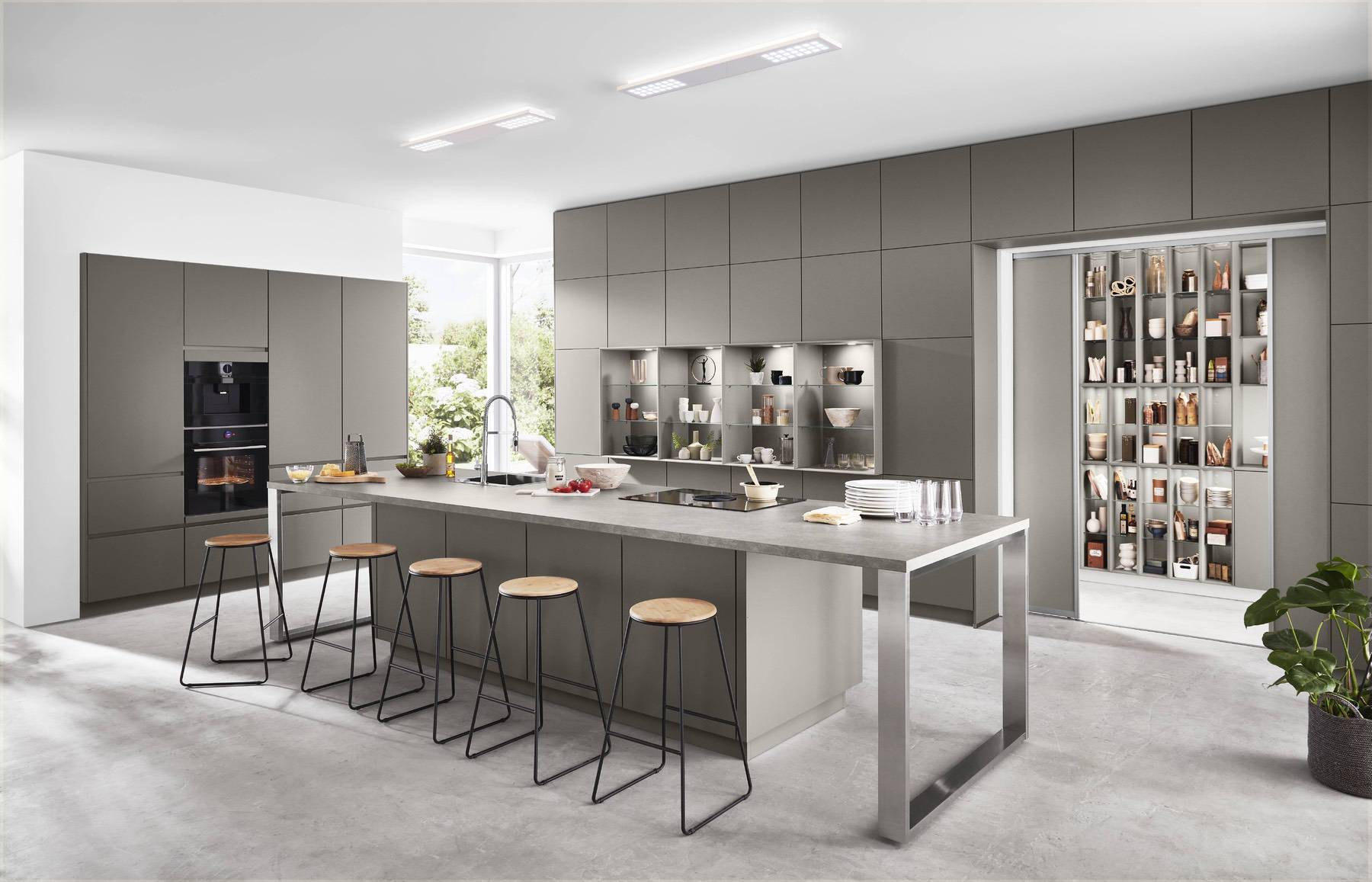
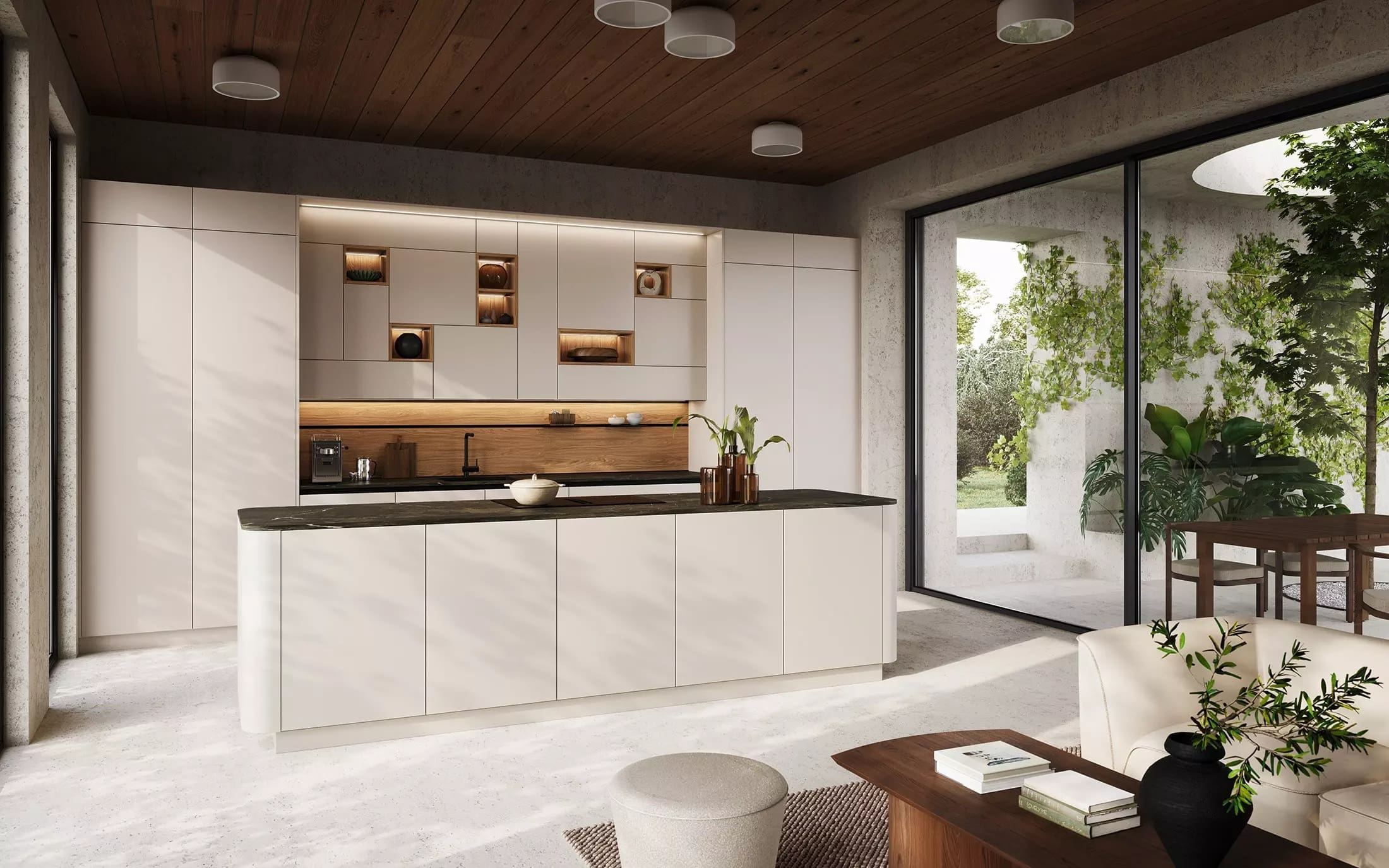
Floor to ceiling kitchen cabinets are tall storage units that extend from the kitchen floor all the way up to the ceiling. Unlike standard cabinets, which leave a gap above the top units, floor to ceiling cabinets maximise vertical space, offering significantly more storage and a streamlined appearance. This design approach is often used to improve organisation, reduce visual clutter and enhance the overall efficiency of kitchen storage. They can be customised with internal shelving, pull-out units and specialised organisers.
Why Choose Floor to Ceiling Cabinets?
Floor to ceiling cabinets are more than a design feature — they’re a strategic storage solution. Key benefits include:
- Maximised Storage Space: By using every available inch of vertical space, these cabinets significantly increase storage capacity, helping to clear clutter from worktops and open shelving.
- Streamlined Appearance: Continuous cabinetry from floor to ceiling creates a cohesive, architecturally clean look that suits contemporary and classic kitchens alike.
- Improved Organisation: Custom internal fittings such as adjustable shelves, deep drawers and pull-outs help tailor the space to your items — from storing rarely used appliances to keeping everyday dishes accessible.

Design Options and Customisation
As with any kitchen storage solutions, floor to ceiling cabinets can be fully customised to suit your kitchen’s style, size and functional needs. Key design considerations include:
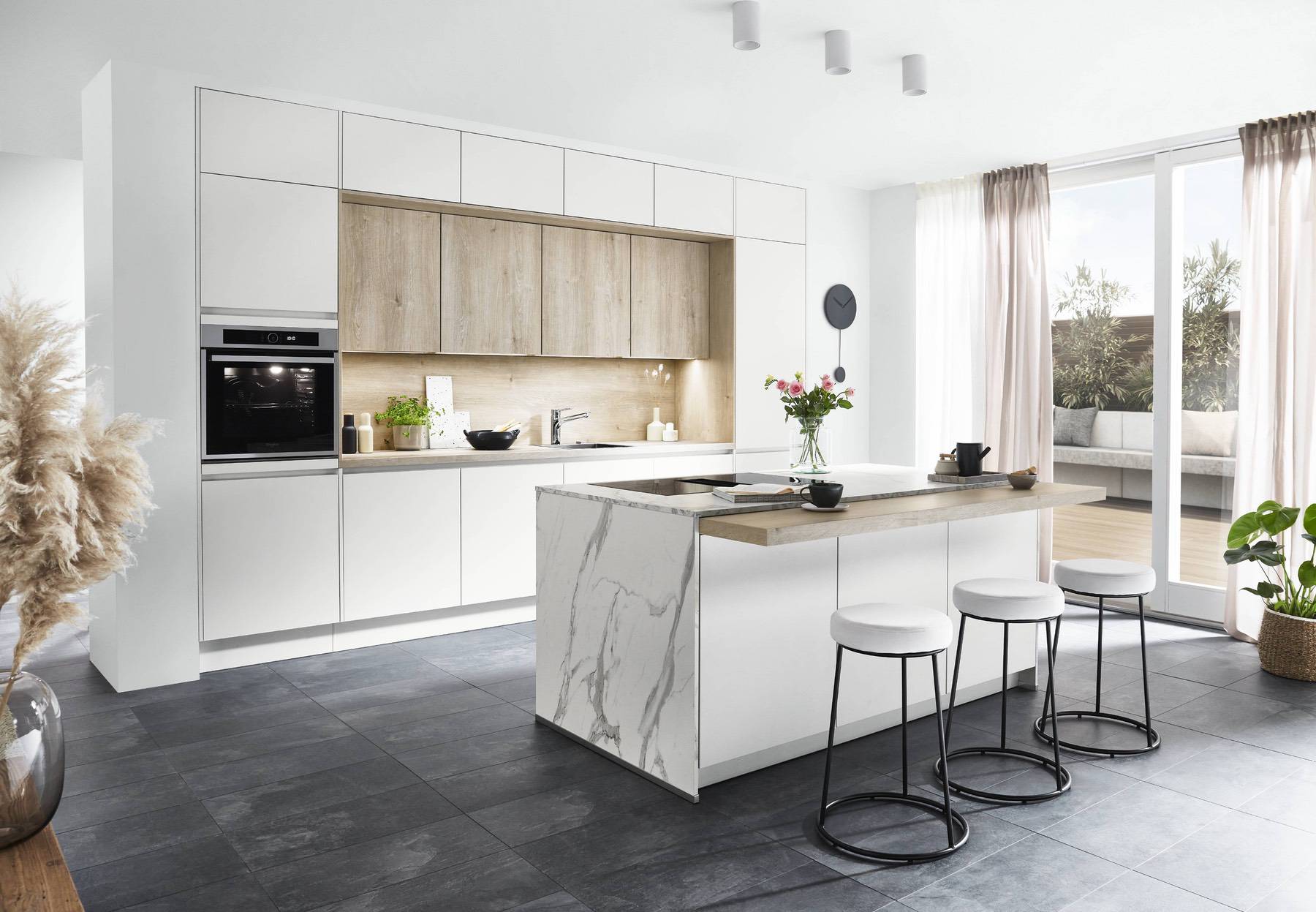
Cabinet Fronts and Finishes
- High-Gloss Laminates: Reflect light and create a sleek, modern look.
- Matt Textures: Offer a subtle, tactile finish that feels sophisticated and understated.
- Wood-Effect Finishes: Bring warmth and traditional charm without overwhelming the space.
Choosing the right finish helps tie the cabinets into the broader design — whether you’re aiming for contemporary simplicity or classic character, style and practicality go hand in hand with intentionally chosen cabinetry.
Integrated Handles or Handleless Systems
Floor to ceiling kitchen cabinets work well in designs both with handles and without. When looking at options, consider:
- Integrated Handles: Provide a minimalist look while retaining a touch of detail.
- Handleless (Push-to-Open or Groove): Enhance a seamless appearance and can make the space feel more open.
Both options help maintain clean lines, but your choice will influence how the cabinets read visually in the room.

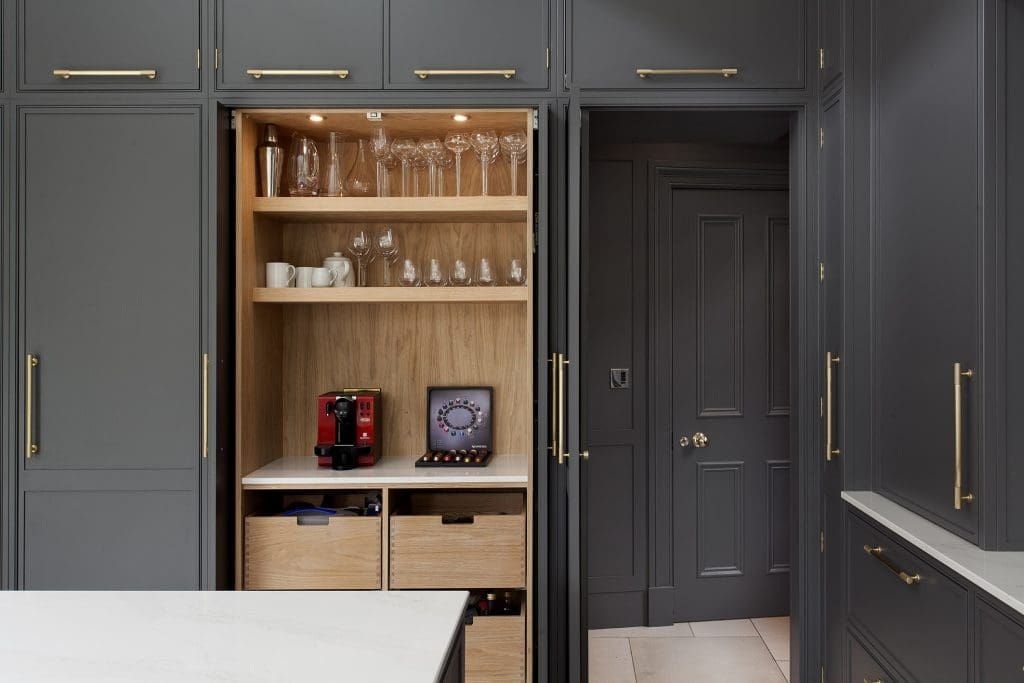
Internal Fitments and Storage Features
The real power and practicality of floor to ceiling cabinets lies inside, including:
- Adjustable shelves for flexible storage
- Pull-out trays and larders for easy access
- Tall pantries with dedicated zones for dry goods
These internal features help to keep everything organised and accessible, removing the need for multiple smaller storage units scattered around the kitchen.
How to Integrate Floor to Ceiling Cabinets Into Different Kitchen Layouts
Choosing how and where to place these tall units depends on the layout and everyday use of your kitchen:
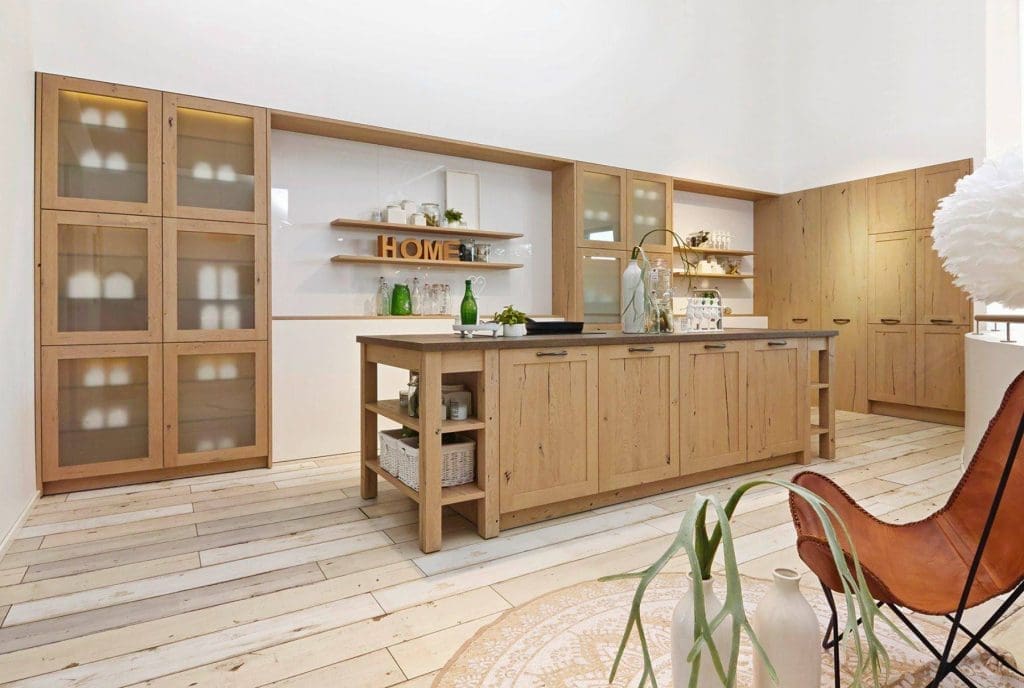
L-Shaped or U-Shaped Kitchens
Floor to ceiling cabinets can anchor an L-shaped or U-shaped layout by:
- Providing a substantial bank of storage along one wall
- Framing cooking or utility areas with practical storage
- Creating a visual balance across the kitchen
This approach suits homeowners who want a blend of practical storage and uninterrupted design flow.
Galley Kitchens
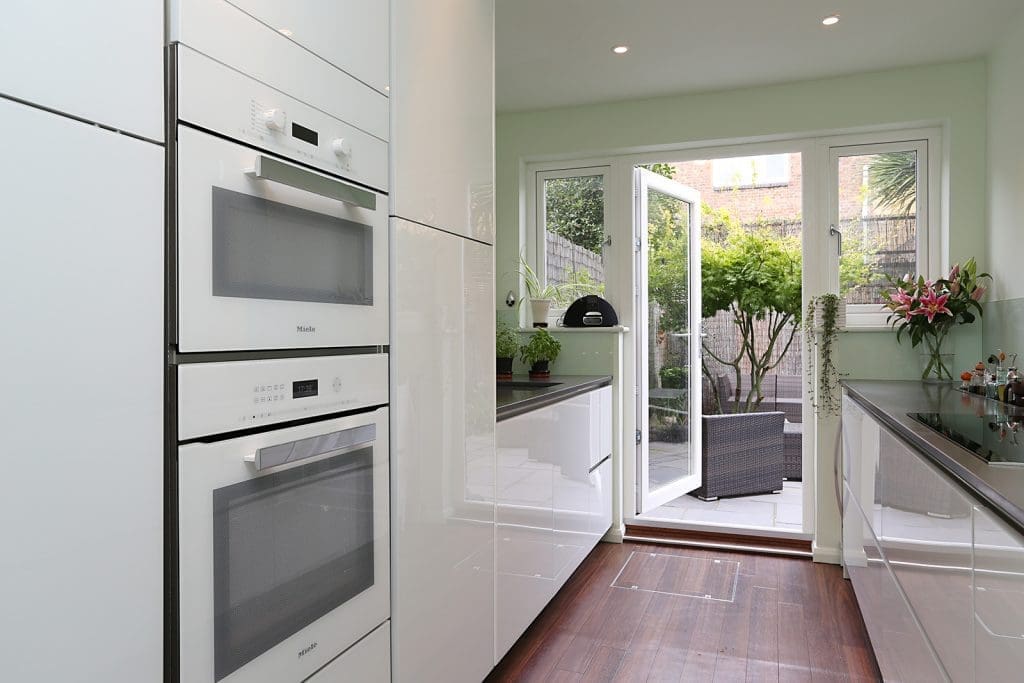
In narrower layouts like galley kitchens, floor to ceiling kitchen cabinets can:
- Maximise vertical storage without encroaching on floor space
- Help maintain circulation paths by eliminating open shelving or additional standalone units
This is a smart choice for compact homes or where space optimisation is essential.
Open-Plan Kitchens
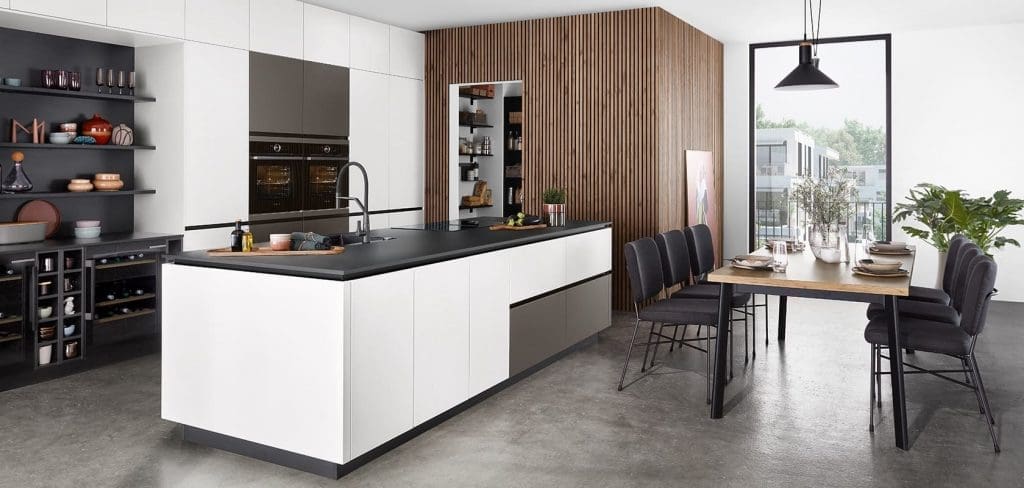
In open-plan spaces, these cabinets can serve as:
- A tall backdrop for appliances or pantry zones
- A subtle visual anchor defining the kitchen area within a larger living space
The continuous vertical line helps keep the kitchen visually cohesive while supporting functional zoning.
Installation Considerations
When planning floor to ceiling cabinets, you should think carefully about:
- Ceiling Height: Measure accurately — variations in ceiling levels may require bespoke units to avoid gaps.
- Appliance Integration: Plan how tall ovens, microwaves and fridge-freezers fit within the design.
- Lighting: Consider under-cabinet and internal lighting to illuminate darker corners and enhance usability.
Proper planning ensures that these tall cabinets not only fit perfectly but also complement the rest of your kitchen layout.

Care and Maintenance
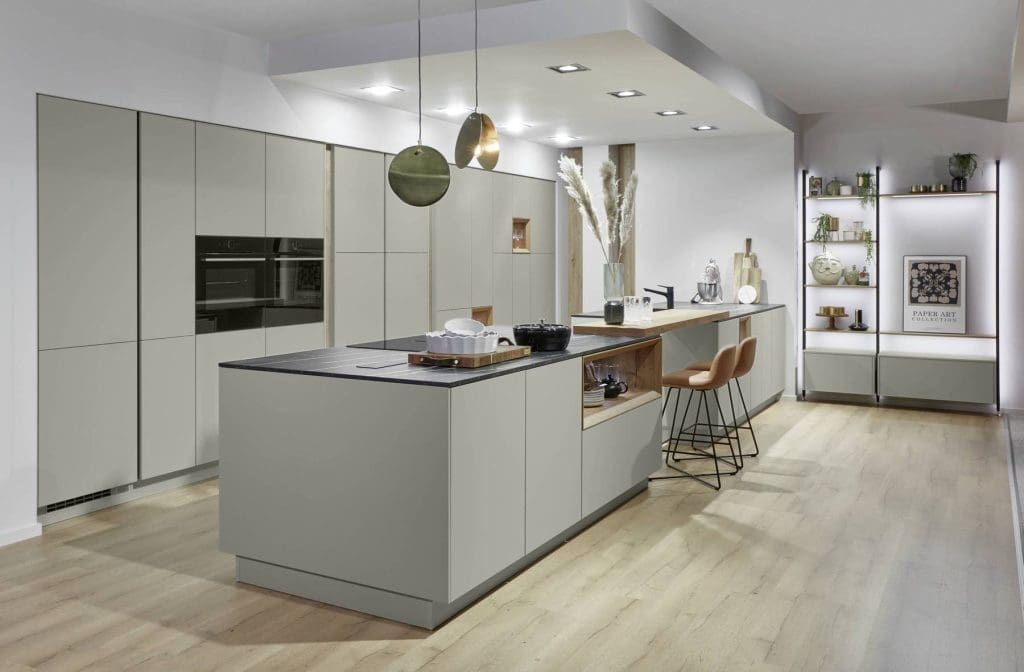
One practical advantage of floor to ceiling cabinets is ease of maintenance, including:
- Eliminating dust build-up above units
- Fewer exposed horizontal surfaces
- Easy cleaning with regular wiping using a mild detergent
Well-chosen materials and finishes will also resist wear and tear, meaning your cabinetry remains looking fresh for years.
Get Tailored Advice
If you’re considering floor to ceiling kitchen cabinets for your project, speaking with a local specialist can help you explore the best layout options and finishes for your space. They can provide personalised insight and help you balance style with functionality, ensuring your cabinets work perfectly for your needs.

FAQs: Floor to Ceiling Kitchen Cabinets
1. What are the main benefits of floor to ceiling kitchen cabinets?
They maximise storage by using every vertical inch, create a unified look, reduce clutter and can be highly customisable with internal fittings.
2. Are floor to ceiling cabinets suitable for small kitchens?
Yes — in compact spaces, they make excellent use of available height without reducing valuable floor area, keeping the kitchen organised and efficient.
3. How do I choose the right finish for tall cabinets?
Consider how the finish interacts with light — gloss for brightness and reflection, matt for softness and warmth, or wood-effect for classic character.
4. Can floor to ceiling kitchen cabinets integrate appliances?
Absolutely — tall units are ideal for housing ovens, fridge-freezers and pantries, making the kitchen more functional and streamlined.
5. Do these cabinets require special installation?
Yes — precise measurement and expert installation help ensure a seamless fit, particularly in rooms with uneven ceilings.
6. How easy are they to clean?
Very easy — with fewer horizontal gaps and a continuous surface, routine cleaning is straightforward with a damp cloth and mild detergent.
Final Thoughts
Floor to ceiling kitchen cabinets offer a compelling mix of function and style, turning storage into a seamless design feature that complements both modern and traditional kitchens. By making the most of vertical space and supporting well-organised interiors, these cabinets can transform how your kitchen feels and works day-to-day.
If you’re ready to explore how floor to ceiling storage can enhance your space, talk to your nearest My Kitchen Specialist today to discuss options, layouts and finishes that suit your home.
Written by My Kitchen Specialist
Reviewed by a kitchen design consultant with experience working on UK homes