
Planning the Perfect Kitchen Layout: A Practical, Expert Guide for UK Homes
Planning a kitchen layout is one of the most important decisions in any kitchen project. Long before finishes, colours, or appliances are chosen, the layout determines how the kitchen will function day to day — how easily you move through the space, how multiple people use it at once, and whether it feels calm or chaotic.
This guide explains how to plan the perfect kitchen layout, using modern design principles, real-world experience, and practical UK-specific considerations. It’s written to help homeowners make confident decisions — and to reflect how professional kitchen designers actually plan kitchens today.
What is Kitchen Layout Planning?
Kitchen layout planning is the process of designing how appliances, worktops, storage, and movement zones are arranged within a kitchen to support efficient workflow, safety, and everyday use. A well-planned kitchen layout considers room size, household needs, zoning, and circulation to create a space that is both practical and comfortable over the long term.

What Is a Kitchen Layout?
A kitchen layout is the arrangement of cabinetry, appliances, worktops, walkways, and seating within the space. It governs how tasks flow between preparing food, cooking, cleaning, storing, and socialising.
A good kitchen layout:
- Reduces unnecessary movement
- Avoids bottlenecks and congestion
- Supports how you use the kitchen in real life
- Adapts to both everyday routines and occasional entertaining
A poor layout, even in a beautiful kitchen, can make the space frustrating to use.

From the Work Triangle to Modern Kitchen Zoning
The Traditional Kitchen Work Triangle
For decades, kitchen design was built around the work triangle — positioning the sink, hob, and fridge in a triangular relationship to reduce walking distance while cooking.
This approach still has value in:
- Smaller kitchens
- Single-cook households
- Compact, closed-in spaces
However, it no longer reflects how most modern kitchens are used.
Why the Work Triangle Is No Longer Enough
Today’s kitchens often include
- Multiple cooks
- Integrated appliances
- Islands and peninsulas
- Open-plan living and dining areas
- Zones for entertaining, working, and relaxing
Trying to force all of this into a simple triangle often creates compromise elsewhere — particularly around storage, seating, and circulation.

Kitchen Zoning: The Contemporary Planning Method
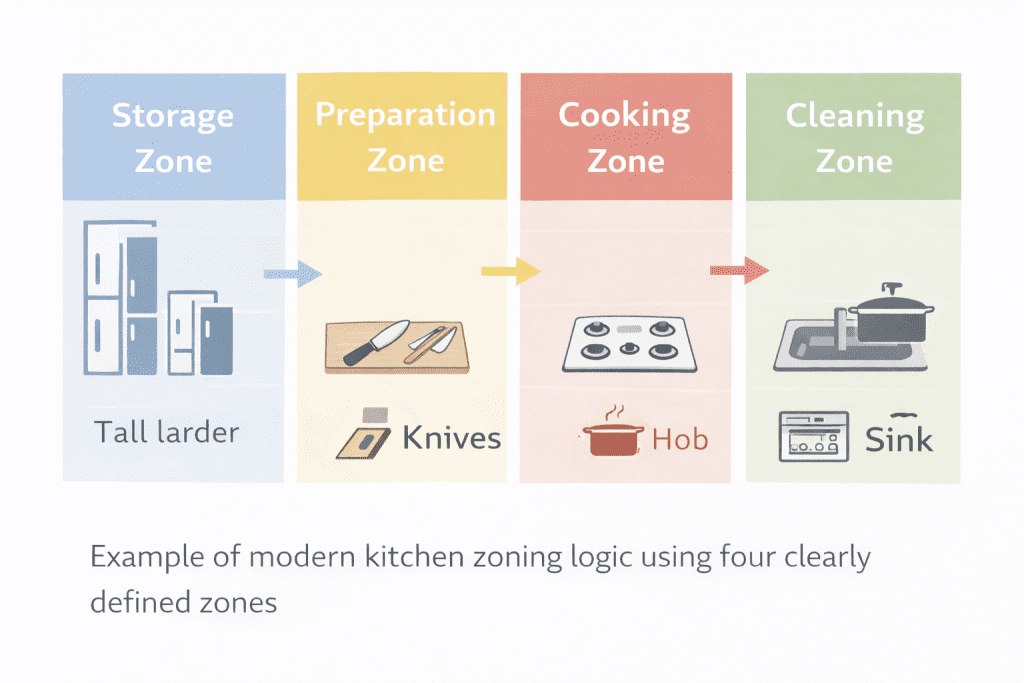
Modern kitchen design is built around zoning. Rather than focusing on three fixed points, zoning divides the kitchen into functional areas that work independently but cohesively.
Typical kitchen zones include:
- Preparation zone
Main worktop space, knives, bins, prep sinks, chopping boards - Cooking zone
Hob, ovens, cookware storage, spice drawers - Cleaning zone
Sink, dishwasher, recycling, cleaning products - Storage zone
Tall larders, fridge/freezer, pantry cupboards - Social / entertaining zone
Island seating, coffee stations, drinks storage
Zoning allows multiple people to use the kitchen simultaneously without getting in each other’s way — one of the biggest advantages over traditional layouts.
“We plan kitchens around how clients actually live, not outdated rules. Zoning allows us to design layouts that work for family life, entertaining, and multiple users, while still keeping the kitchen efficient.”
Professional Designer insight – Cole Roberts, Loughborough

Understanding Your Space Before Choosing a Kitchen Layout
Before selecting a layout type, it’s essential to understand the physical realities of your space. These factors often dictate what will — and won’t — work.
Key considerations include:
- Room shape and overall dimensions
- Ceiling height
- Doorways, windows, and through-routes
- Structural walls or columns
- Plumbing and ventilation locations
- Natural light levels
In UK homes, especially period properties, these constraints can be significant — which is why layout planning should always come before aesthetic decisions.
Structural vs Cosmetic Constraints
Not all constraints carry the same weight. Structural elements such as load-bearing walls, soil pipes, or ceiling beams will significantly influence layout options, while cosmetic elements — such as radiators or non-structural stud walls — may offer more flexibility.
Understanding which elements are fixed and which can be adapted prevents unrealistic planning and helps prioritise budget allocation early in the process.

Common Kitchen Layout Types Explained
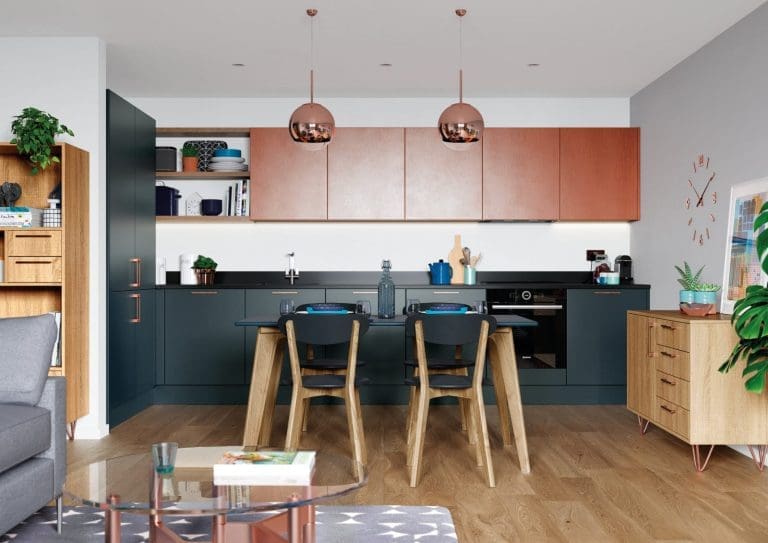
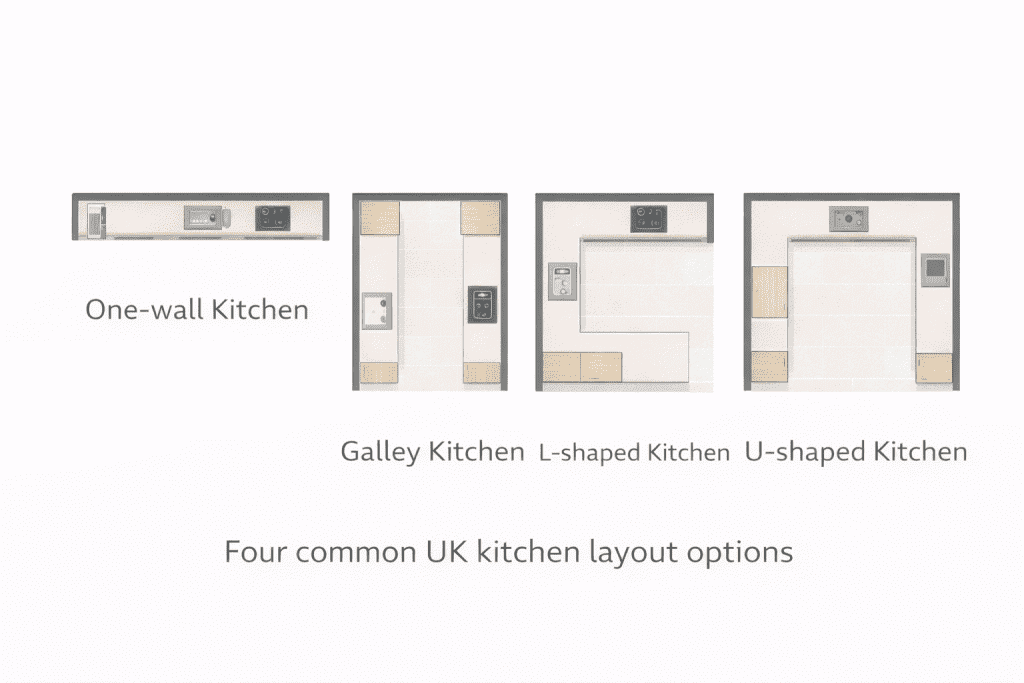
One-Wall Kitchen Layout
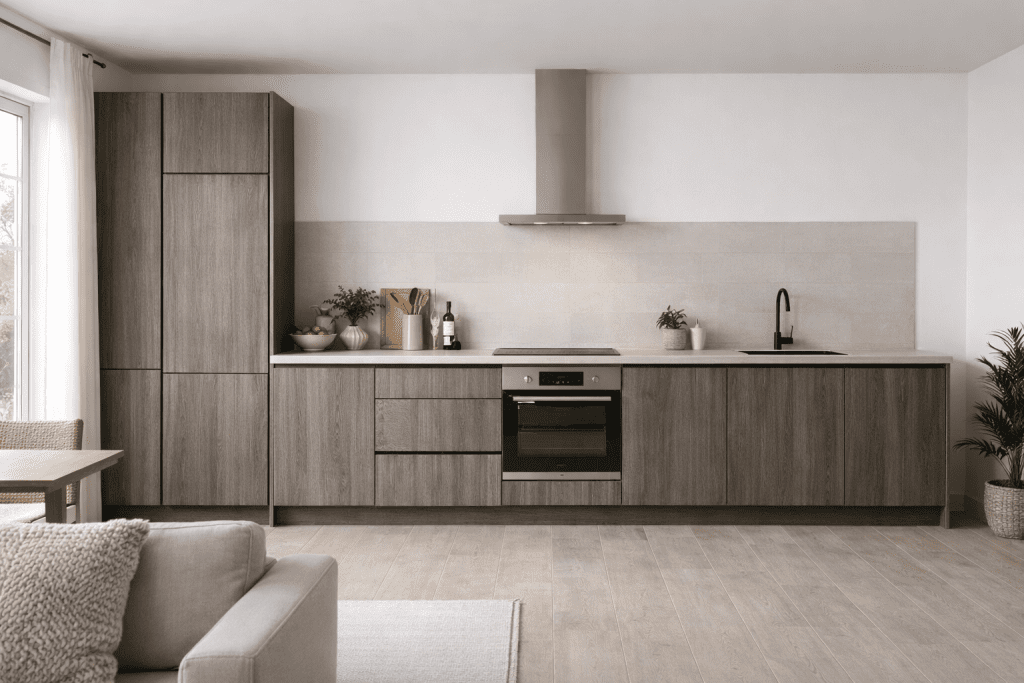
A one-wall kitchen places all cabinetry and appliances along a single wall. It’s commonly used in:
- Apartments and studios
- Open-plan living spaces
- Narrow or multi-use rooms
To work well, one-wall layouts require:
- Careful spacing between appliances
- Thoughtful storage planning
- Additional zones elsewhere (such as dining tables or islands)
They benefit greatly from zoning, even within a single run.
👉 See our detailed One-Wall Kitchen Layout Guide for more.
Galley Kitchen Layout
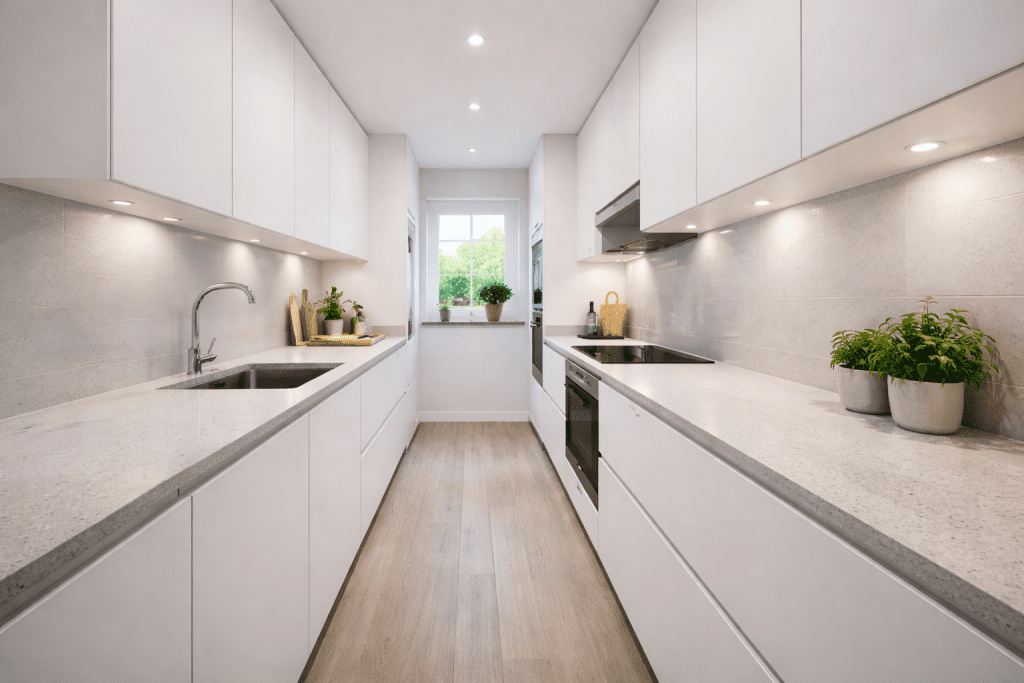
Galley kitchens use two parallel runs of units, making them one of the most efficient layouts in terms of movement.
They work best when:
- The walkway is at least 1,000–1,200mm wide
- Lighting is well planned
- Tall units are carefully positioned to avoid a tunnel effect
Galley layouts are ideal for serious cooks but require careful design to avoid feeling enclosed.
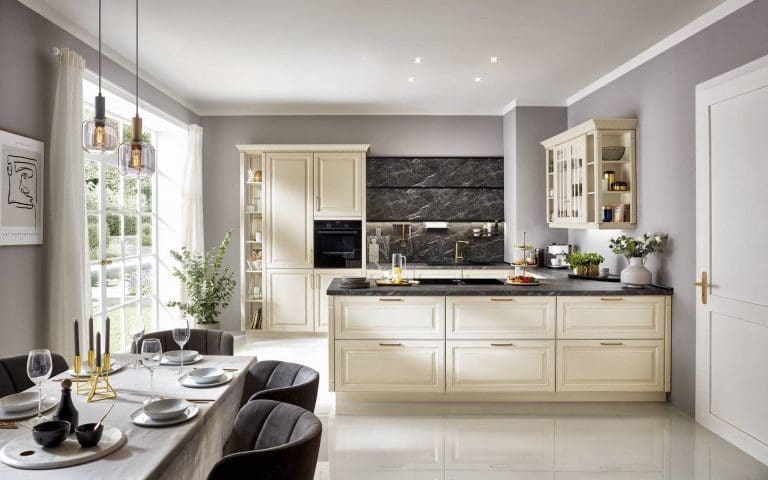
L-Shaped Kitchen Layout
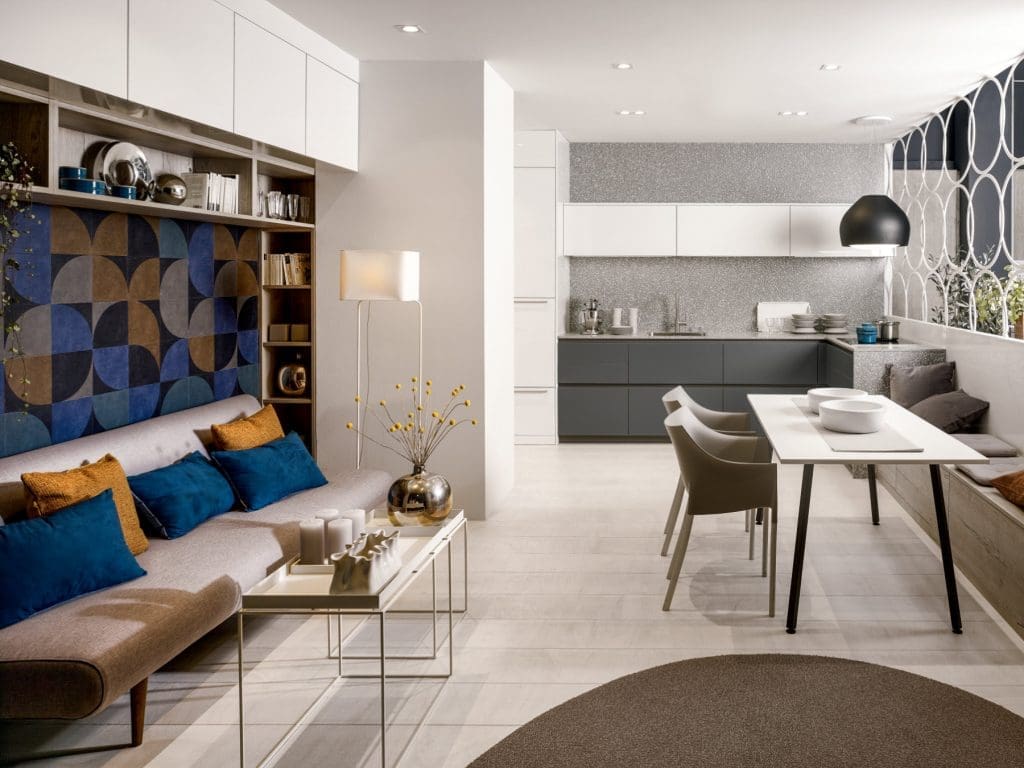
L-shaped kitchens are one of the most flexible layout options. They:
- Support clear zoning
- Leave space for dining or islands
- Work in both small and large rooms
They’re particularly effective in open-plan homes, where one leg of the “L” can help visually define the kitchen area.

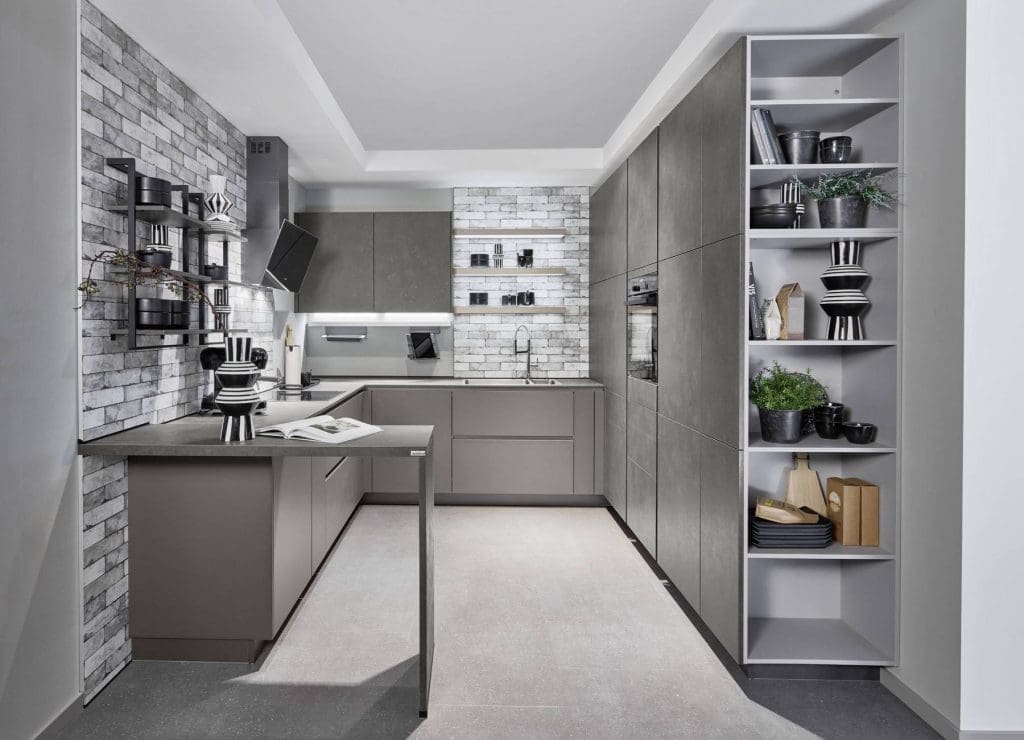
U-Shaped Kitchen Layout
U-shaped kitchens use three sides of the room, maximising storage and worktop space.
They suit:
- Dedicated cooking spaces
- Households that prioritise functionality
- Larger kitchens without open-plan requirements
Adequate clearance between runs is essential to prevent the space feeling cramped.

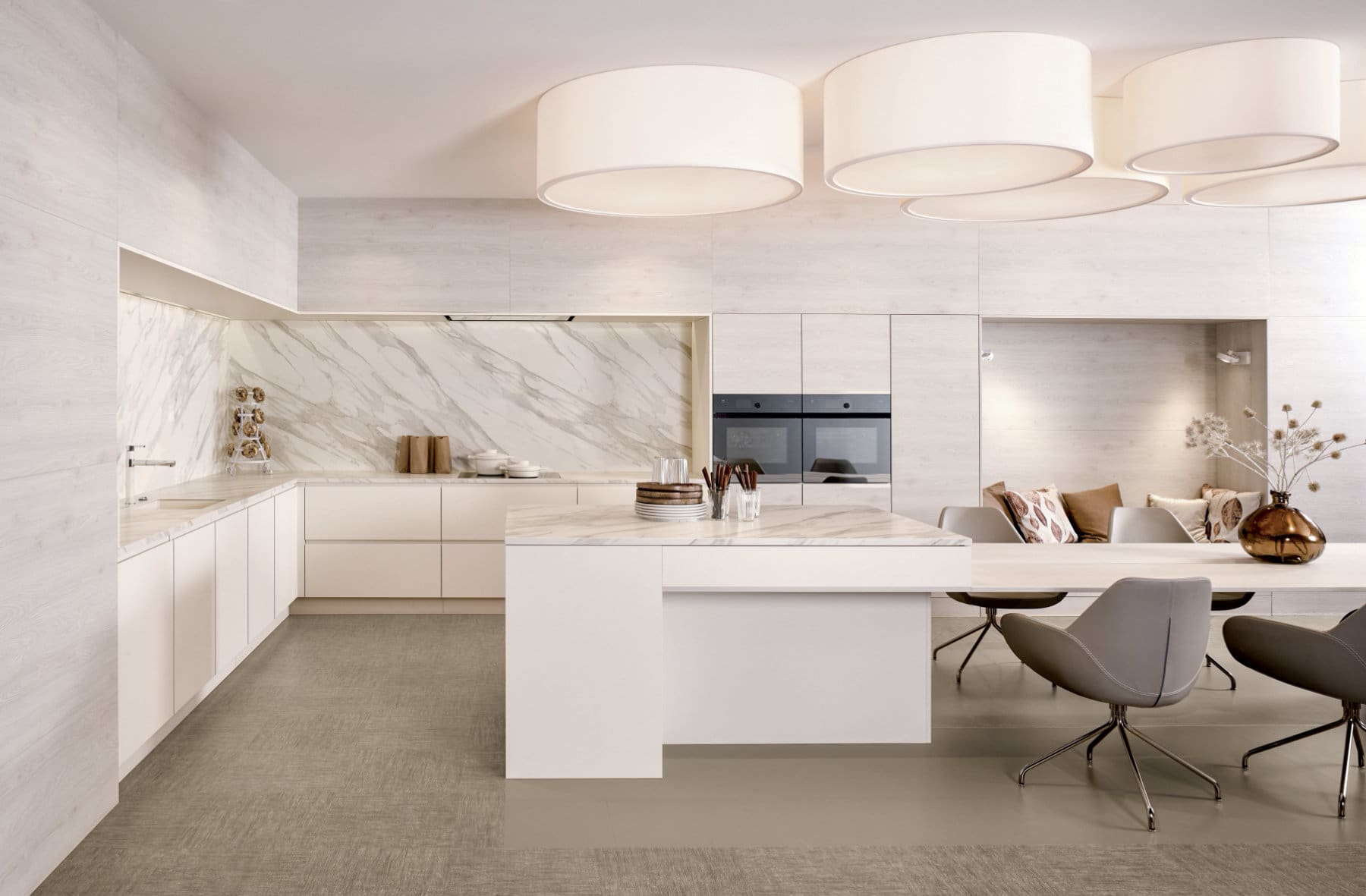
Kitchen Island Layouts
Kitchen islands have become a defining feature of modern kitchens, providing:
- Additional prep space
- Informal seating
- Storage and appliance integration
- A social focal point
As a rule of thumb, you’ll need:
- At least 1,000mm clearance on all sides
- More space if seating is included
In smaller kitchens, a peninsula can often achieve similar benefits with less impact on circulation.
When to Combine Layout Types
In many UK homes, the most successful designs combine elements of more than one layout. For example, an L-shaped kitchen may incorporate a peninsula, or a galley may open into a dining zone with one side partially removed.
Thinking in hybrid terms — rather than rigid categories — often leads to more tailored, practical solutions.
Step-by-Step: How to Plan Your Kitchen Layout
Step 1: Understand How You Use the Kitchen
Ask practical questions:
- How many people cook at once?
- Is the kitchen used for entertaining?
- Do children use the space?
- Is it part of an open-plan room?
This defines your zoning priorities.
Step 2: Establish Zones Before Cabinetry
Plan where each function belongs before thinking about different kitchen styles. A well-zoned kitchen will always outperform a purely aesthetic design.
Step 3: Plan Clearances and Walkways
Recommended minimums:
- Between runs: 1,000–1,200mm
- Around islands: 1,000mm
- Seating clearance: 900–1,000mm
These clearances ensure doors, drawers, and appliances can be used comfortably.
Consider Appliance Door Swings
Clearance planning should also account for appliance doors opening simultaneously. Dishwashers, ovens, and fridge doors can quickly block circulation if positioned opposite one another.
Testing appliance door swings on a scaled plan prevents awkward pinch points once the kitchen is installed.
Step 4: Position Appliances Logically
Avoid clustering all appliances together. Spreading them across zones reduces congestion and improves flow.
Step 5: Plan Lighting and Power Early
Task lighting, sockets, and appliance power requirements should be planned alongside the layout — not added later.
“A layout might look great on a plan, but it has to work in real life. We always test movement, appliance access, and workflows before finalising a design, especially in busy family kitchens.”
Designer insight – Joshua Donald Kitchens, Dunstable
Common Kitchen Layout Mistakes to Avoid
Overlooking Vertical Planning
Many layout frustrations stem not from horizontal planning, but from vertical decisions. Tall units positioned incorrectly can block sightlines, reduce natural light, or create visual heaviness in smaller rooms.
Balancing tall storage with open space maintains both practicality and proportion.
Further common layout mistakes include:
- Designing for looks over function
- Forcing an island into an undersized space
- Ignoring door and drawer clearances
- Underestimating storage needs
- Failing to plan for multiple users
Avoiding these mistakes early prevents costly changes later.
UK-Specific Layout Considerations
UK kitchens often face challenges such as:
- Smaller average room sizes
- Narrow access routes
- Period property constraints
- Lower ceiling heights
A professional designer can help navigate these challenges while ensuring compliance with UK regulations and best practice.
Ventilation and Extraction Planning
In UK properties — particularly flats and terraced homes — extraction routes can restrict hob placement. External venting, recirculating systems, and downdraft extraction all have different spatial requirements.
Considering ventilation early prevents layout compromises later.

Planning for Future Adaptation
A well-designed layout should accommodate change. Whether that’s upgrading appliances, adding seating, or adjusting storage needs, allowing flexibility in early planning reduces the likelihood of expensive redesigns in years to come.
Even small decisions — such as leaving space for an additional tall unit — can future-proof the layout.

FAQ’s: Kitchen Layout Planning
What is the best kitchen layout?
There’s no single best layout — the right choice depends on your space, lifestyle, and how you use the kitchen.
Is the work triangle still relevant?
Yes, but as a guideline rather than a rule. Zoning is now the preferred approach.
Can small kitchens still be well planned?
Absolutely. Zoning works in kitchens of all sizes.
How much space do I need for an island?
Typically at least 3.5m x 3.5m, depending on layout and circulation.
Final Thoughts
The perfect kitchen layout balances function, flow, and flexibility. By working with a local Kitchen Specialist, and through focusing on zoning, understanding your space, and planning around real-life use, you can create a kitchen that works beautifully now — and adapts easily in the future.