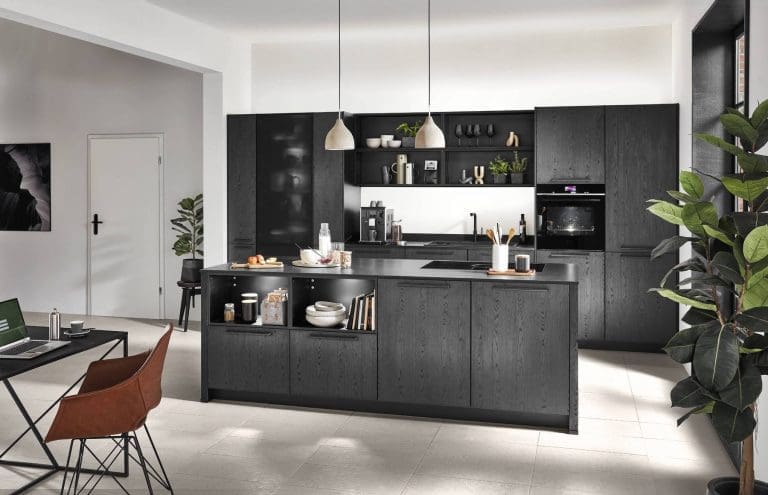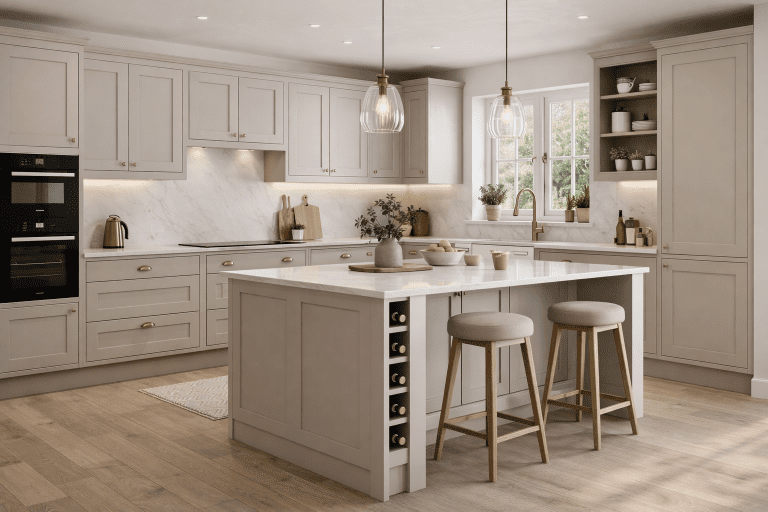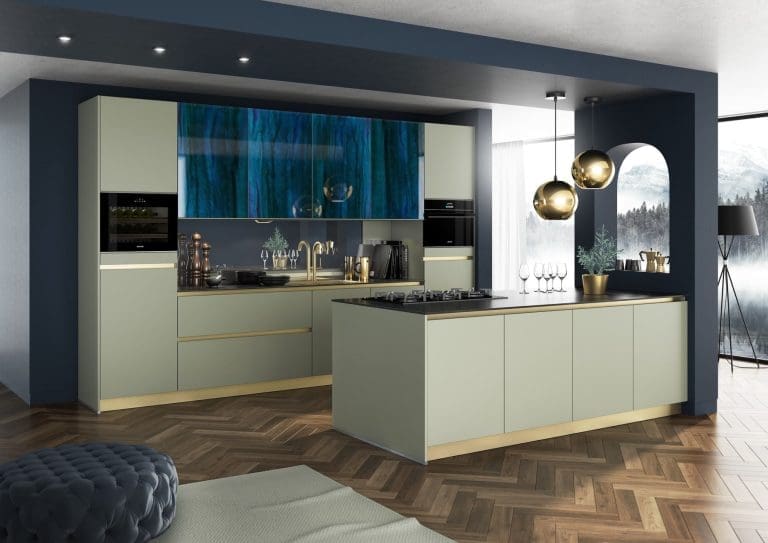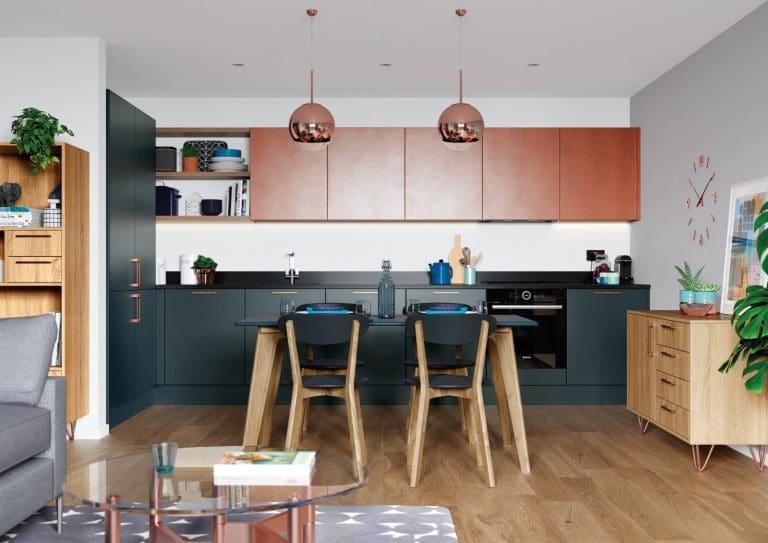

Are Gloss Kitchens Still Popular? A UK Design Guide
Are Gloss Kitchens Still Popular? A UK Design Perspective
Gloss kitchens have been part of the UK kitchen landscape for decades. At various points, they have been celebrated as cutting-edge, dismissed as dated, and then quietly re-evaluated by designers who understand how finishes evolve rather than disappear. If you are wondering whether a gloss kitchen is still a sensible choice for your home today, the answer is more nuanced than a simple yes or no.
Gloss kitchens are no longer about mirror-like white doors and sharp lighting alone. Modern gloss finishes are more refined, better balanced, and often used with restraint. When specified well, they remain highly relevant within contemporary UK homes, especially where light, space, and practicality matter.
This guide explores where gloss kitchens sit in today’s design landscape, when they work best, how designers use them differently now, and what to consider if you are deciding whether gloss is right for your kitchen project.
Understanding What a Gloss Kitchen Really Is
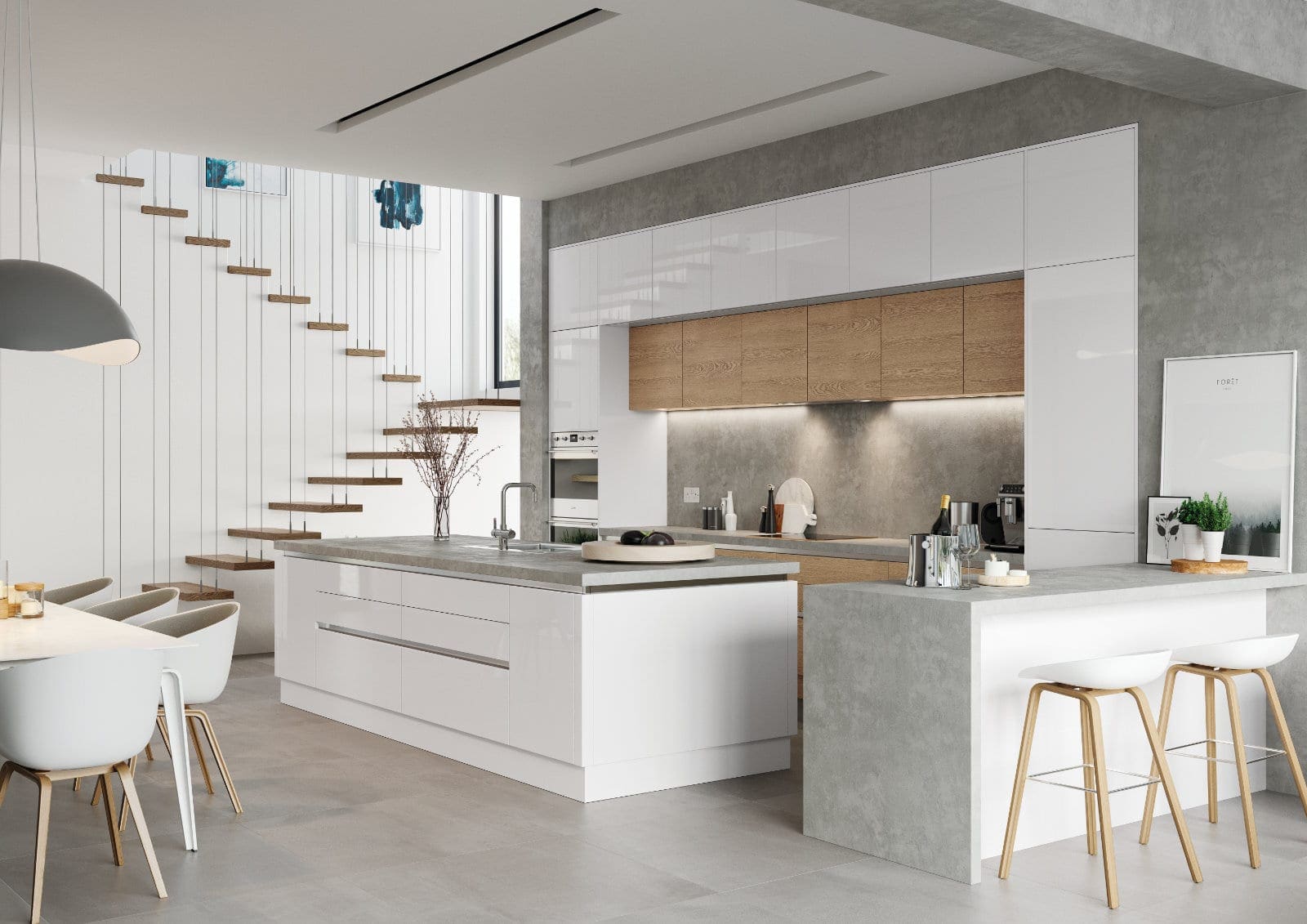
A gloss kitchen refers to cabinetry with a high-sheen surface that reflects light. The finish can be achieved through lacquered doors, polished laminates, acrylic fronts, or high-gloss polymers. The level of reflectivity varies significantly depending on material quality and manufacturing process.
Earlier generations of gloss kitchens focused on maximum shine. Today’s versions prioritise surface depth, colour consistency, and durability. Many modern gloss doors offer a smoother, softer reflection rather than a harsh mirror effect, which makes them easier to live with and more visually balanced.
From a professional designer’s perspective, gloss is simply one tool in a much wider palette. It is not a style on its own. Its success depends on how it interacts with layout, lighting, worktops, and surrounding finishes.
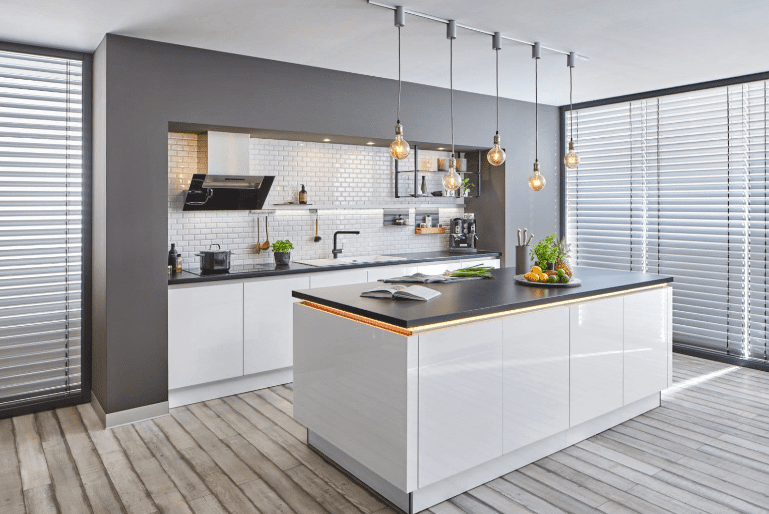
Are Gloss Kitchens Still Popular in the UK?
Gloss kitchens remain popular in the UK, though demand has shifted towards more considered designs. They are no longer chosen purely for their shine. Instead, homeowners and designers use gloss to solve specific design challenges.
Gloss kitchens continue to perform strongly in:
- Compact kitchens where light reflection improves brightness
- Flats and apartments with limited natural light
- Contemporary homes that favour clean lines
- Homes where ease of cleaning is a priority
What has changed is how gloss is used. Full high-gloss kitchens still exist, though many current projects combine gloss doors with matt cabinetry, textured finishes, or natural materials to create balance.
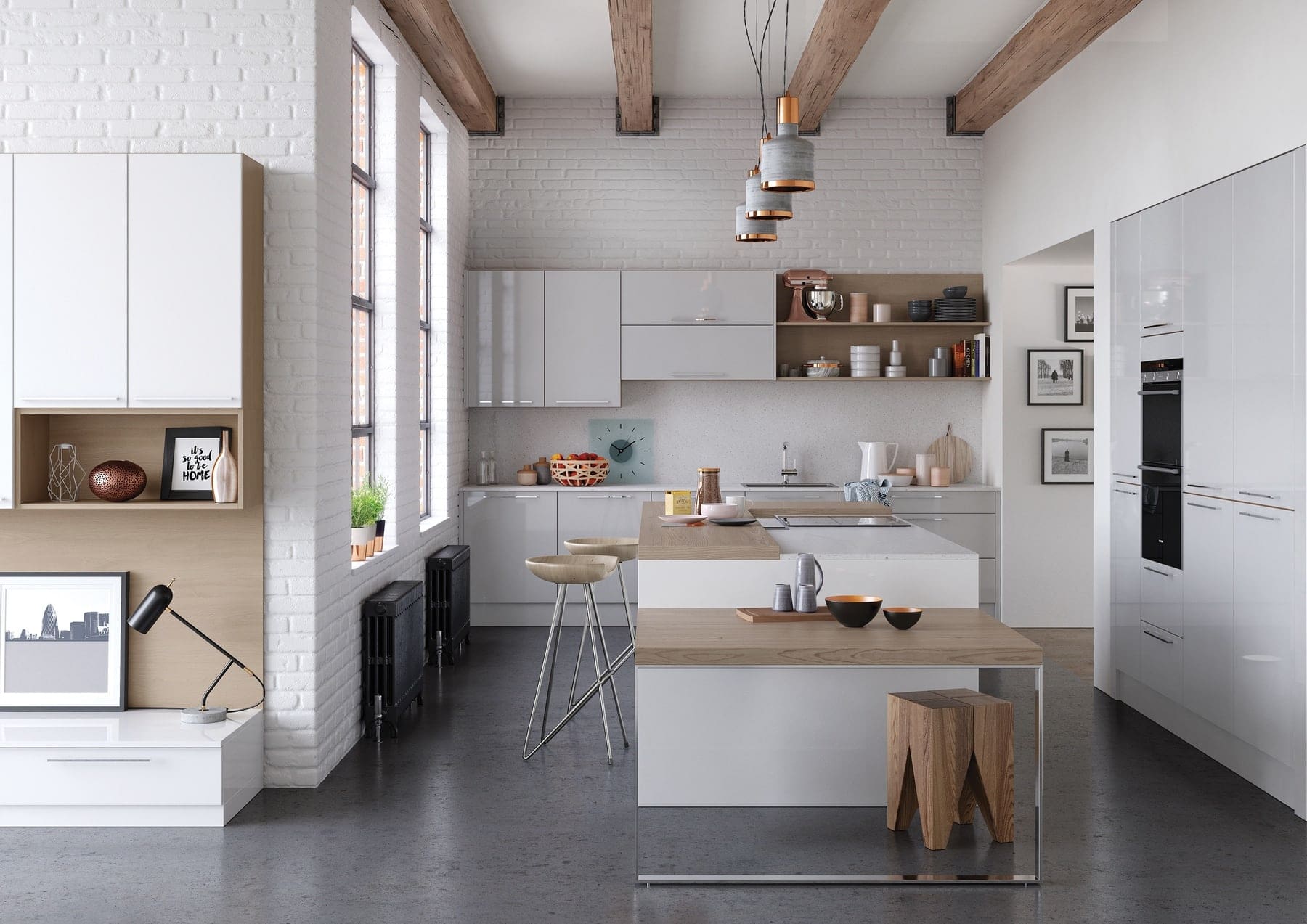
Why Gloss Kitchens Still Make Sense in UK Homes
Gloss kitchens continue to hold their place in UK homes because they address real, everyday design challenges rather than following short-term trends. When specified thoughtfully, gloss finishes enhance natural and artificial light, help compact spaces feel more open, and deliver a clean, contemporary look that suits modern living.
Light Reflection and Visual Space
UK housing stock includes many smaller kitchens, terraced homes, and properties with limited daylight. Gloss kitchen doors bounce light around the room, helping spaces feel brighter and more open.
Kitchen designers often specify gloss in north-facing kitchens or areas with fewer windows. The reflective surface reduces the need for excessive artificial lighting while creating a cleaner visual flow.
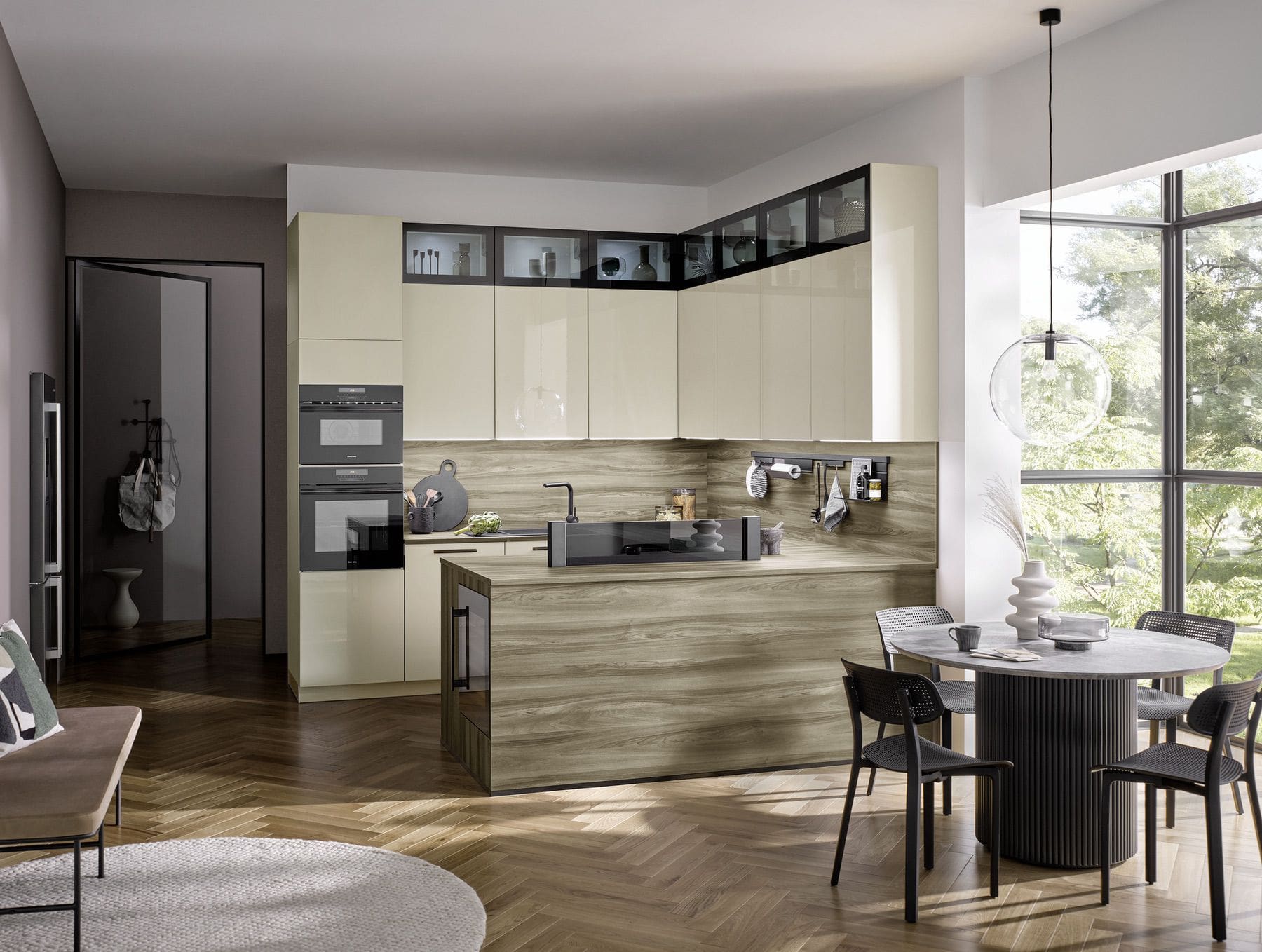
Practicality for Everyday Living
Gloss kitchens are easy to clean. Smooth, sealed surfaces resist moisture and wipe down easily. This appeals to busy households, rental properties, and family kitchens where practicality carries weight.
Modern high-quality gloss finishes are more resistant to scratches, fading, and discolouration than older versions. When sourced from reputable manufacturers, gloss kitchens age far better than their reputation suggests.
A Contemporary Aesthetic Without Excess Decoration
Gloss kitchen doors suit handleless kitchen designs, slab fronts, and minimalist layouts. They work particularly well in kitchens that prioritise strong proportions and uncluttered lines.
When paired with subtle lighting, refined worktops, and thoughtful colour choices, gloss kitchens can feel calm rather than clinical.
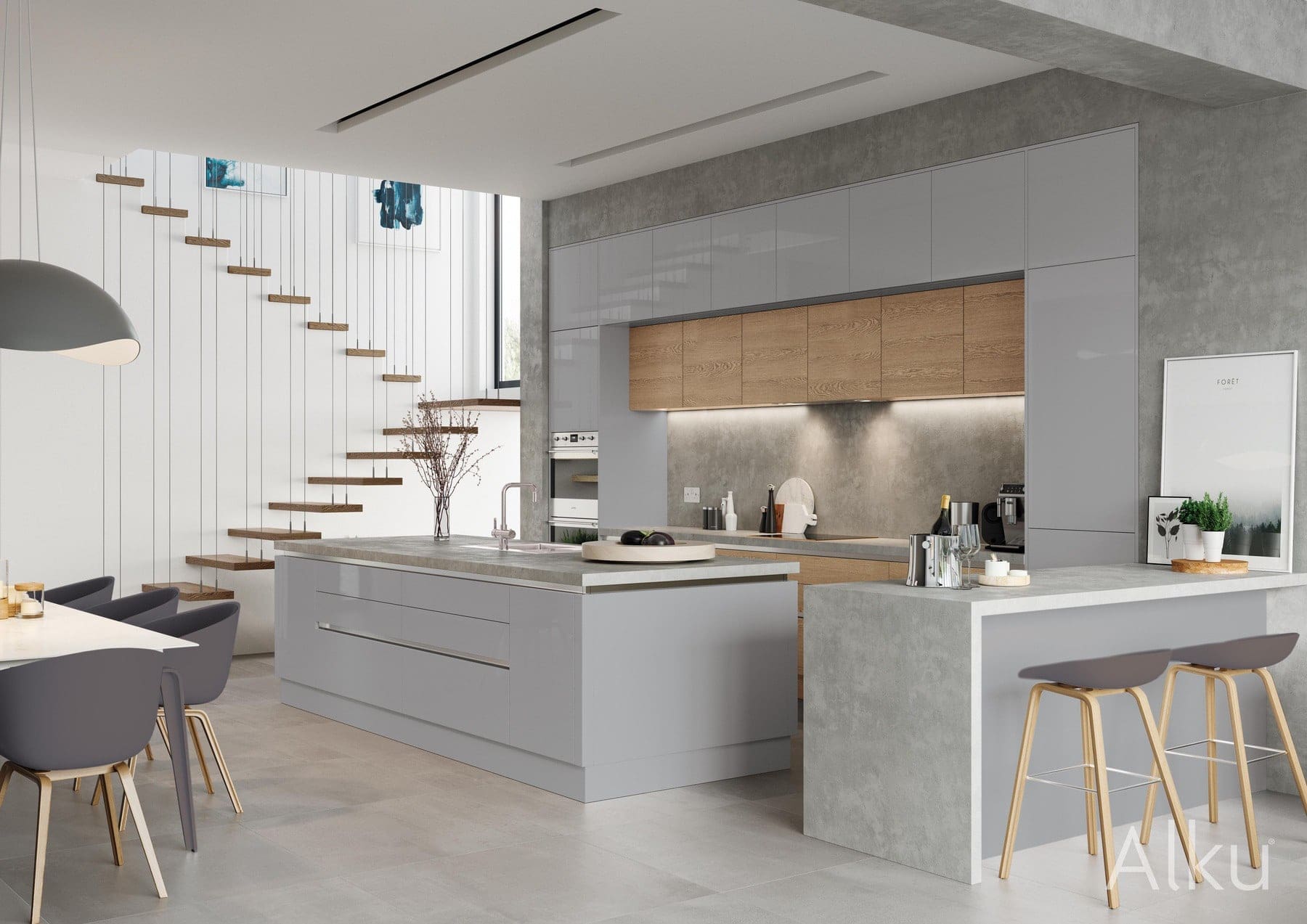
How Professional Kitchen Designers Use Gloss Kitchens Differently Today
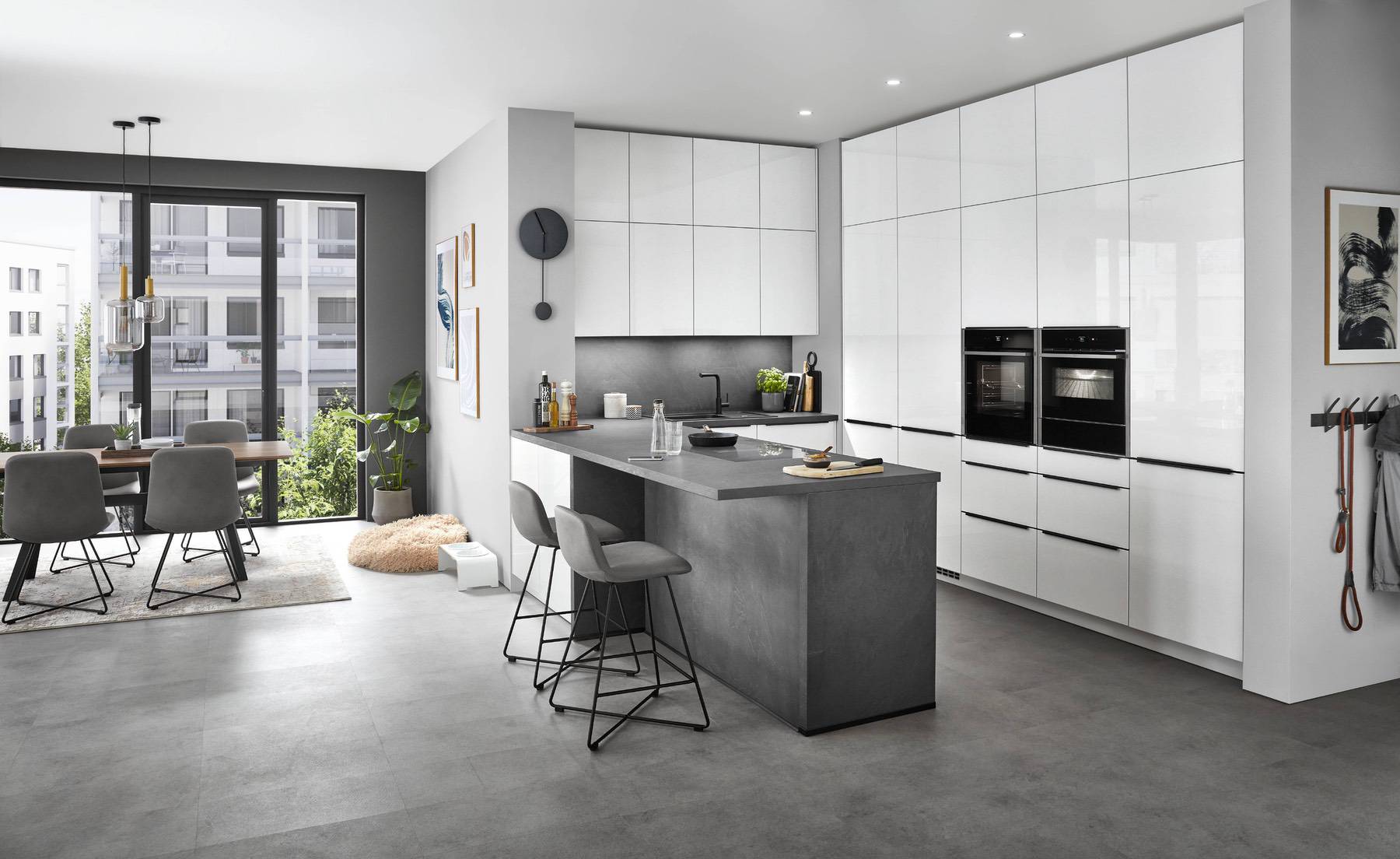
Rather than applying gloss across every cabinet, it is often introduced selectively to enhance light, define key areas, and balance matt or textured finishes, creating kitchens that feel contemporary without appearing overly reflective.
Gloss as a Feature Rather Than a Default
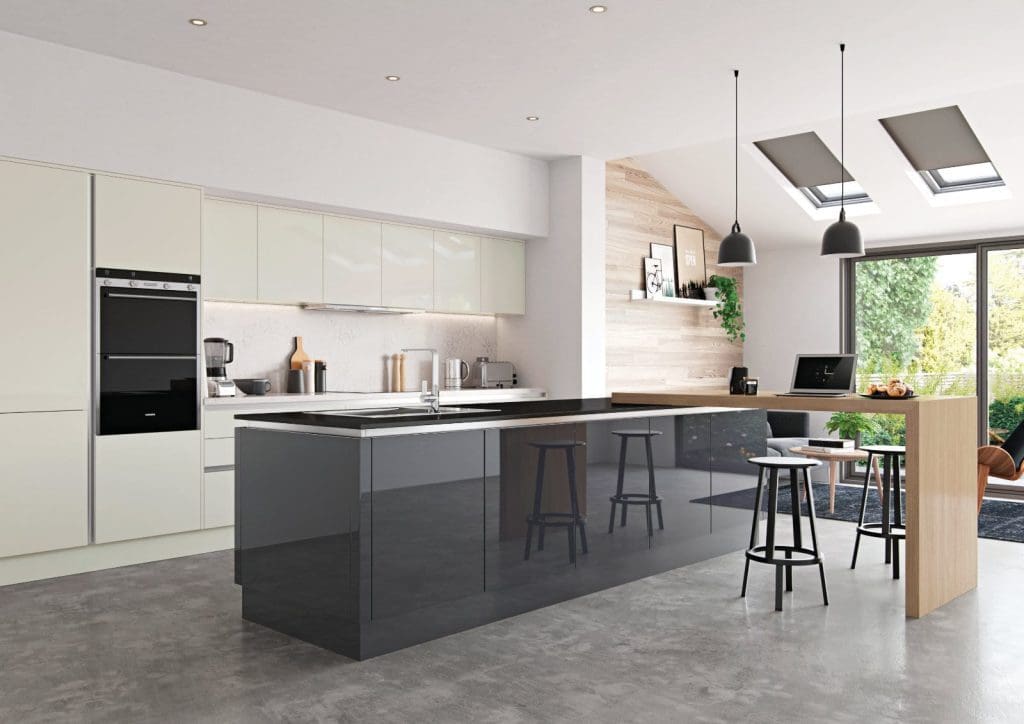
Rather than specifying gloss across every cabinet, designers now use it selectively. Island units, tall housings, or specific zones benefit most from reflective surfaces.
Combining gloss with matt cabinetry allows you to enjoy light reflection without overwhelming the space. This approach feels more current and tailored to how kitchens are actually used.
Softer Colour Palettes
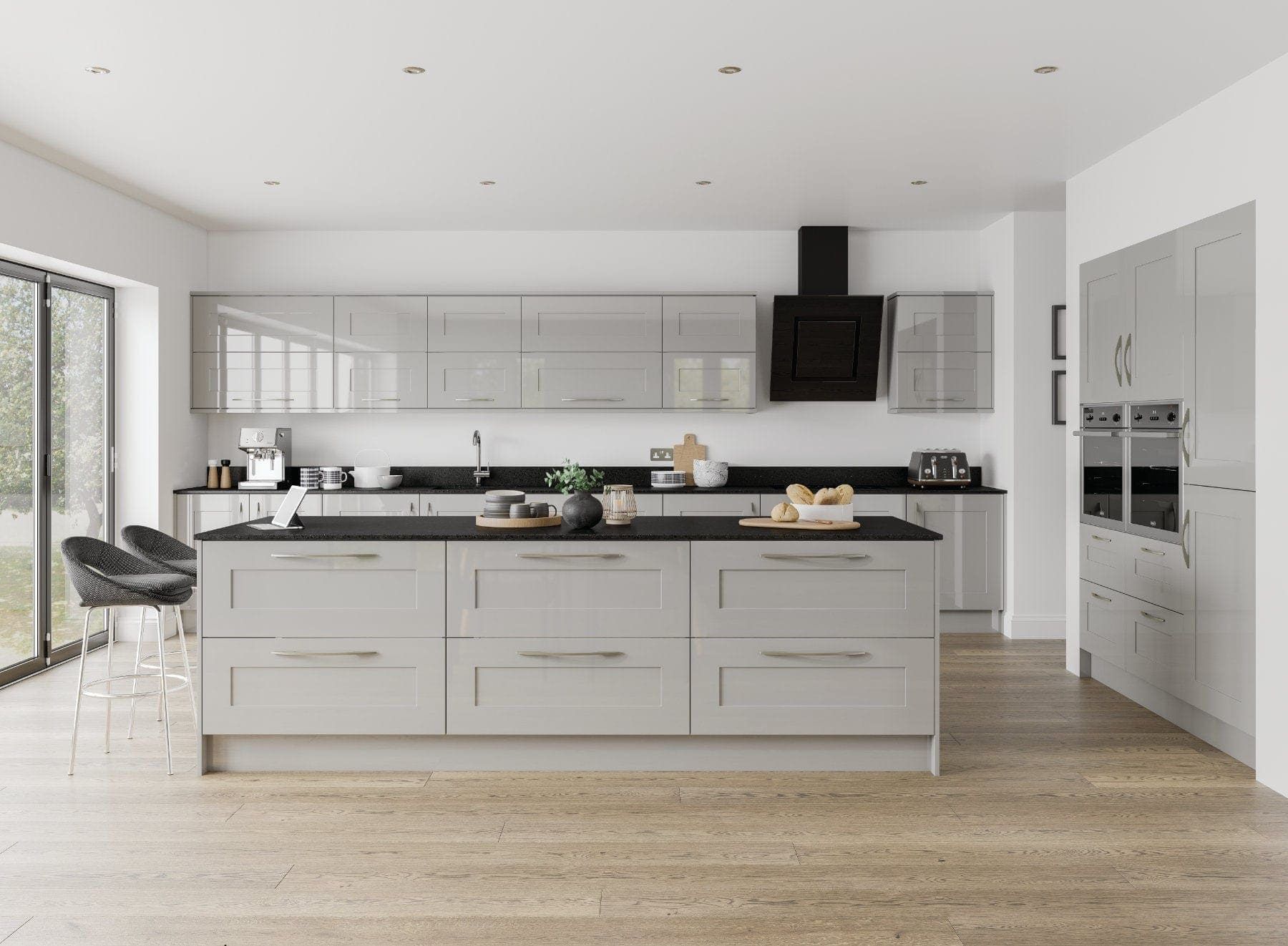
Pure white gloss remains popular, though softer shades now dominate. Warm whites, greys, taupes, cashmere, and muted colours feel less stark while retaining the benefits of reflection.
Some modern gloss kitchen finishes introduce subtle undertones that shift under light, adding depth rather than flat shine.
Pairing Gloss with Texture
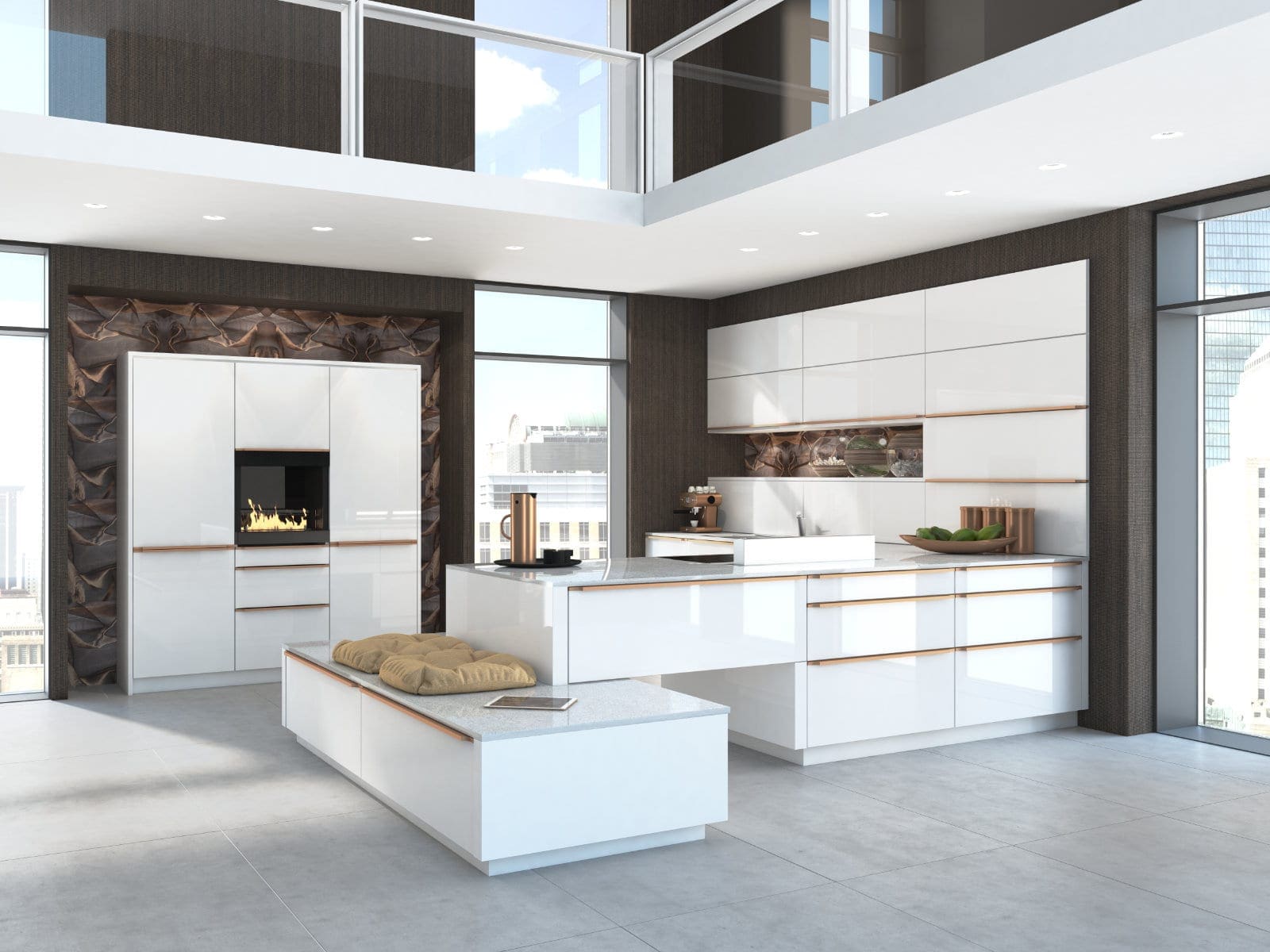
Gloss kitchens are often balanced with textured worktops, wood-effect finishes, stone surfaces, or metal accents. This combination prevents the space from feeling cold while retaining a contemporary edge.
A gloss door next to a ceramic worktop or timber shelf creates contrast that feels intentional and well designed.
Gloss vs Matt Kitchens: Which Is Right for You?
Matt kitchens dominate current trend headlines, though that does not make them universally better. Each finish suits different spaces and lifestyles.
Gloss kitchens work best when:
- Your kitchen lacks natural light
- You want a clean, contemporary look
- Easy cleaning matters
- Space needs visual expansion
Matt kitchens suit homes that favour softness, texture, and low reflectivity. They can absorb light rather than reflect it, which works beautifully in larger or brighter rooms.
A professional kitchen designer often recommends a blend of both. This avoids committing entirely to one finish while benefiting from the strengths of each.
Are Gloss Kitchens Hard to Keep Clean?
This is one of the most common concerns. Gloss kitchens do show fingerprints more readily than some matt finishes, particularly on darker colours. That said, modern gloss materials are far easier to maintain than older versions.
High-quality gloss kitchen doors clean easily with a soft cloth and mild cleaner. Many manufacturers now offer finishes with improved resistance to marks and micro-scratches.
Design choices also make a difference. Integrated handle rails reduce hand contact on door fronts. Well-placed lighting avoids highlighting minor smudges.
Are Gloss Kitchens Going Out of Fashion?
Gloss kitchens are not going out of fashion. They have simply moved into a more refined phase. Like many finishes, they cycle through periods of heavy use and quieter relevance.
What feels dated is not gloss itself but a poorly balanced design. Kitchens that rely entirely on shine without texture or contrast can feel flat, whereas kitchens that use gloss intentionally still feel current.
Design longevity comes from proportion, layout, and material quality rather than chasing trends.

Gloss Kitchens and Long-Term Value
A well-designed gloss kitchen appeals to a broad audience, making it a sensible option for homeowners thinking about long-term value. Light and white gloss finishes photograph particularly well, present a clean and modern look to a wide range of buyers, and adapt easily as accessories, wall colours, or styling preferences change over time. Choosing a reputable manufacturer with consistent colour matching also adds reassurance, as it allows for replacement doors or future additions without compromising the overall finish.
Quality Matters More Than Finish
The difference between a gloss kitchen that ages well and one that doesn’t often comes down to manufacturing quality.
Brands known for precision engineering, consistent finishes, and durable materials produce gloss kitchens that perform long term. Within the My Kitchen Specialists range, manufacturers such as Nobilia, Bauformat, and Ballerina offer gloss finishes that feel contemporary rather than shiny for the sake of it.
Equally, brands such as Brigitte, Alku, JJO, and Ashley Ann demonstrate how gloss can be integrated into modern kitchens with warmth, balance, and practicality.
A designer’s role is to match the right finish to the right brand and layout rather than treating gloss as a one-size solution.
When a Gloss Kitchen Might Not Be the Best Choice
Gloss kitchens are not ideal in every situation. If your kitchen receives intense direct sunlight all day, glare may become uncomfortable without careful lighting control. Similarly, if you prefer a softer, tactile environment, matt or textured finishes may suit you better.
Homes with very traditional architecture may benefit from gloss but only in subtle doses rather than full installations. This type of scenario is where professional guidance matters. A designer considers how you use your kitchen, how light moves through the space, and how finishes will age in your specific environment.
Final Thoughts: Should You Choose a Gloss Kitchen?
Gloss kitchens remain a practical and visually effective choice for UK homes when designed with care. They are no longer about maximum shine but about using reflection to improve light, space, and usability.
If you value brightness, easy maintenance, and a contemporary look that adapts over time, gloss kitchen finishes deserve consideration. The key to success with this style lies in thoughtful specification, quality materials, and a design approach that balances gloss with complementary finishes.
Rather than asking whether gloss kitchens are still popular, the better question is whether gloss is right for your space, lifestyle, and long-term expectations. When the answer is yes, gloss kitchens continue to deliver strong results in modern UK design.