
Kitchen Peninsula Layout: Benefits, Design Advice & Expert Planning Guide
A kitchen peninsula is one of the most practical layout solutions for modern UK homes — particularly where space is limited but functionality is still a priority. Often described as a hybrid between a traditional run of cabinetry and a freestanding kitchen island, a peninsula can deliver additional workspace, storage, and seating without requiring the footprint of a full island.
If you’re weighing up whether a peninsula layout is right for your kitchen, this guide explores the benefits, potential drawbacks, and key planning considerations to help you make an informed decision.
What Is a Kitchen Peninsula?
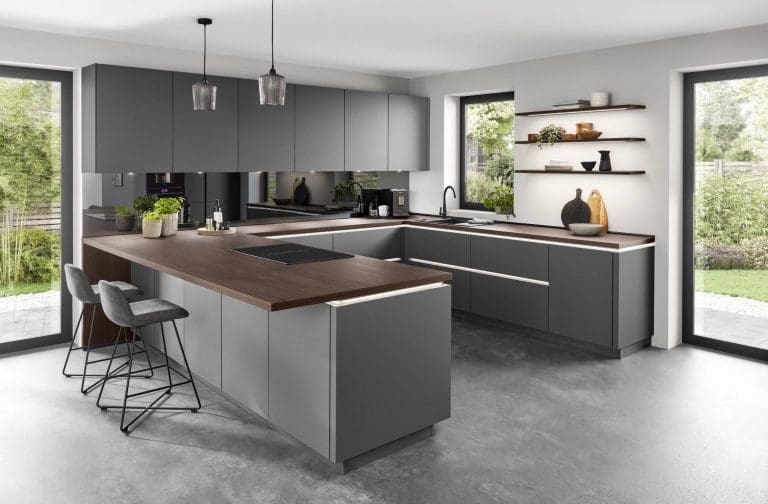
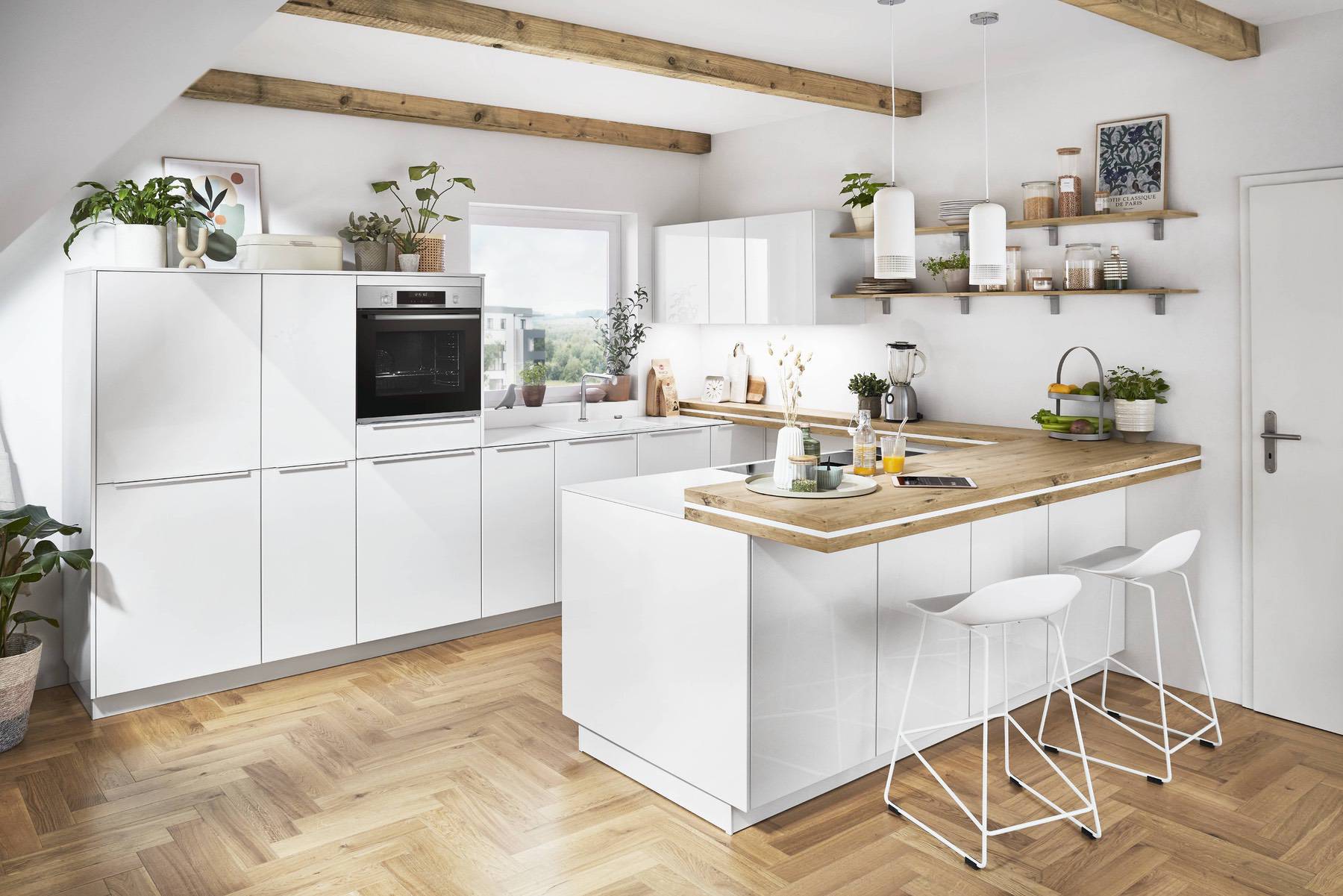
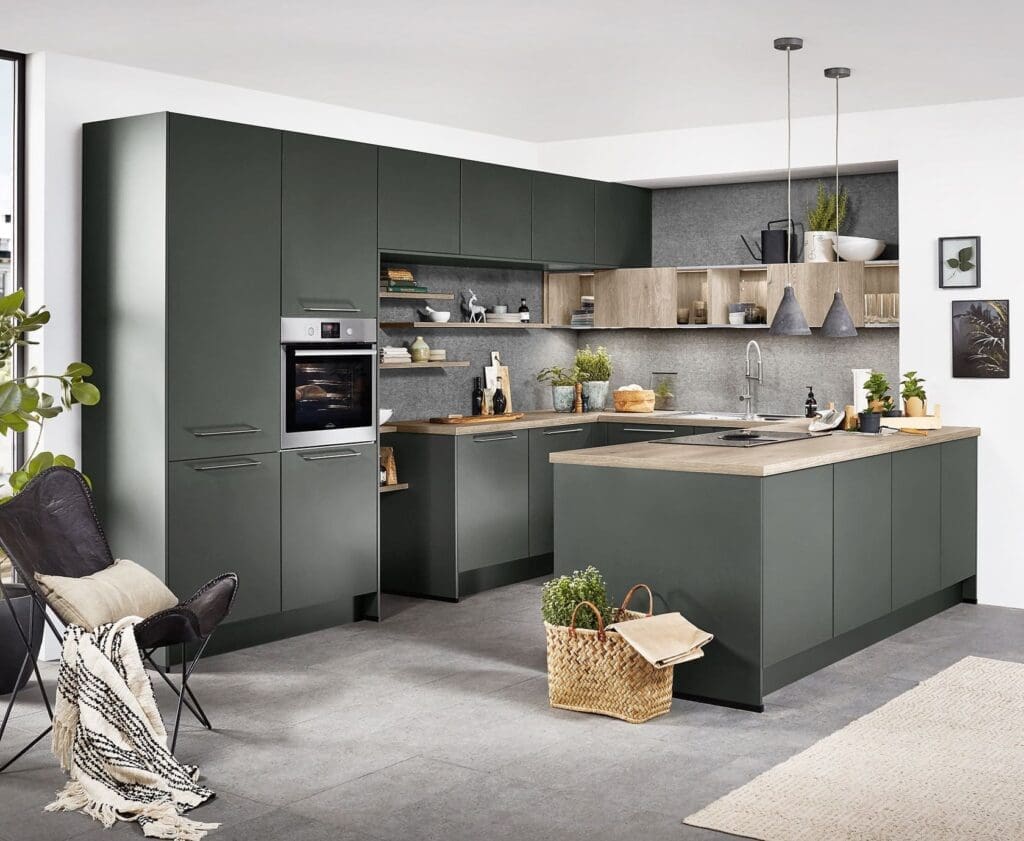
A kitchen peninsula is an extended run of cabinetry that projects out from a wall or main kitchen run. Unlike a freestanding island, which is accessible from all sides, a peninsula remains connected at one end to the existing layout.
Why is the Peninsula so Practical?
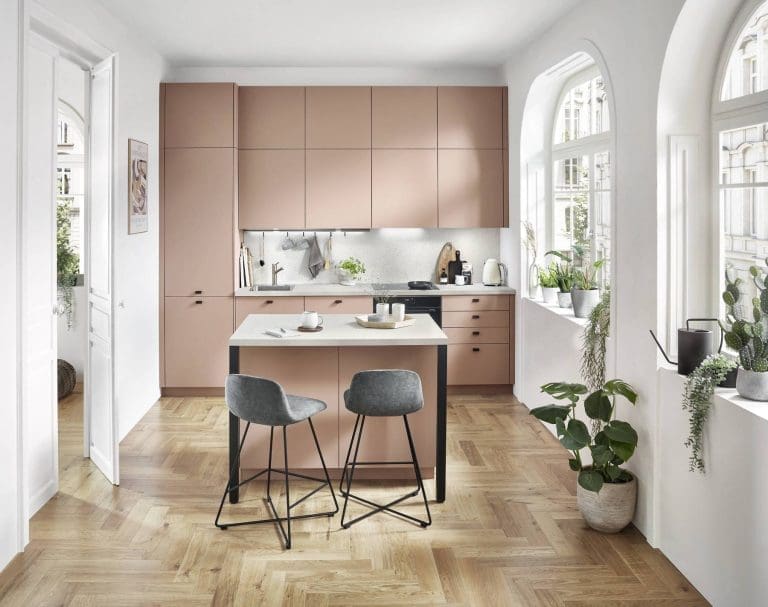
Because it is anchored to the main kitchen, a peninsula is often easier to integrate into compact layouts such as L-shaped or galley kitchens.
In practical terms, this means:
- It provides additional worktop and storage space
- It helps define kitchen zones
- It requires less circulation space than an island
- It can incorporate seating
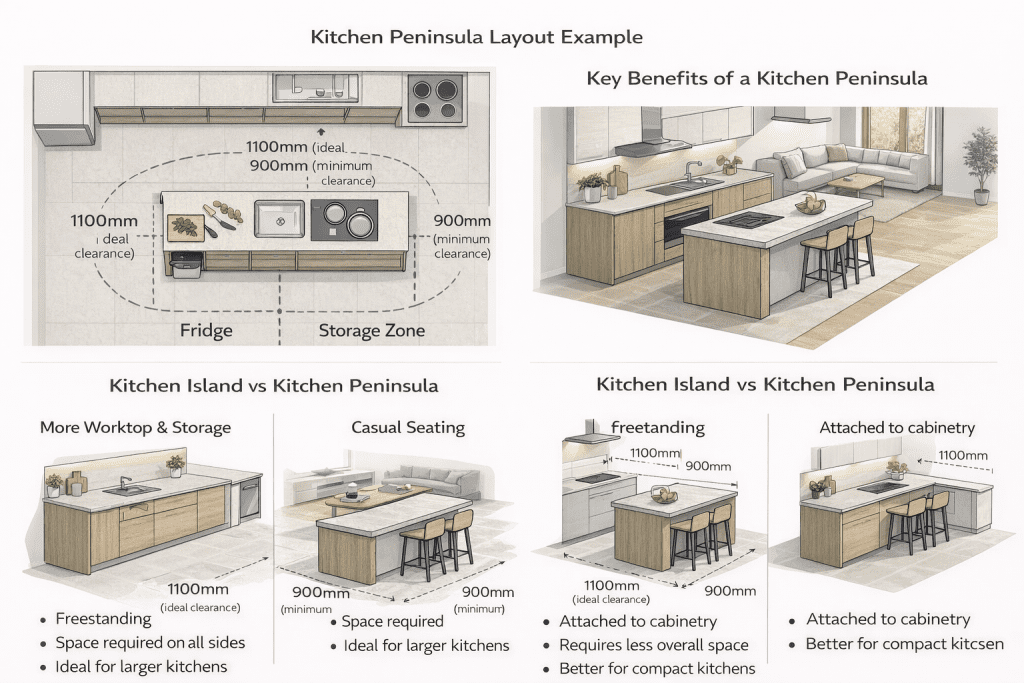
The Key Benefits of a Kitchen Peninsula
1. Maximises Usable Space
A peninsula delivers many of the advantages of a kitchen island but with a smaller footprint. Because it connects to an existing run of units, it doesn’t require clearance on all four sides.
This makes it particularly effective in:
- Narrow kitchens
- Smaller homes and flats
- Terraced properties
- Galley layouts
Where a freestanding island might feel intrusive, a peninsula can offer extended workspace without compromising circulation.
2. Additional Worktop Area for Everyday Use
One of the most immediate benefits of a peninsula is the added preparation space. This is particularly valuable in households where:
- Multiple people cook at once
- Baking or batch cooking is common
- Small appliances require permanent space
When carefully positioned, a peninsula can extend the primary preparation zone, improving efficiency and comfort.
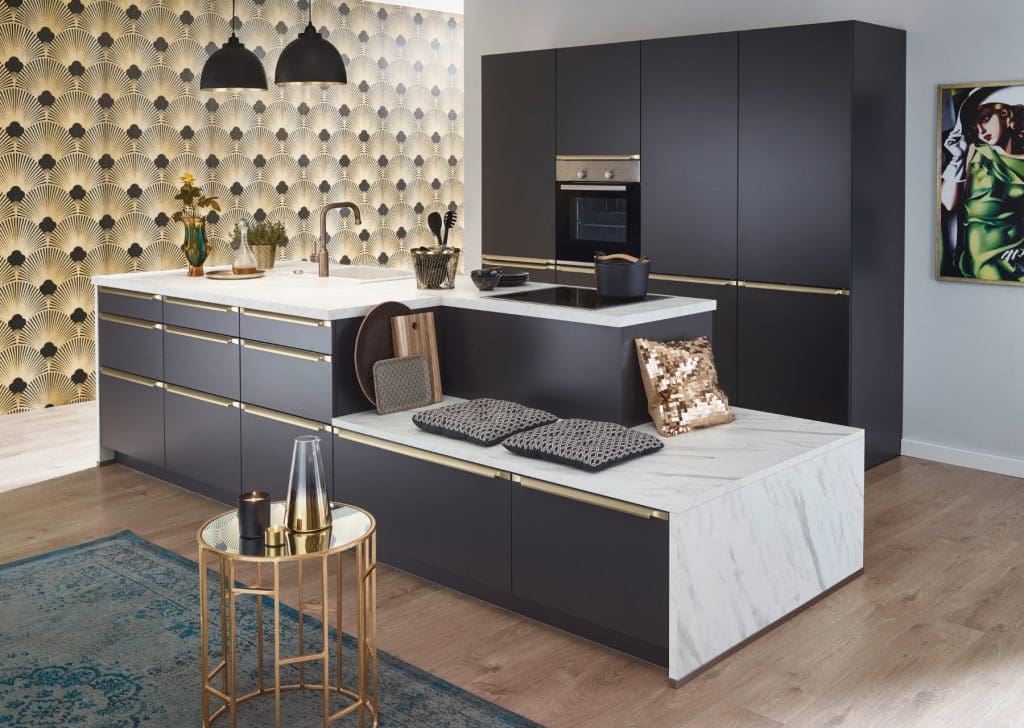
3. Extra Storage Without Expanding the Room
Peninsulas typically include:
- Deep drawers
- Base cupboards
- Integrated bins
- Appliance housing
In smaller kitchens, this additional storage can reduce the need for wall cabinets, helping the space feel lighter and less crowded.
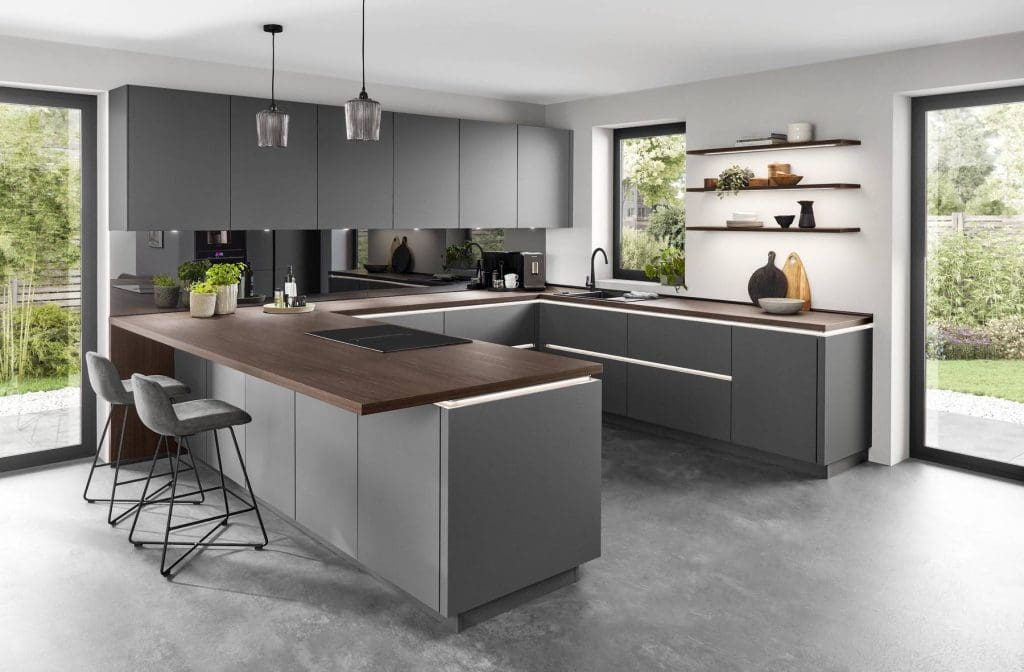
4. Casual Seating Without a Separate Dining Table
With the addition of an overhanging worktop, a peninsula can accommodate breakfast bar seating. This creates:
- A casual dining space
- A homework or work-from-home station
- A social hub while cooking
For many households, this eliminates the need for a separate dining table in the kitchen itself.
Planning tip: Allow approximately 600mm per seat and 250–300mm overhang for comfortable legroom.
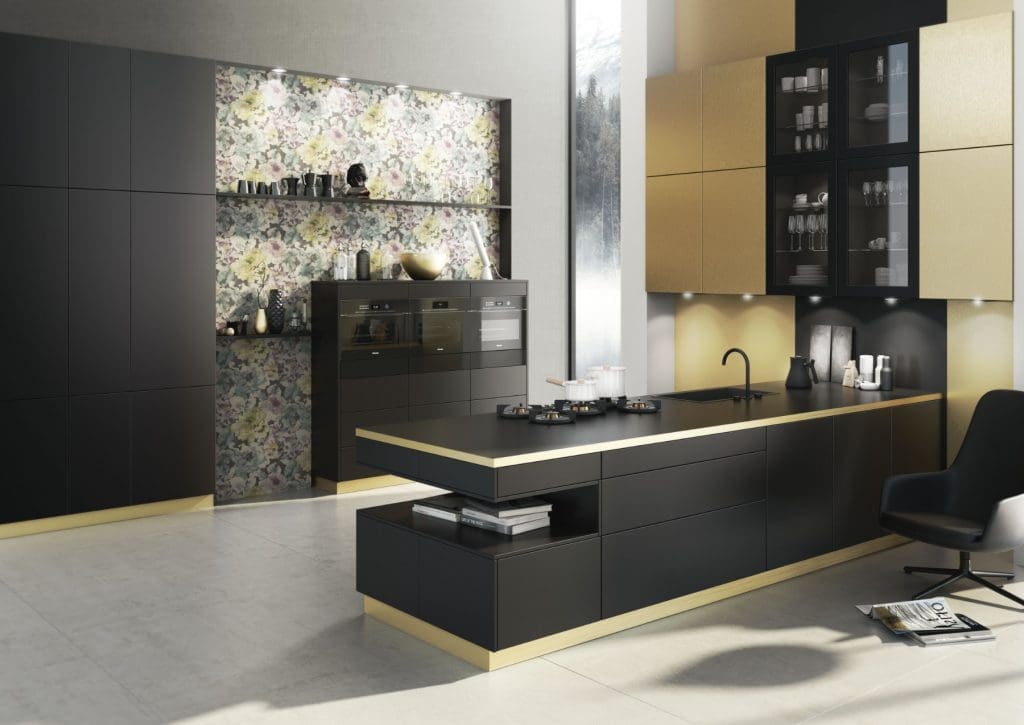
5. Improved Zoning in Open-Plan Homes
Open-plan living continues to dominate modern kitchen design. A peninsula can act as a subtle divider between kitchen and living areas without enclosing the space.
It provides:
- Clear separation of cooking and relaxation zones
- A defined boundary without walls
- Visual structure within large rooms
This makes peninsulas particularly effective in contemporary open-plan extensions.
Kitchen Peninsula vs Kitchen Island: Which Is Better?
The choice between an island and a peninsula largely depends on space and circulation.
A kitchen island:
- Is freestanding
- Requires clearance on all sides
- Works best in larger kitchens
A kitchen peninsula:
- Is attached to the main layout
- Requires less overall space
- Works well in narrower or smaller kitchens
If you’re unsure which layout suits your home, you may find our guide to modern kitchen islands helpful for comparison.
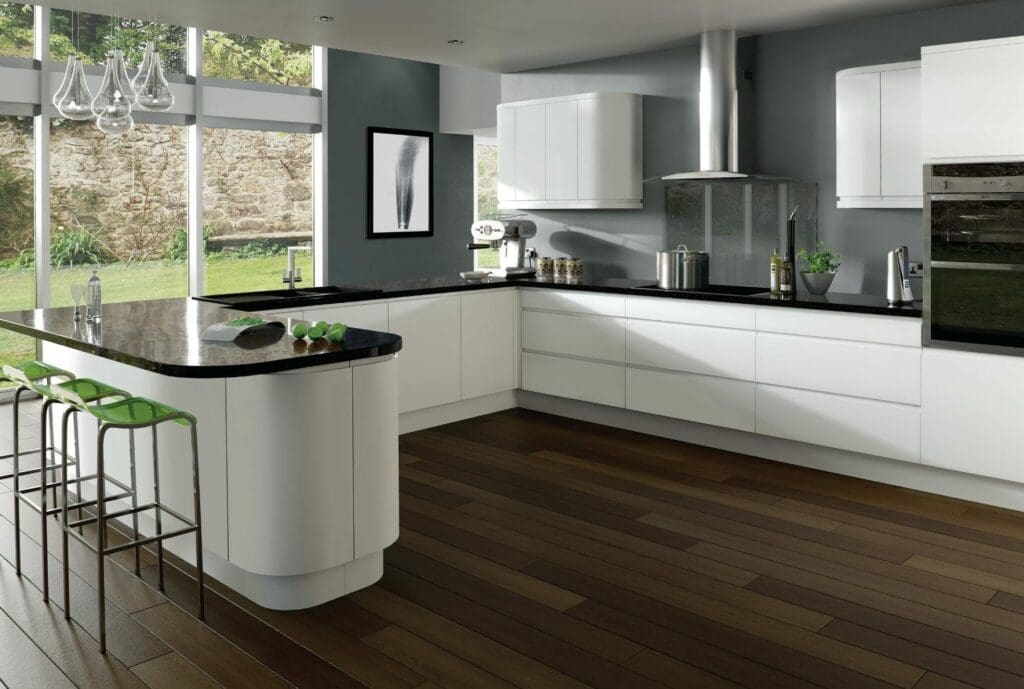
Who Is a Kitchen Peninsula Best Suited To?
A peninsula layout works particularly well for:
- Smaller homes and apartments
- Galley kitchens
- L-shaped layouts
- Households that want seating without a full island
- Families seeking improved flow and defined zones
In busy households, a peninsula can also create a natural boundary that keeps children clear of the cooking area while still allowing interaction.
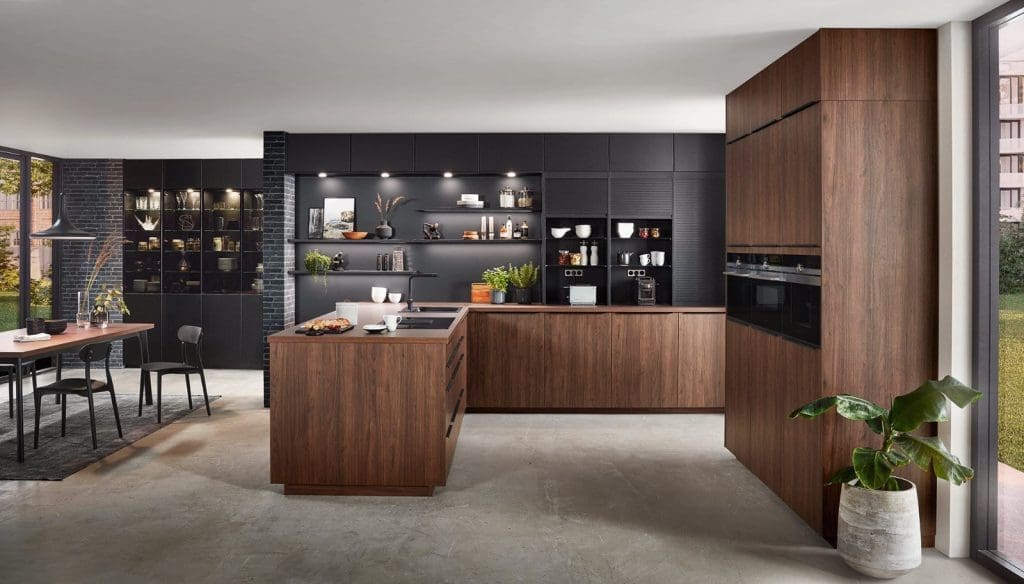
The Potential Drawbacks of a Kitchen Peninsula
No layout is perfect for every home. Before committing to a peninsula, consider the following:
1. Circulation Space Still Matters
Although a peninsula requires less clearance than an island, you still need sufficient walkway space. Aim for:
- 900–1100mm clearance between opposing units
Anything less can restrict movement and appliance access.
2. Workflow Must Be Carefully Planned
Poorly positioned peninsulas can disrupt kitchen zoning. The peninsula should support — not interrupt — the natural flow between:
- cooking
- preparation
- cleaning
- storage
Professional layout planning is particularly important in compact kitchens.
3. Design Integration Is Crucial
A peninsula should feel intentional, not like an afterthought. Materials, proportions, and alignment with the rest of the cabinetry must be carefully considered.
4. Installation Costs
If incorporating sinks, hobs, or electrical outlets, additional plumbing or wiring may increase costs. However, compared to a freestanding island, installation complexity is often reduced.
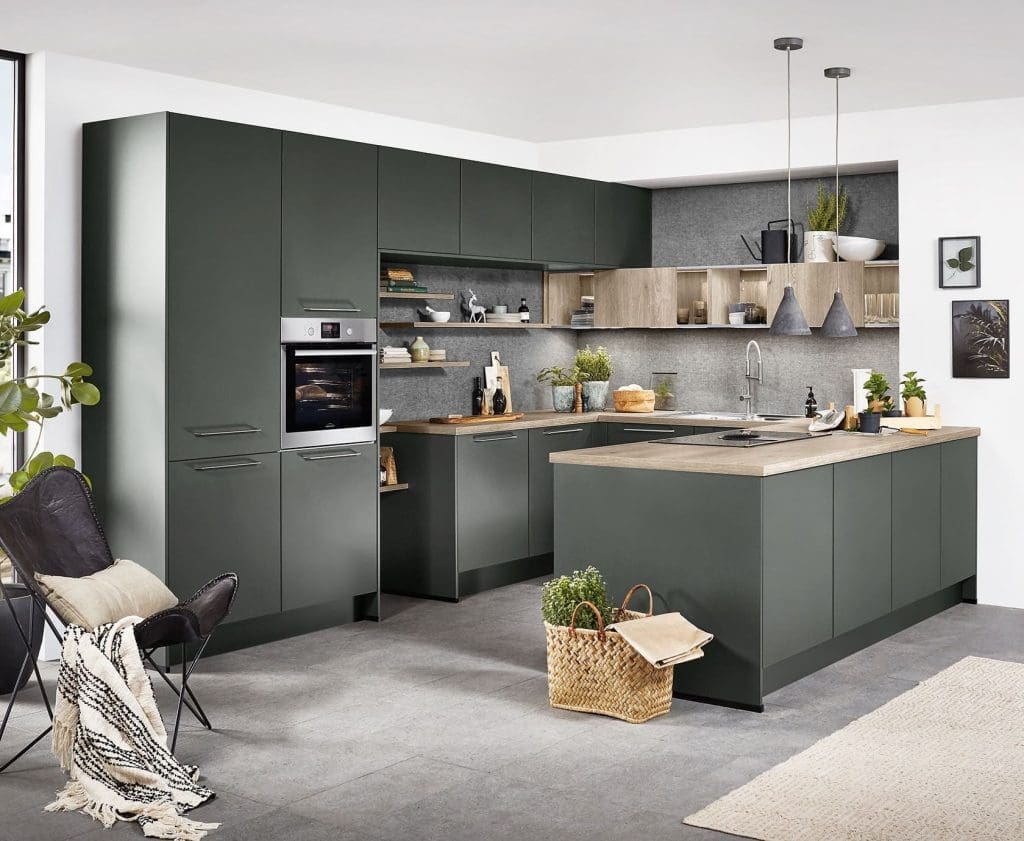
Design Tips for a Successful Kitchen Peninsula
To ensure your peninsula works both practically and visually:
- Keep proportions balanced with the room size
- Consider contrasting finishes for subtle emphasis
- Use handleless cabinetry for a streamlined appearance
- Incorporate lighting above the seating area
- Avoid overcrowding with unnecessary appliances
A well-designed peninsula should enhance usability while maintaining visual clarity.
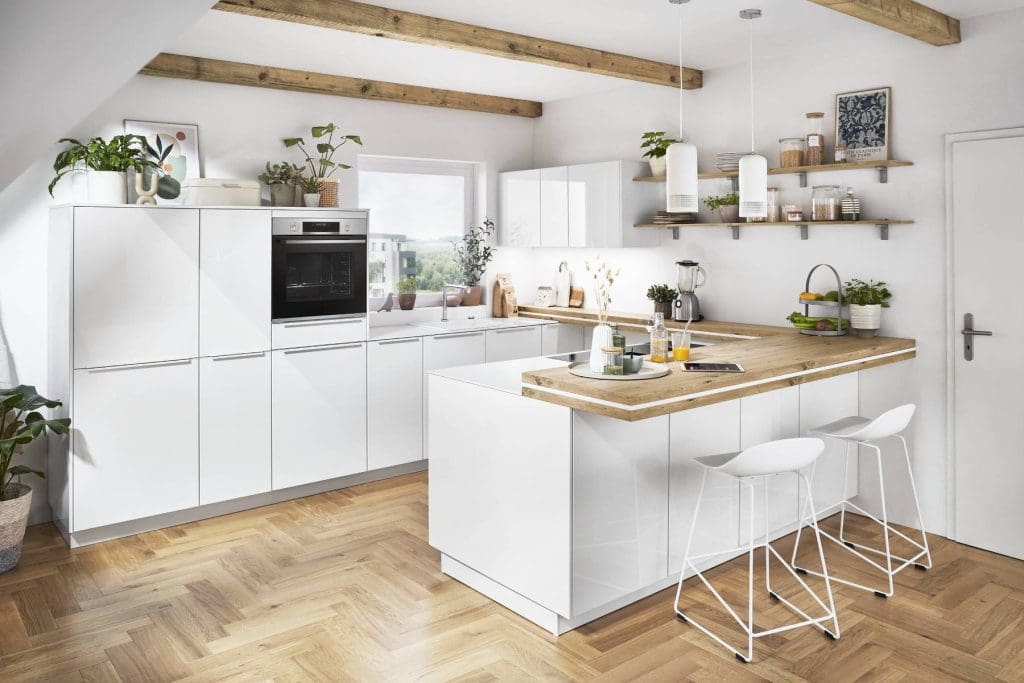
Final Thoughts: Is a Kitchen Peninsula Right for You?
A kitchen peninsula is one of the most versatile layout solutions available. It offers additional workspace, storage, and seating while requiring less space than a freestanding island.
For smaller kitchens or layouts where circulation is tight, a peninsula can provide many of the benefits of an island — without the spatial demands.
When thoughtfully planned, it creates balance, improves zoning, and enhances everyday functionality.
Contact your nearest Kitchen Specialist today to find your ideal peninsula kitchen layout!
FAQ’s Kitchen Peninsulas
1. What is the difference between a kitchen peninsula and an island?
A kitchen island is freestanding and requires clearance on all sides. A peninsula is connected to a wall or cabinet run on one end, meaning it requires less space while still providing additional worktop area and seating.
2. How much space do you need for a kitchen peninsula?
Ideally, allow at least 90–100cm of walkway clearance around the open sides of the peninsula to maintain comfortable movement and appliance access.
3. Can you add seating to a kitchen peninsula?
Yes. A peninsula can incorporate a worktop overhang of around 25–30cm to accommodate stools, creating a practical breakfast bar or informal dining area.
4. Is a kitchen peninsula suitable for small kitchens?
Yes. In many small or galley kitchens, a peninsula is a better alternative to an island because it provides similar functionality without interrupting circulation space.
5. Does a kitchen peninsula improve workflow?
When planned correctly, a peninsula can enhance zoning and support a contemporary kitchen workflow model, particularly by separating prep and social areas without disrupting the main working zones.
6. Are kitchen peninsulas outdated?
No. Peninsulas remain highly relevant in modern open-plan design, especially where homeowners want partial separation without fully enclosing the space.
About the Author
This guide has been written by the editorial team at My Kitchen Specialist, in collaboration with experienced independent kitchen retailers across the UK.
With insight from designers working daily with leading German and British kitchen brands — including Nobilia, Bauformat, Ballerina and Alku — our advice is grounded in real-world planning experience rather than theory alone.
Kitchen layout decisions such as choosing between a peninsula and an island can significantly impact circulation, storage, and long-term functionality. The guidance shared here reflects practical design principles used by professional kitchen planners to ensure both aesthetic balance and everyday usability.
For tailored advice specific to your home, we always recommend consulting your nearest independent kitchen specialist.