
Modern Kitchen Colour Schemes for UK Homes
Updated February 2026.
Modern Kitchen Colour Schemes: Choosing the Right Palette for Your Home
Colour is one of the most powerful design tools in a modern kitchen. It shapes how spacious the room feels, how light interacts with surfaces, and how the space connects to the rest of your home.
While layout and cabinetry style matter, the colour scheme ultimately defines the atmosphere.
If you are planning a new kitchen, this guide will help you:
- Understand the most popular modern kitchen colour directions
- Compare neutral and bold palettes
- Decide between light and dark schemes
- Explore two-tone combinations
- Choose a colour approach that works long-term
Rather than following short-lived trends, the key is selecting a colour scheme that complements your home, lighting and lifestyle.
What Defines a Modern Kitchen Colour Scheme?
Modern kitchen colour schemes tend to focus on:
- Clean, cohesive palettes
- Understated contrast
- Balance between warmth and minimalism
- Layered tones rather than excessive variation
Unlike traditional kitchens, which may rely on decorative detailing, modern colour schemes use restraint. Materials, textures and lighting do much of the visual work.
1. Neutral Modern Kitchen Colour Schemes
Neutral palettes remain the foundation of contemporary kitchen design.
Popular neutral tones include:
• Warm beige
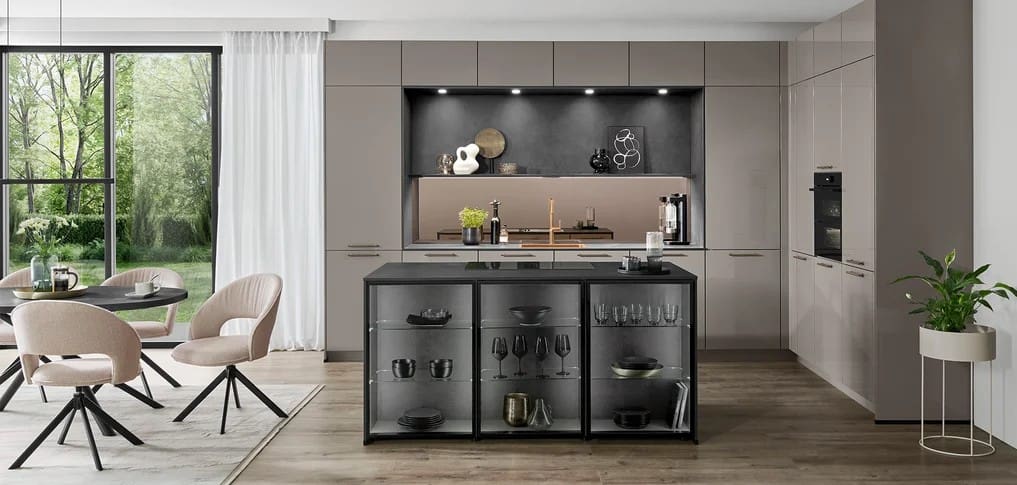
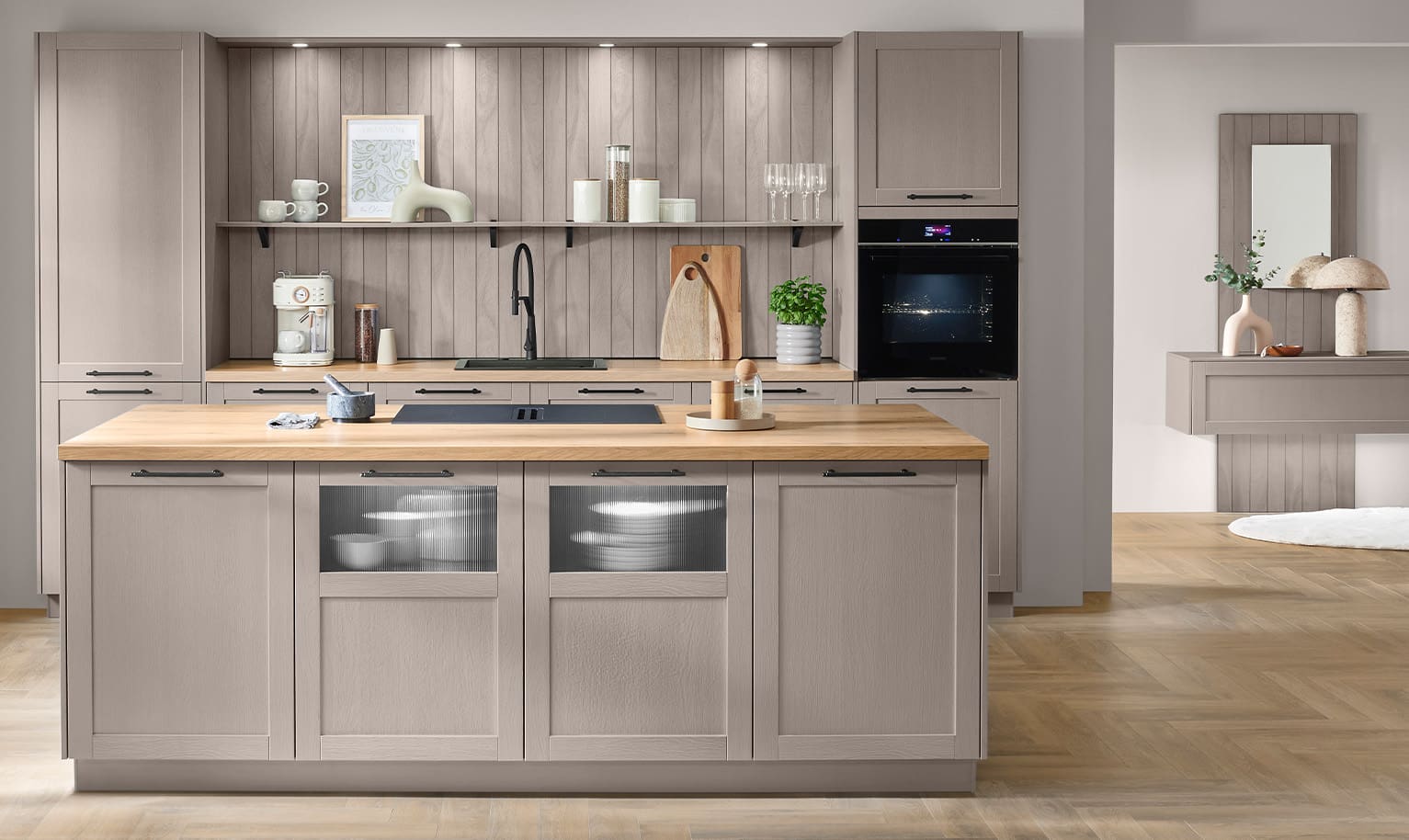
• Soft taupe
• Off-white
• Greige (grey-beige blend)
Neutrals provide flexibility. They allow cabinetry, worktops and lighting to evolve over time without requiring a full redesign.
Neutral schemes work particularly well in:
• Open-plan kitchens
• Homes with natural timber flooring
• Spaces where long-term versatility is important
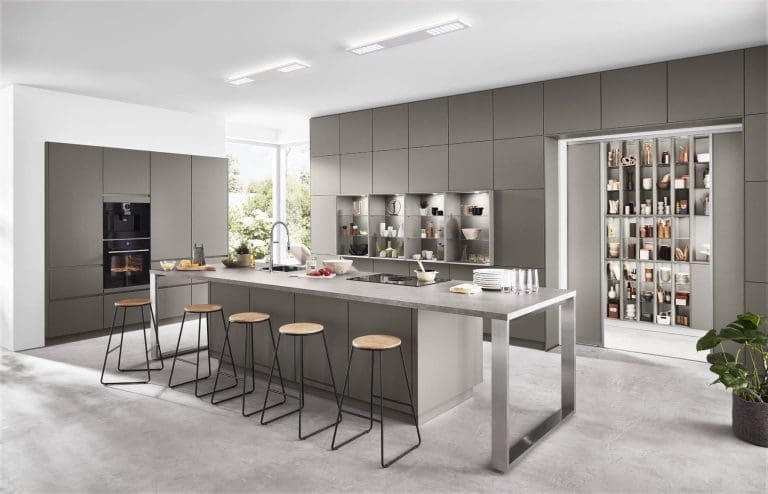
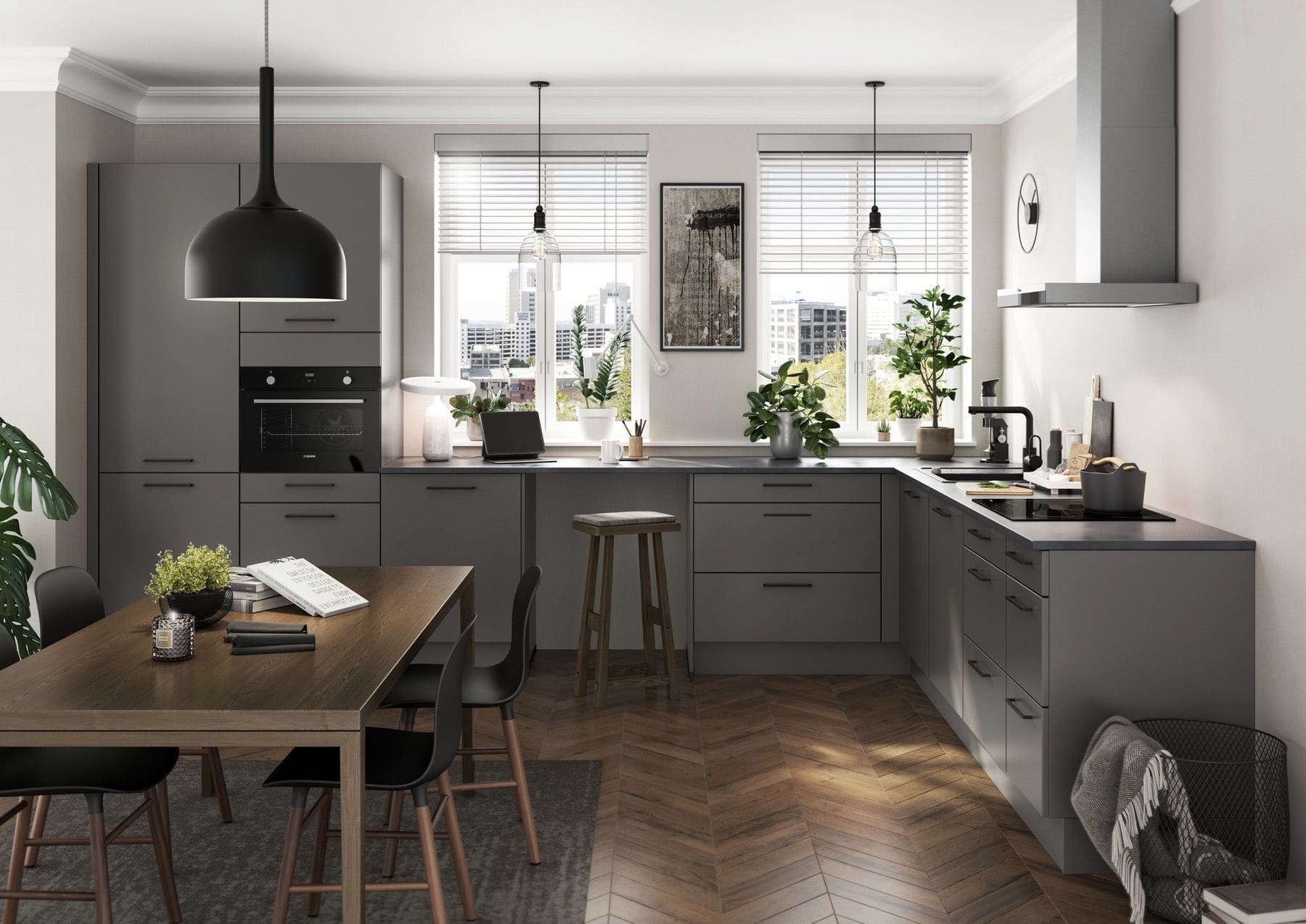
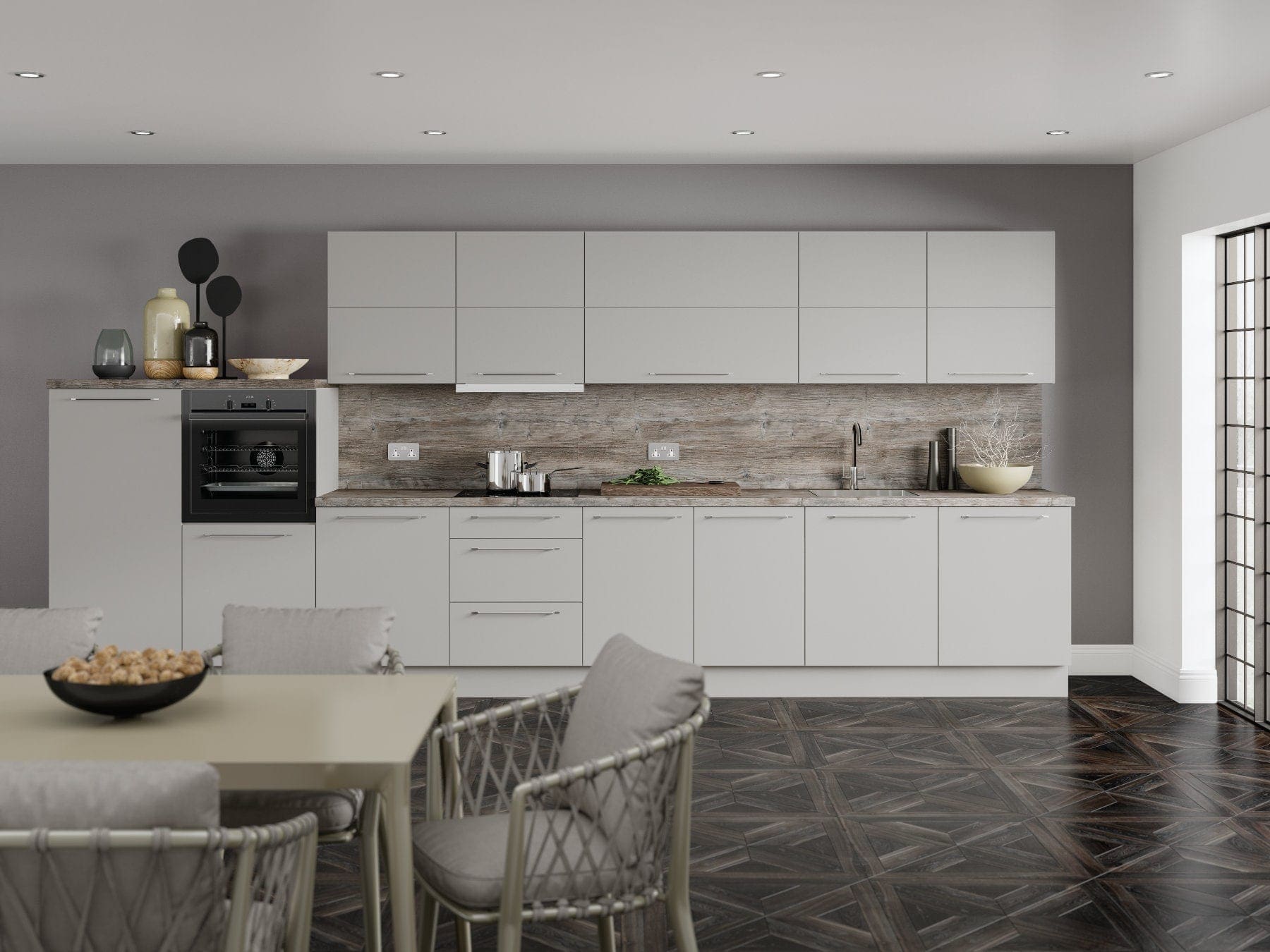
2. Grey Kitchen Colour Schemes
Grey continues to be one of the most popular modern kitchen colours.
It offers more depth than white while remaining adaptable.
- Light grey creates brightness in smaller kitchens.
- Mid-tone grey adds softness without heaviness.
- Charcoal introduces contrast in larger spaces.
However, grey behaves differently depending on undertones and lighting conditions.
If you are specifically considering grey cabinetry, you may wish to explore our detailed guide to Modern Grey Kitchen Cabinets, which examines shade selection, undertones and pairing strategies in more depth.
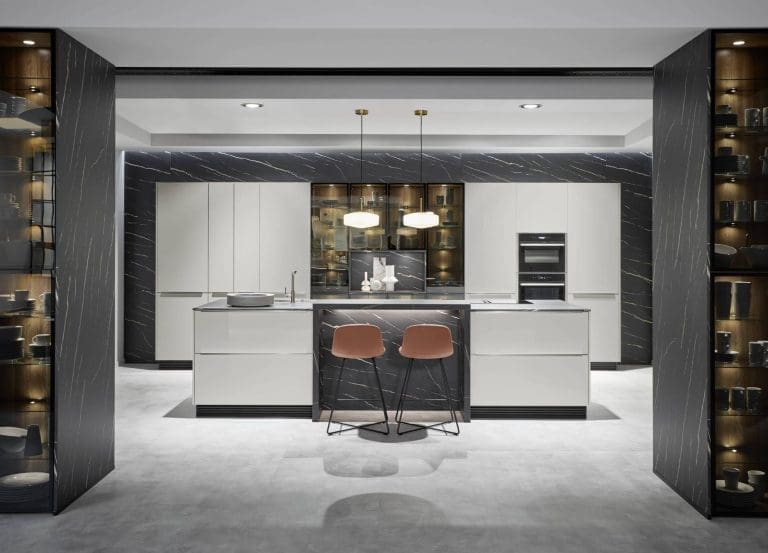
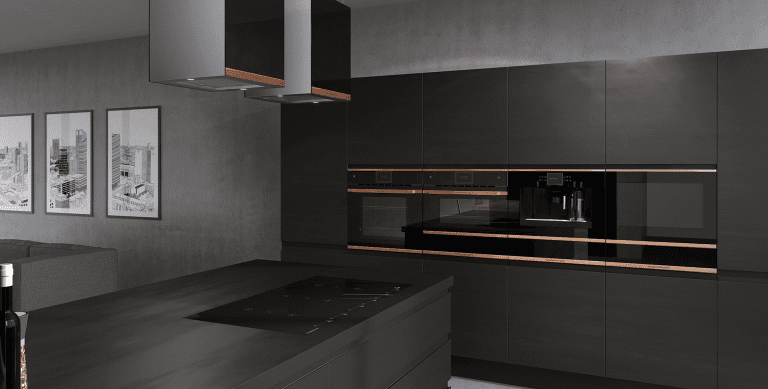
3. Bold & Dramatic Colour Schemes
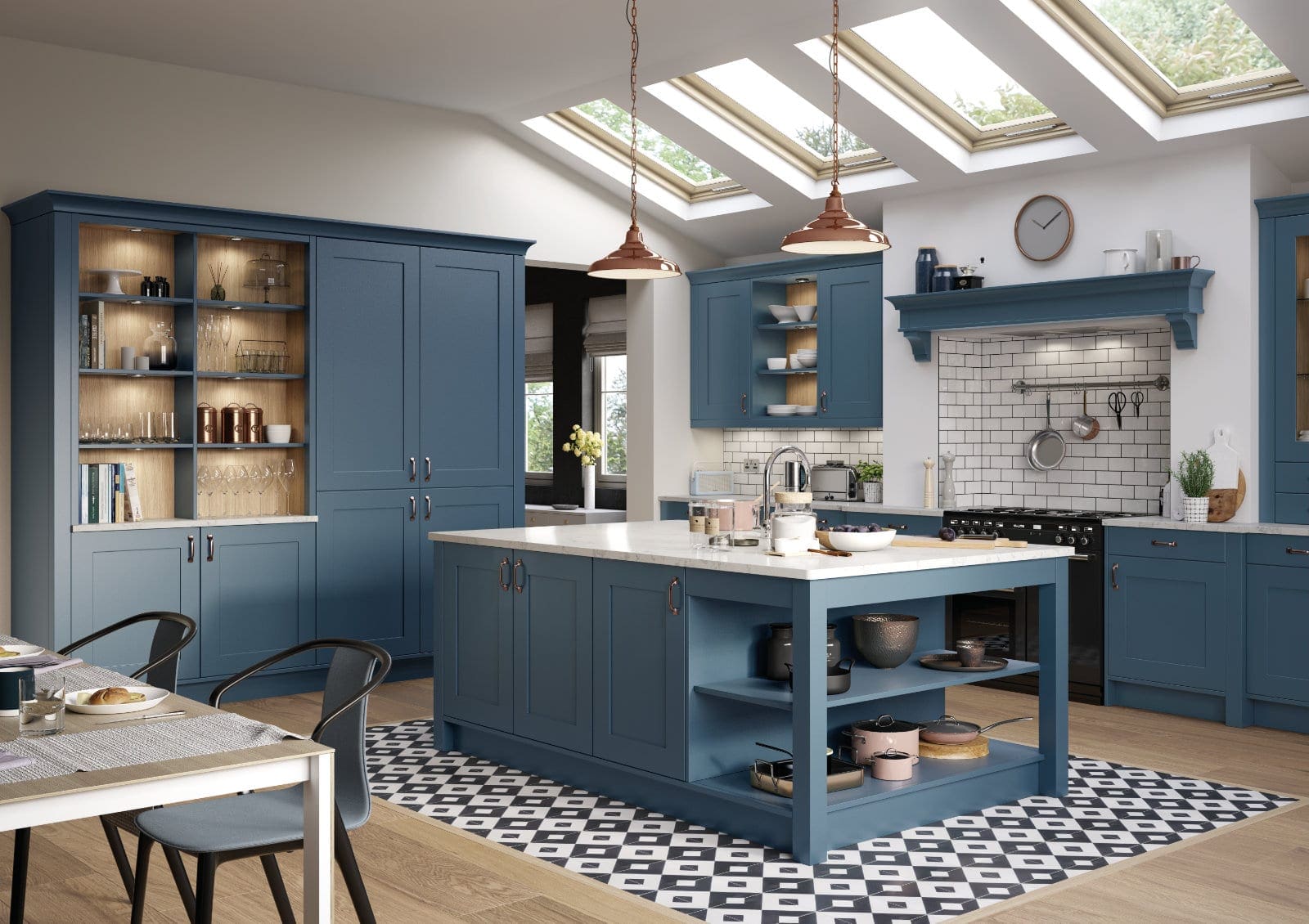
For homeowners who want impact, deeper tones can create a striking modern kitchen.
Popular bold colours include:
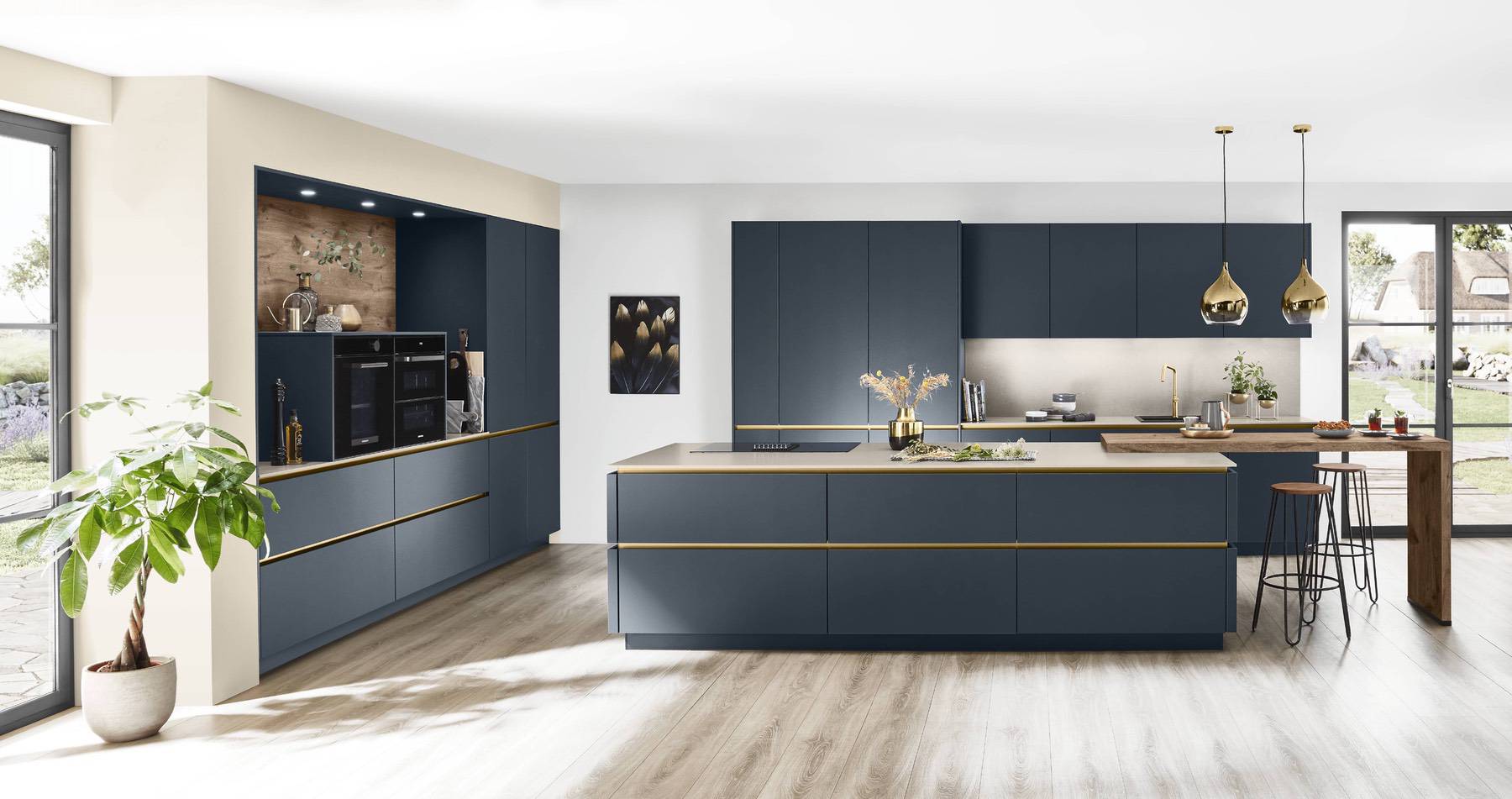
- Navy blue
- Forest green
- Deep teal
- Charcoal
- Matte black
These colours work best when balanced with lighter surfaces such as white quartz or pale stone worktops.
Darker schemes tend to suit:
- Larger kitchens
- High ceilings
- Spaces with good natural light
Used thoughtfully, they can create a refined and contemporary atmosphere rather than an overpowering one.

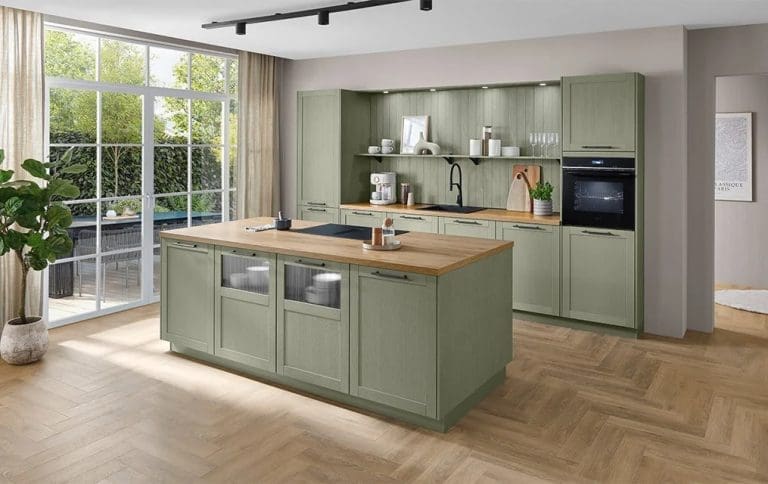
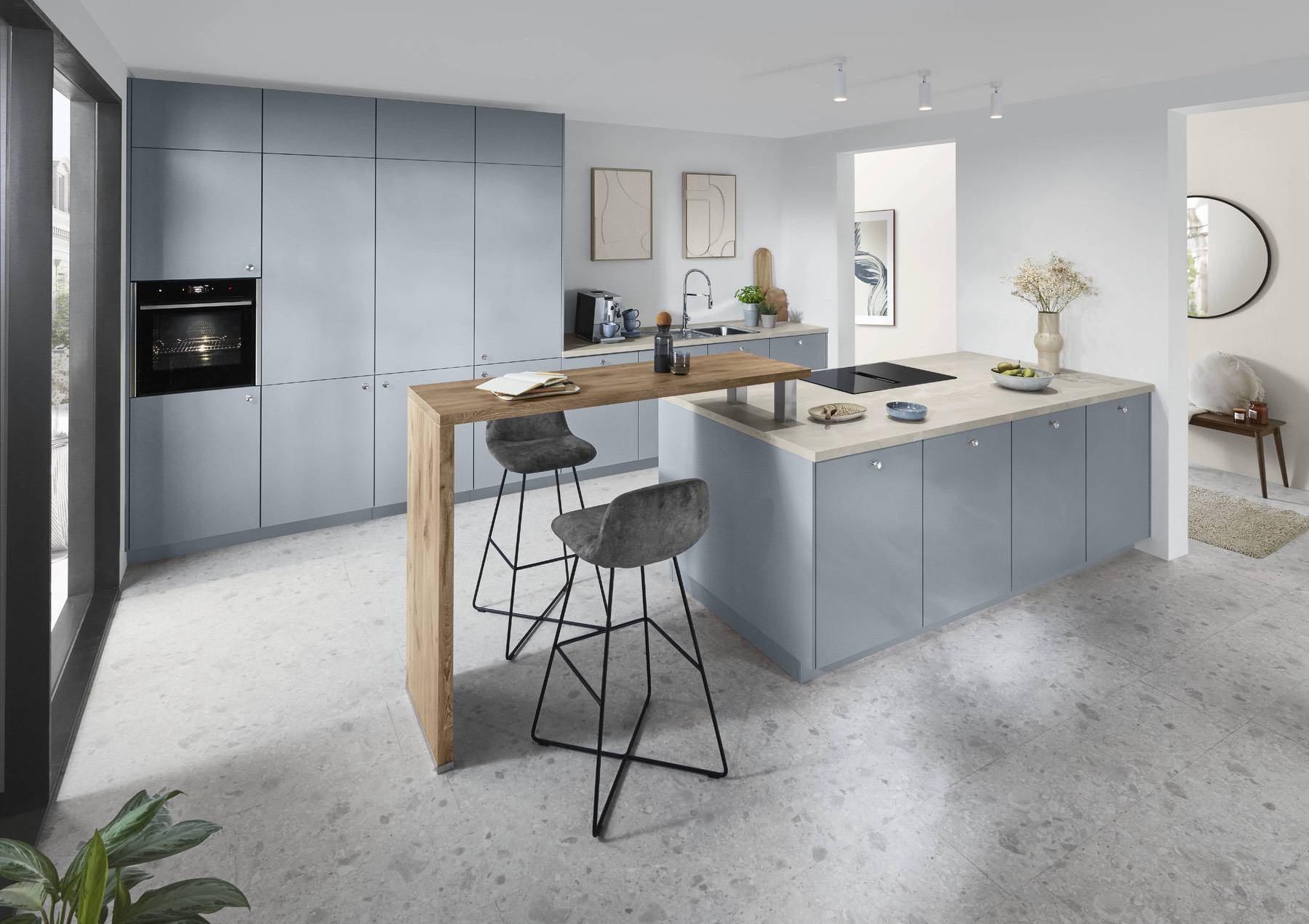
4. Soft Pastel & Muted Tones
Muted pastels offer a softer alternative to bold colours.
Modern interpretations include:
- Pale sage
- Dusty blue
- Blush tones
- Muted olive
When combined with simple cabinetry and natural materials, these colours create a calm and welcoming kitchen environment.
Pastel schemes work particularly well in:
- Homes with lots of natural light
- Scandinavian-inspired kitchens
- Smaller spaces
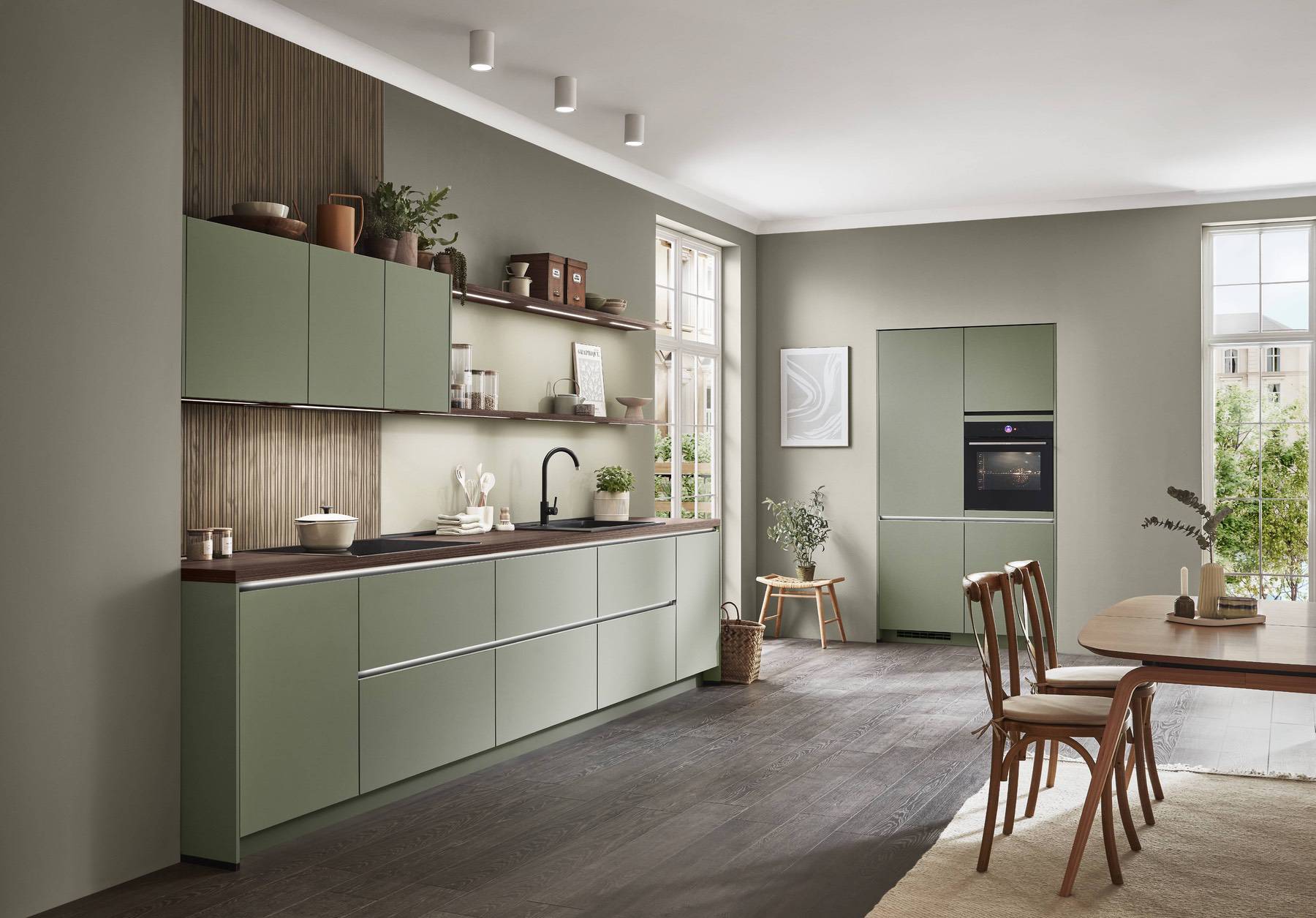
5. Earth-Inspired Colour Palettes
Earthy tones have grown in popularity as homeowners seek natural warmth.
These may include:
- Terracotta
- Clay
- Olive green
- Warm browns
When paired with timber, stone or textured finishes, earth tones introduce depth without overwhelming the space.
They are particularly effective in contemporary kitchens that aim to feel grounded rather than stark.
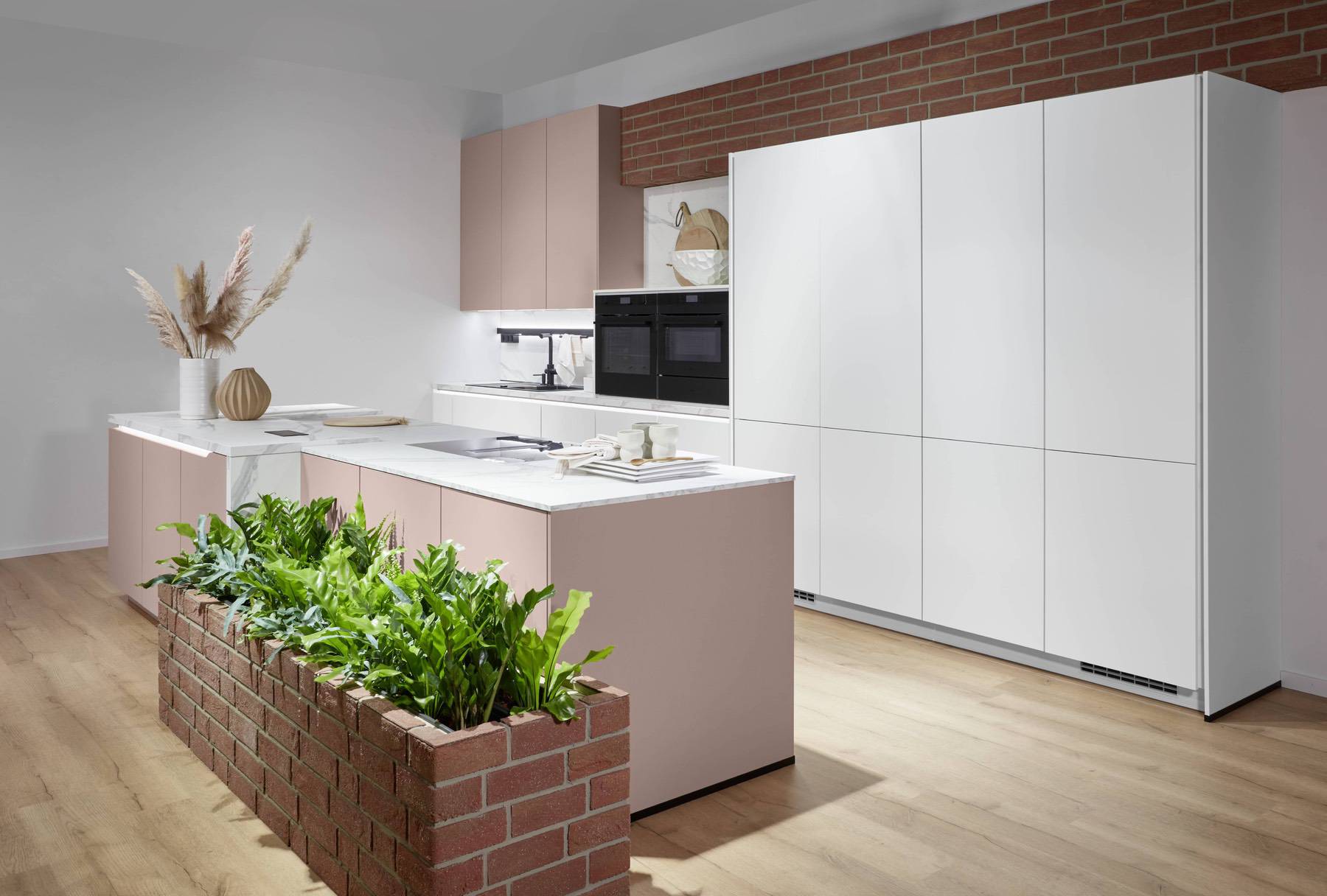
6. Two-Tone Modern Kitchen Schemes
Two-tone kitchens remain one of the most versatile modern colour strategies.
Common combinations include:
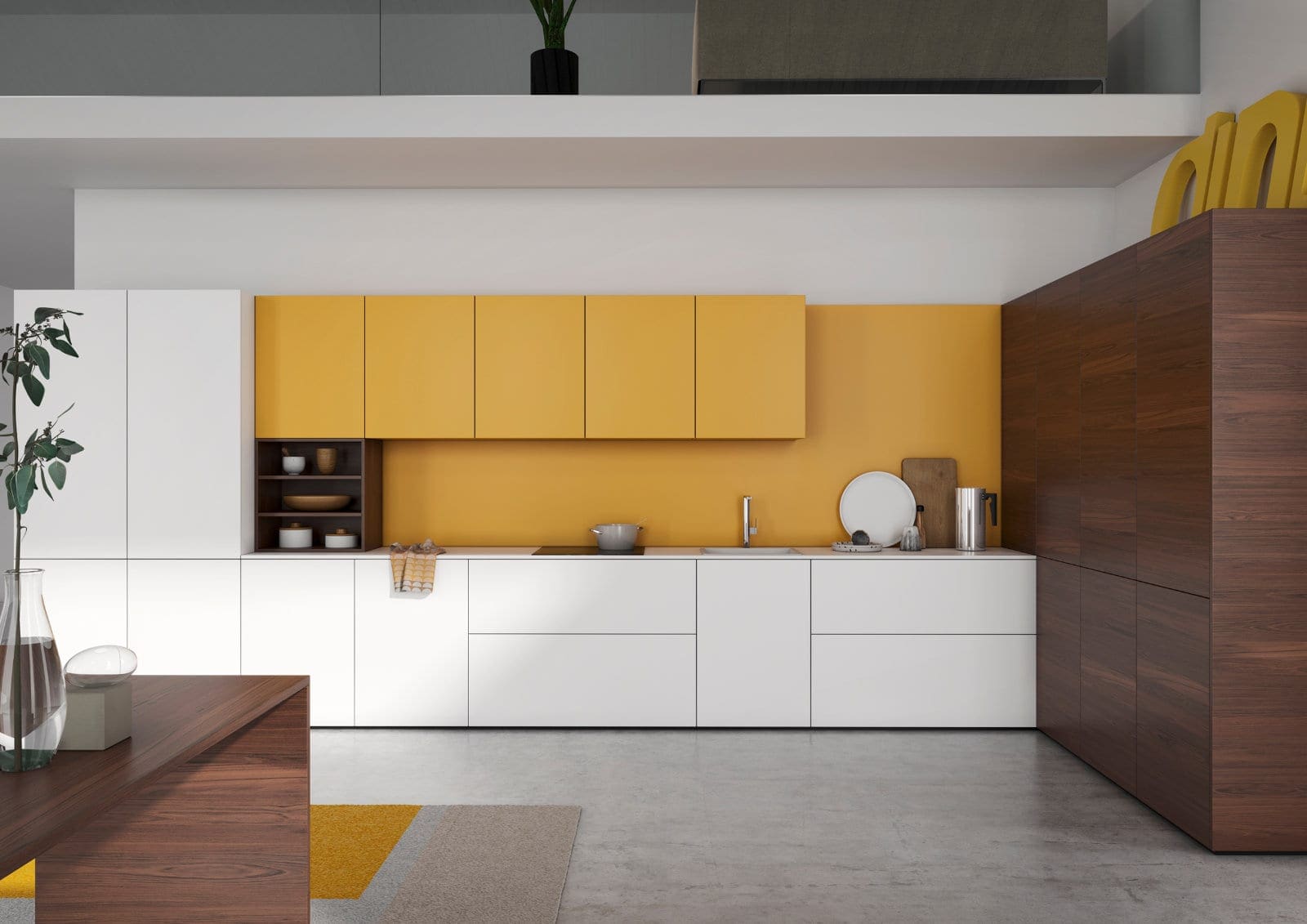
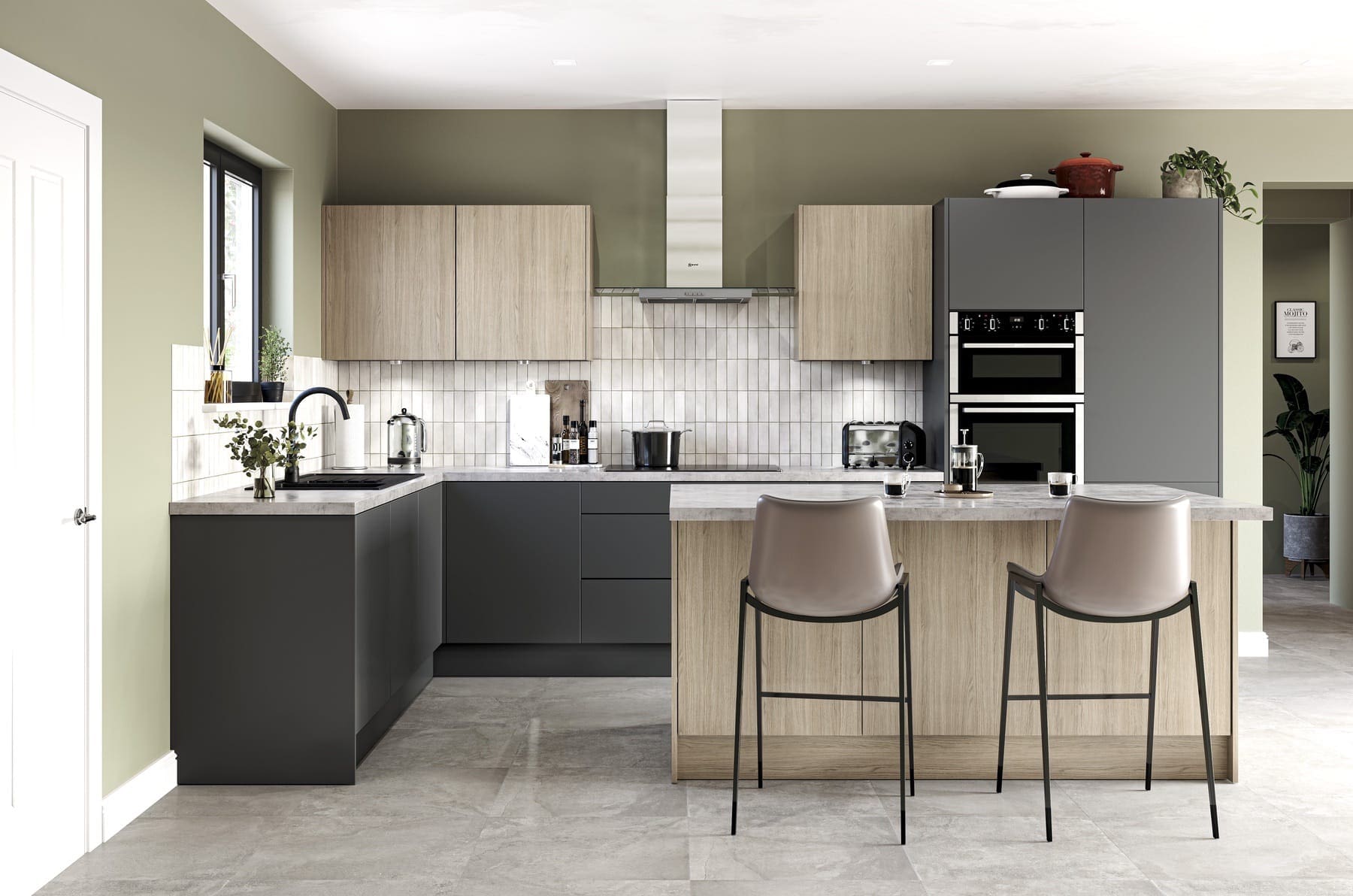
- Light upper cabinets with darker base units
- Neutral cabinetry paired with timber accents
- Contrasting island colours
Two-tone schemes allow you to introduce depth while maintaining balance.
For example:
- Grey base units with white uppers
- Navy island with neutral perimeter cabinets
- Wood lower units with soft white upper cabinetry
The key is proportion. The darker colour should anchor the space rather than dominate it.
7. Monochromatic Modern Kitchens
A monochromatic scheme layers different shades of the same colour.
This approach works particularly well in:
- Minimalist kitchens
- Handleless designs
- Contemporary extensions
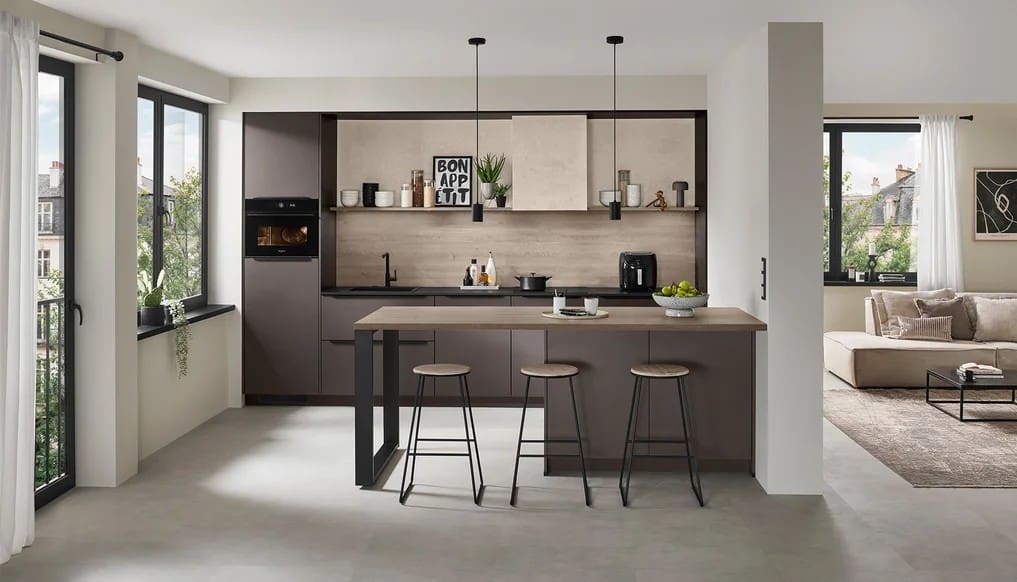
For example, layering multiple shades of beige or grey can create subtle depth without introducing strong contrast.
Texture becomes especially important in monochromatic designs, helping prevent the space from feeling flat.
Choosing the Right Colour Scheme for Your Home
Before committing to a colour direction, consider:
Natural Light
North-facing kitchens may benefit from warmer tones. South-facing kitchens can handle cooler hues more comfortably.
Room Size
Darker colours can add intimacy in large kitchens but may feel heavy in compact spaces without sufficient lighting.
Flooring & Surrounding Rooms
Your kitchen should feel connected to adjacent living spaces, particularly in open-plan layouts.
Long-Term Flexibility
Neutral foundations allow you to update accessories, lighting and décor without replacing cabinetry.
Testing large samples in your own lighting conditions is essential before finalising any colour scheme.
How Colour Works with Modern Finishes
Colour alone does not define a kitchen’s appearance.
Finish and texture influence perception significantly.
- Matt finishes soften colour.
- Gloss finishes reflect light.
- Textured surfaces add depth.
- Wood accents introduce warmth.
For a complete guide to kitchen colours and finishes, see our Kitchen Colours & Finishes guide.
Frequently Asked Questions
Are modern kitchen colour schemes moving away from white?
White remains popular, but warmer neutrals and layered tones are increasingly favoured over stark, high-gloss white.
What is the safest modern kitchen colour?
Neutral tones such as greige, soft grey or warm beige tend to offer the most long-term flexibility.
Are dark kitchen colour schemes still popular?
Yes, particularly in larger kitchens with strong lighting.
Should cabinets and walls match?
Not necessarily. Subtle contrast often adds more depth than exact matching.
Planning Your Colour Direction
Choosing a kitchen colour scheme is not about following trends — it’s about understanding how colour interacts with your space.
If you are exploring colour options for your kitchen:
Seeing materials in person and reviewing full-size samples will give you confidence in your final decision.
Written by My Kitchen Specialist
Reviewed by a kitchen design consultant with experience working on UK homes.