
Scandi Kitchen Design: Light, Natural & Effortlessly Modern
Updated February 2026.
Scandi Kitchen Design: Light, Natural & Effortlessly Modern
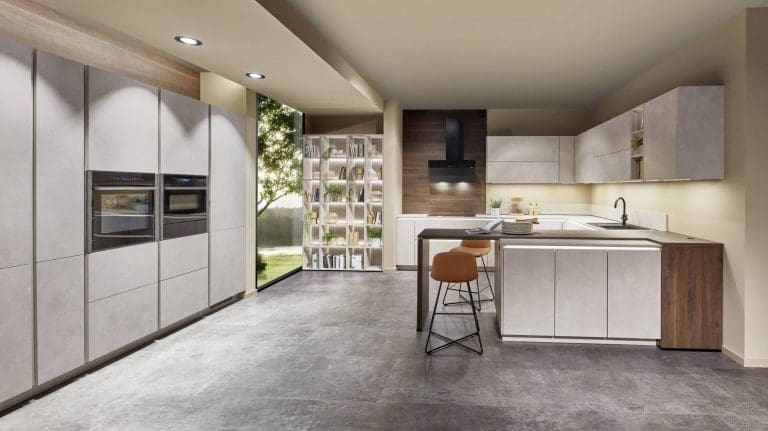
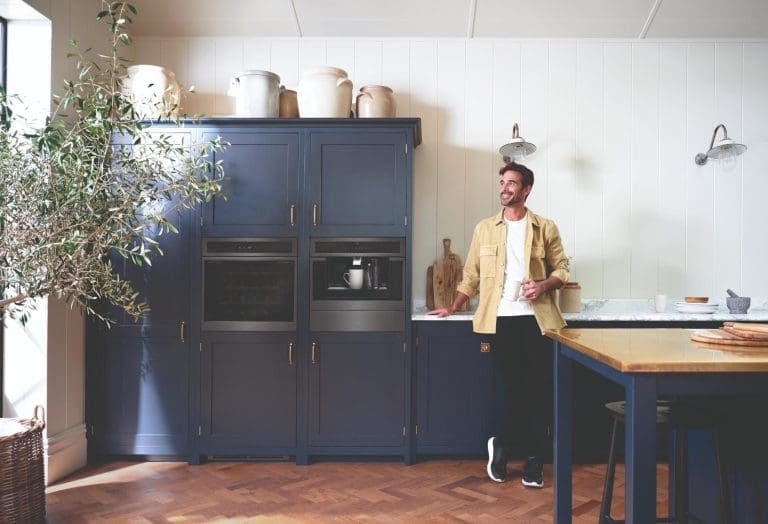
Scandi kitchen design is a Scandinavian-inspired style known for its light colour palettes, natural materials and clean, functional layouts. It combines simplicity with warmth — creating kitchens that feel calm and practical rather than stark or over-styled.
While minimal in appearance, a Scandi kitchen is never cold. Soft wood tones, matt finishes and subtle detailing ensure the space feels welcoming and comfortable for everyday living.
If you’re looking for a kitchen that feels contemporary but relaxed, Scandinavian style offers a beautifully balanced approach.

What Is Scandi Kitchen Design?
Scandi kitchen style is a Scandinavian-inspired design approach that combines light colour palettes, natural materials and minimalist cabinetry to create calm, functional spaces. Rooted in Nordic interiors, it prioritises simplicity, warmth and everyday practicality.
What Makes a Kitchen Feel Scandinavian?
Scandinavian design developed in Nordic countries where maximising light and creating uplifting interiors was essential, particularly during long winters.
As a result, Scandi kitchens typically focus on:
- Bright, airy spaces
- Simple, uncluttered cabinetry
- Natural materials
- Practical layouts designed for daily life
Rather than dramatic contrasts or decorative flourishes, the emphasis is on proportion, balance and quiet detail.
The Danish concept of hygge — a sense of comfort and contentment — often sits at the heart of the design.

Natural Materials: The Foundation of Scandi Style
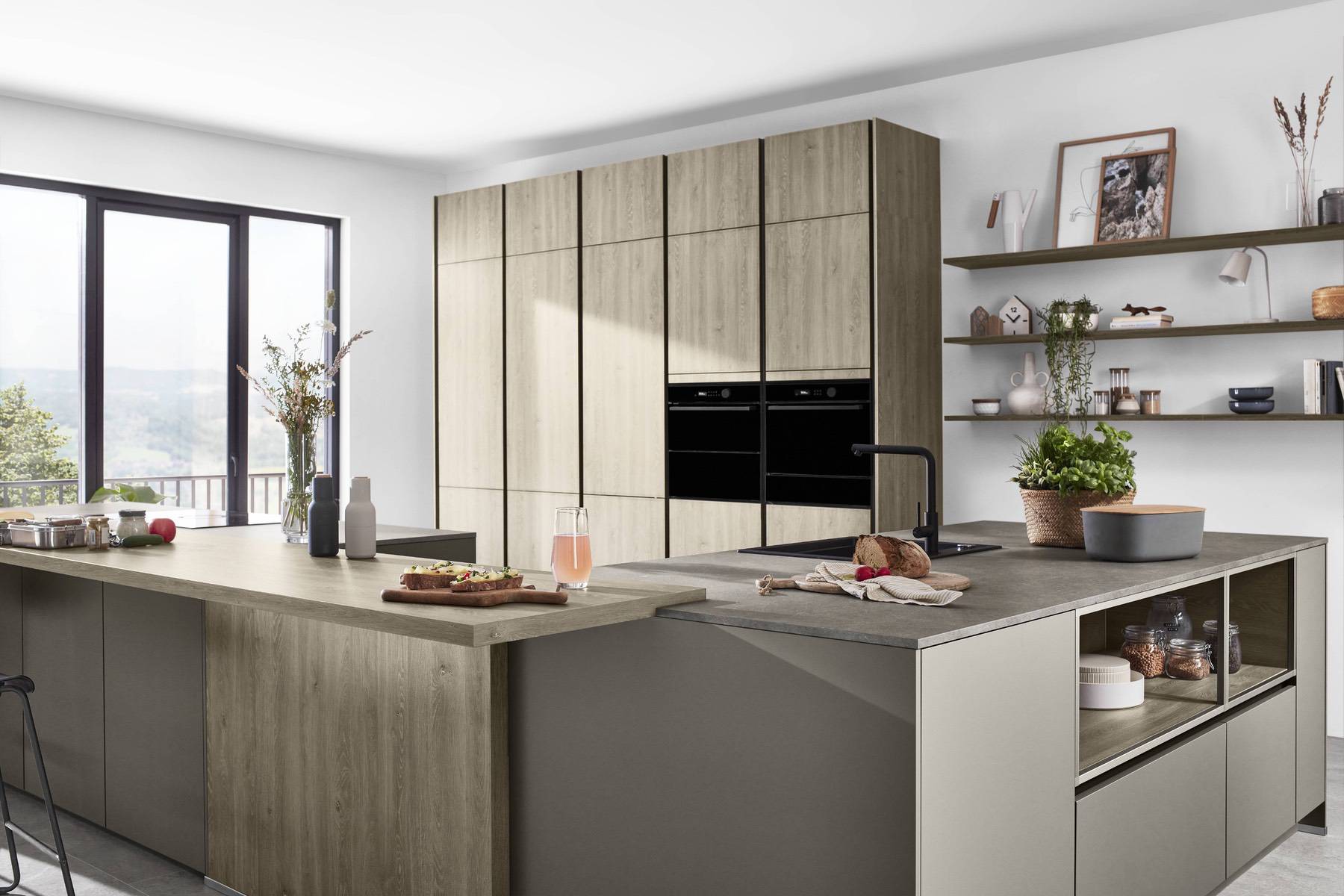
Wood plays an important role in Scandinavian kitchens.
Light-toned finishes such as oak or ash are commonly used to soften white cabinetry and add texture without overwhelming the space. Timber may appear in cabinetry, shelving, island features or subtle wall panelling.
In modern interpretations, homeowners often pair wood with:
• Stone or composite worktops
• Soft ceramic textures
• Fluted glass details
• Brushed metal accents
Many European kitchen manufacturers available through the My Kitchen Specialist network offer durable wood-effect finishes that achieve this look while remaining practical for busy households.
Light, Calm Colour Palettes
White is often the starting point in a Scandi kitchen, helping to reflect natural light and make the room feel open.
It is usually supported by gentle, tonal shades such as:
- Soft grey
- Pale green
- Muted blue
- Warm beige
Rather than bold contrast, Scandinavian kitchens rely on harmony between materials and colours. The result is a space that feels settled and easy to live in.

Sustainability and Eco-Friendliness
A standout feature of the Scandinavian kitchen theme is its dedication to sustainability and eco-friendliness, aligning with the broader Nordic ethos of environmental responsibility. This commitment is evident in the choice of sustainable materials like bamboo for flooring and cabinetry, and recycled glass for worksurfaces reflecting a preference for renewable, recyclable options. Energy-efficient appliances and LED lighting further minimise the kitchen’s ecological footprint, while non-toxic paints and finishes ensure a healthier indoor environment, underscoring the Scandi design’s holistic approach to eco-conscious living.
Simple Cabinetry & Subtle Hardware
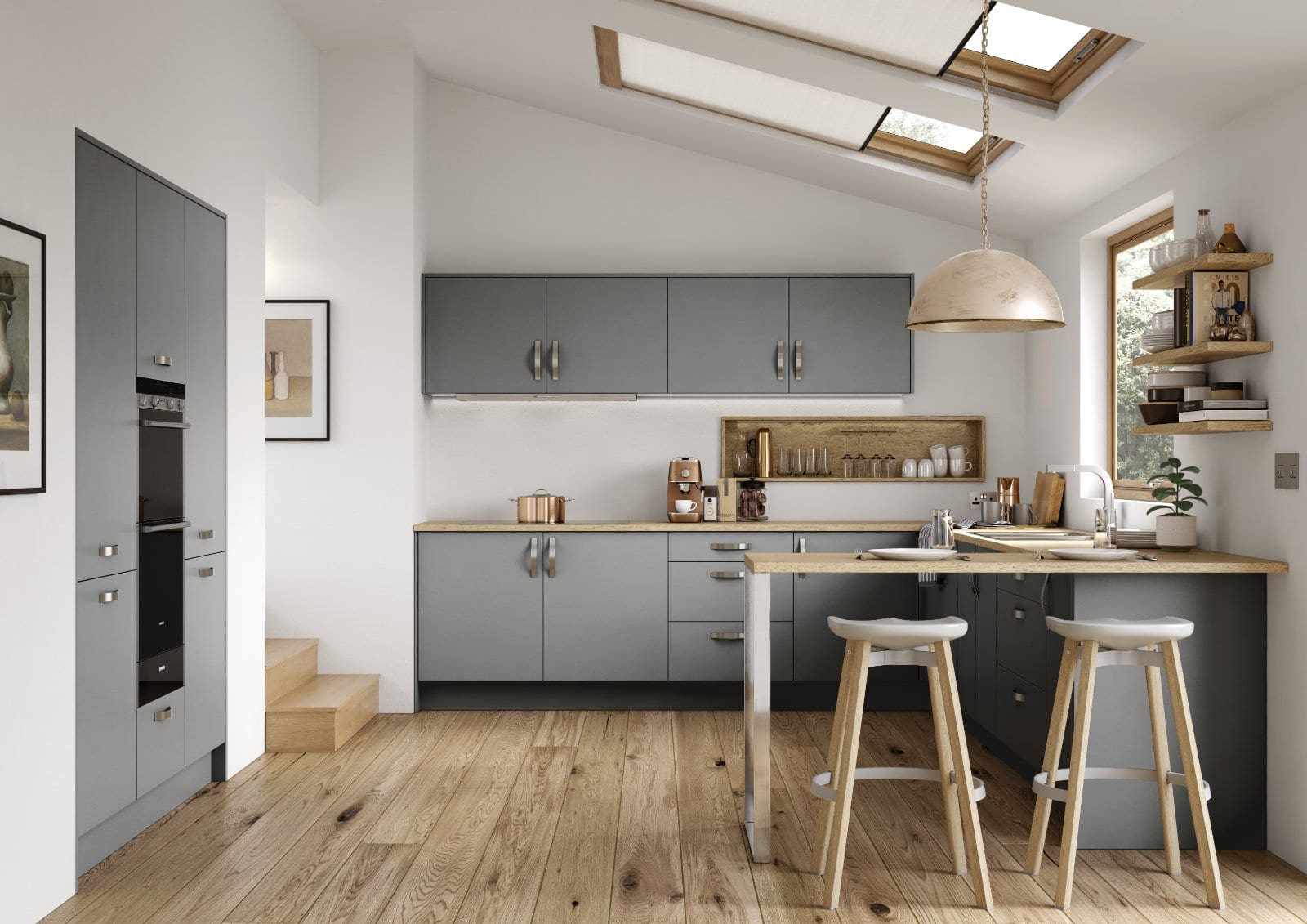
Cabinet design in a Scandi kitchen is understated.
Flat-fronted or slim shaker doors are common, often finished in matt textures. Handles are typically discreet, or cabinetry may use handleless systems to maintain clean lines.
The aim is not to draw attention to individual elements, but to allow the whole space to feel cohesive and balanced.

A Practical Approach to Layout
Function is just as important as appearance in Scandinavian design.
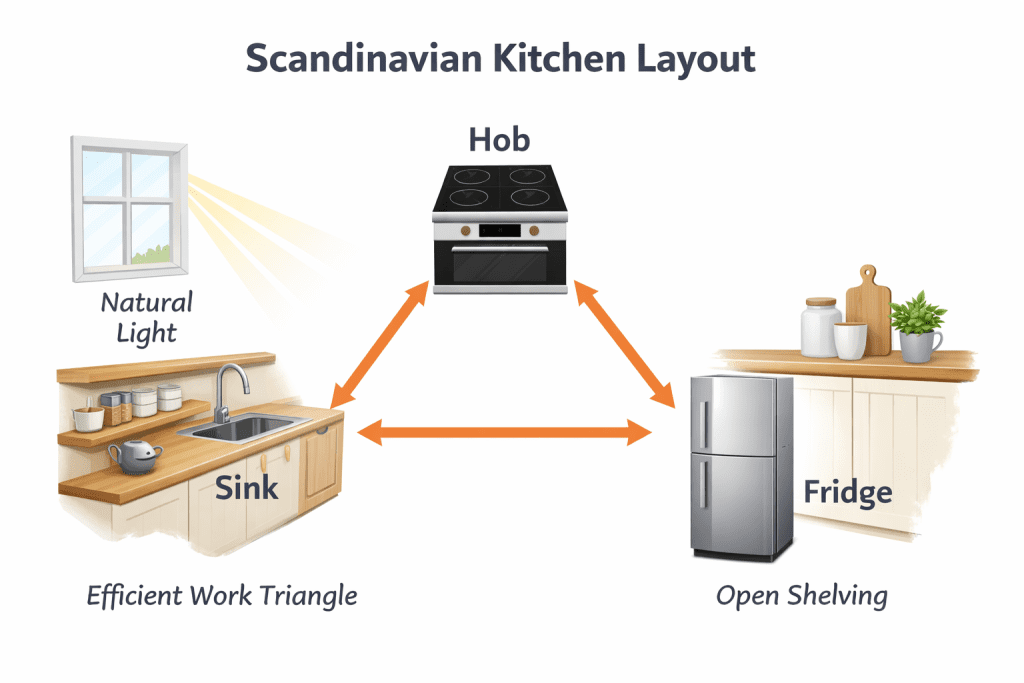
A Scandi kitchen layout usually prioritises:
- Clear work zones
- Easy movement around the room
- Well-considered storage
- Minimal surface clutter
Open shelving is sometimes introduced to display everyday ceramics or glassware, but it is used thoughtfully rather than excessively.
If you’re planning a full redesign, our guide to Kitchen Layouts Explained can help you explore layout options in more detail.
Simple Cabinetry & Subtle Accessories
Although rooted in Nordic interiors, Scandinavian style adapts beautifully to UK properties.
In smaller kitchens, light cabinetry and pale wood accents can help create a sense of openness. Integrated appliances reduce visual interruption, while under-cabinet lighting adds warmth in the evenings.
In open-plan spaces, timber islands and simple pendant lighting can introduce gentle contrast without disturbing the overall calmness of the design.
Modern influences such as ribbed glass, fluted panels or subtle Japandi elements can also be incorporated while keeping the aesthetic balanced.

Is Scandi Kitchen Style Right for You?
Scandi kitchens tend to appeal to homeowners who:
- Prefer light, calming environments
- Appreciate natural textures
- Value practicality over decoration
- Want a style that feels current but not trend-driven
They work particularly well in homes where natural light is important and where the kitchen forms part of a wider open-plan living space.
If you are unsure how Scandinavian style might translate into your own layout, reviewing material samples and design references with a specialist can help clarify the direction.

Explore Modern Kitchen Styles Further
Scandi kitchens are one interpretation of contemporary design.
You may also wish to explore:
Each offers a different balance of warmth and minimalism.

Frequently Asked Questions
What defines a Scandi kitchen?
A Scandi kitchen combines light colours, natural materials, minimalist cabinetry and practical layouts inspired by Nordic interiors.
Are Scandi kitchens suitable for small spaces?
Yes. Their bright palette and streamlined design make them particularly effective in compact kitchens.
Do Scandi kitchens use handles?
They typically use slimline hardware or handleless systems to maintain a clean appearance.
What is the difference between Scandi and Japandi kitchens?
Japandi blends Scandinavian minimalism with Japanese influences, often introducing slightly darker tones and more contrast.

Considering a Scandi Kitchen?
If you’re exploring Scandinavian kitchen ideas:
A well-designed Scandi kitchen should feel effortless, practical and quietly beautiful — not over-designed.

Author’s Note
This guide has been written to help homeowners understand Scandinavian kitchen style in practical terms. The principles outlined reflect current European kitchen design trends and the types of materials and finishes offered by leading British and German manufacturers available through the My Kitchen Specialist network.
Written by My Kitchen Specialist
Reviewed by a kitchen design consultant with experience working on UK homes.